
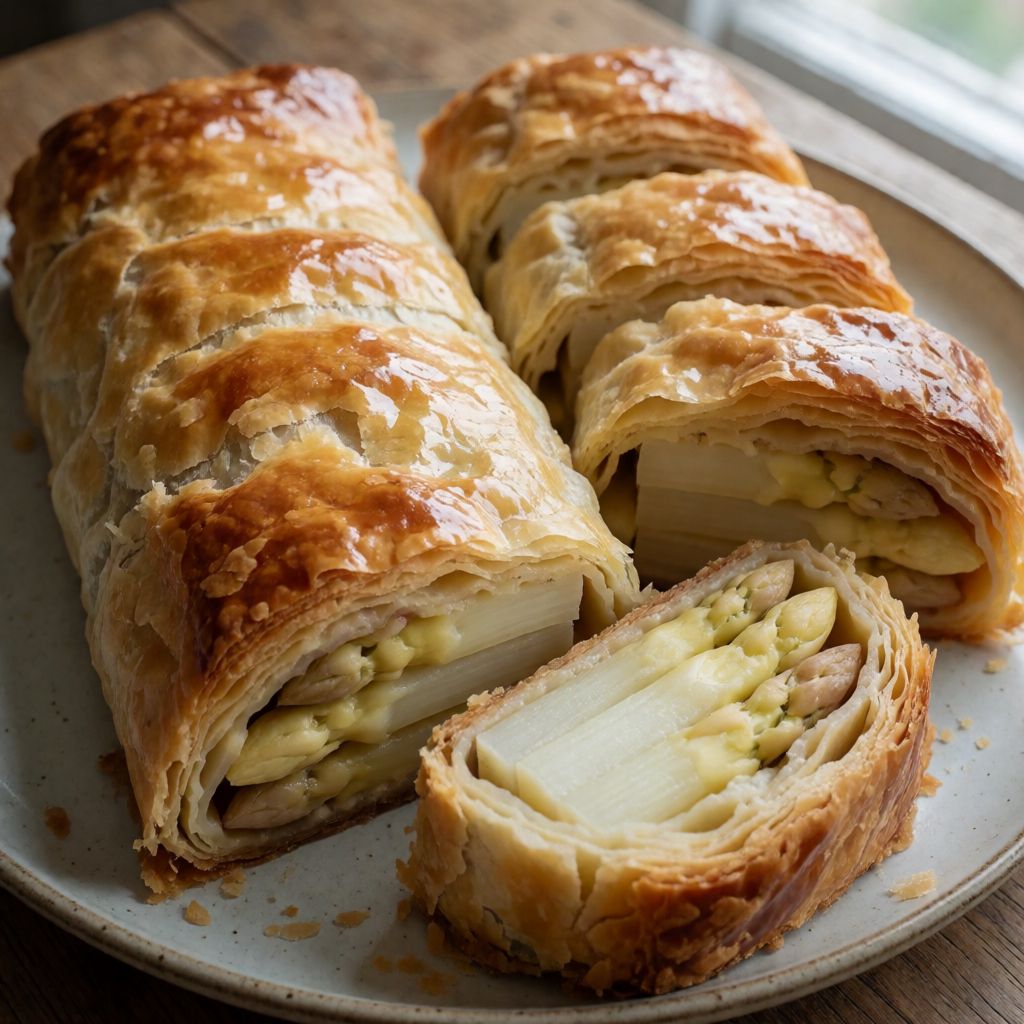
 AI photo
Savoury Puff Pastry Strudel with White Asparagus
A savoury puff pastry strudel filled with ham, fior di latte and white asparagus, served cold as a starter.
Labels are worked out automatically from the ingredients and can be wrong. Check the packaging if it matters to you.
Ingredients
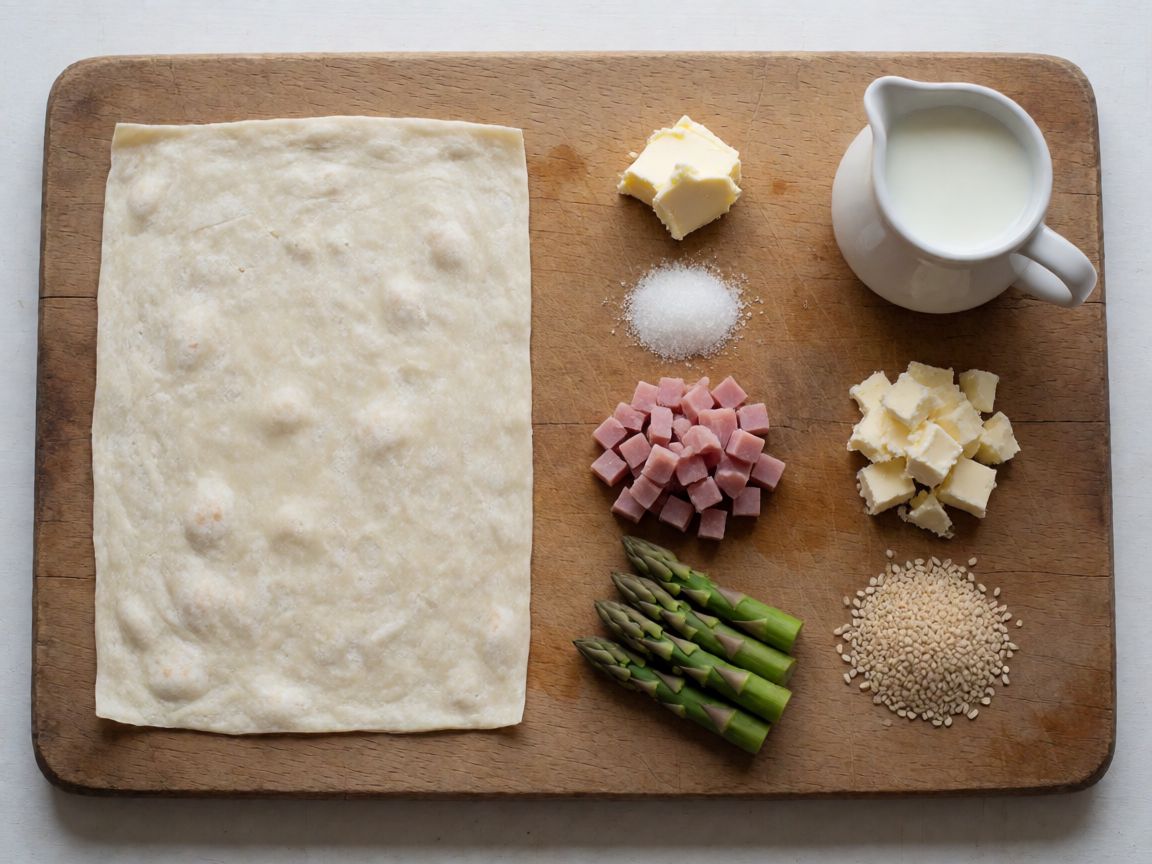
- 1 pcs Ready-rolled puff pastry sheet
- 10 g Butter
- Salt to taste
- Black pepper to taste
- Caster sugar to taste
- 120 g Ham
- 125 g Fior di latte
- 350 g Asparagus
- Sesame seeds to taste
- Milk to taste
- 1 tbsp White wine











Steps
Peel the tough part of the asparagus with a vegetable peeler and boil for 10 minutes in water with the white wine, a pinch of salt, a pinch of sugar and the butter.
10 minDrain the asparagus and let it cool.
Lay out the sheet of puff pastry on a baking tray lined with baking paper.
In the centre, arrange a few slices of ham, top with the asparagus, crumble over the fior di latte, sprinkle with black pepper and cover with the remaining ham.
Bring the edges of the pastry together over the filling and pinch tightly to seal.
If you like, decorate with strips of pastry cut from the trimmings.
Brush the surface with milk and sprinkle with sesame seeds.
Put it in the fridge for 20 minutes.
20 minBake at 200°C for 25 minutes.
25 minServe cold as a starter.
This is a cold starter dressed up as a hot one: you bake it, then let it sit, and it's at the table room-temperature or just-chilled, which is exactly where its flavours settle. White asparagus boiled in a scrap of wine and butter, ham, and fior di latte wrapped in puff pastry and pinched shut like a parcel — the whole thing lives or dies on the seal and on how wet the filling is when it goes in.
What decides it is moisture. Fior di latte is a wet cheese — it's sitting in its own whey in the tub — and asparagus holds water too, even boiled and drained. If you don't drain and cool both properly, that water has nowhere to go but into the pastry, and instead of shattering layers you get a soggy, steamed parcel with a raw, gluey seam underneath. The 20 minutes in the fridge before baking isn't fussiness — it's giving the butter in the pastry time to go solid again after your hands warmed it shut, so it puffs in layers in the oven instead of melting flat before it has a chance to rise.
Some say puff pastry needs a hot oven to "seal in" the filling. No — it needs a hot oven because butter laminated between sheets of dough only lifts if it flashes to steam fast, before it has time to soak in and turn the dough greasy rather than crisp. 200°C is the point where your domestic oven's heat is reliably enough to do that in a reasonable time without you needing a professional blast-chiller or a deck oven underneath it.
Puff pastry, ready-rolled, is the honest shortcut here, and there's no shame in it — proper hand-laminated pastry is a half-day job of folding and resting butter between dough, and a domestic kitchen with a warm Sunday-roast oven ticking away isn't the place to attempt it alongside everything else. Buy the best butter one you can find; the ones made with vegetable fat puff less because there's less water trapped in the fat to turn to steam, and that steam is the entire mechanism of the rise.
White asparagus is the traditional choice because it's grown blind under soil or black plastic, so it never makes chlorophyll and stays pale and tender rather than fibrous. It needs peeling and a longer, gentler boil than the green stalks you'll find easily in a UK supermarket — if green asparagus is what you've got, use it, just trim it rather than peel the tough skin, and boil it less; it cooks faster and you're checking for a stalk that bends without snapping, not a clock.
The butter, wine and sugar in the asparagus water aren't decoration — the butter rounds off the bitterness the vegetable naturally has, the sugar balances it further, and the wine's acidity keeps the asparagus a cleaner colour and adds a note the plain water wouldn't. A splash of any dry white you'd actually drink does it; there's no point opening something good for one tablespoon.
Fior di latte is a fresh, unaged cow's-milk mozzarella — if your shop only has buffalo mozzarella, that works too, just squeeze it in a cloth or kitchen paper first, because buffalo milk cheese tends to hold even more whey. What you're avoiding is the pre-shredded "pizza mozzarella" sold for melting, which is drier by design and won't give you the same soft give, but will at least behave itself moisture-wise if fior di latte isn't on the shelf.
Ham here is doing a double job: flavour, and — because it goes both under and over the filling — acting as a barrier between the wettest ingredients and the pastry itself. Use a sliced cooked ham rather than anything cured and salty like prosciutto, which would overpower the mild asparagus and cheese rather than sit alongside them.
The milk-and-sesame finish is the same logic as an egg wash, just gentler: milk browns the pastry less aggressively than egg, giving you colour without the risk of over-darkening in a fan oven that runs hotter than it says, and the sesame gives it something to hold onto and a bit of texture against all that soft filling. If you've no sesame, a few caraway or poppy seeds do the same structural job, just a different flavour note.