
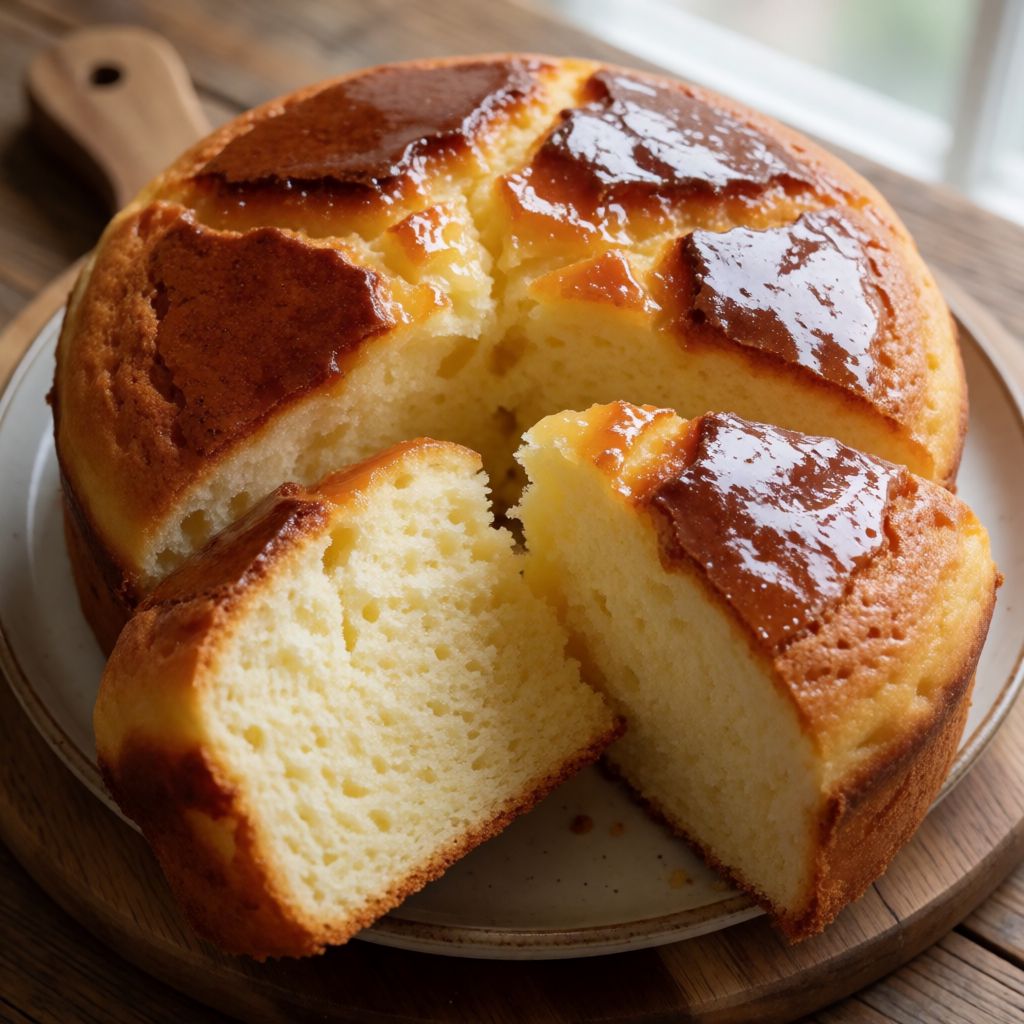
 AI photo
Yeast Cake with a Caramel Crust
A soft yeast dough cake topped with a rich caramelised brown sugar and butter crust.
Labels are worked out automatically from the ingredients and can be wrong. Check the packaging if it matters to you.
Ingredients
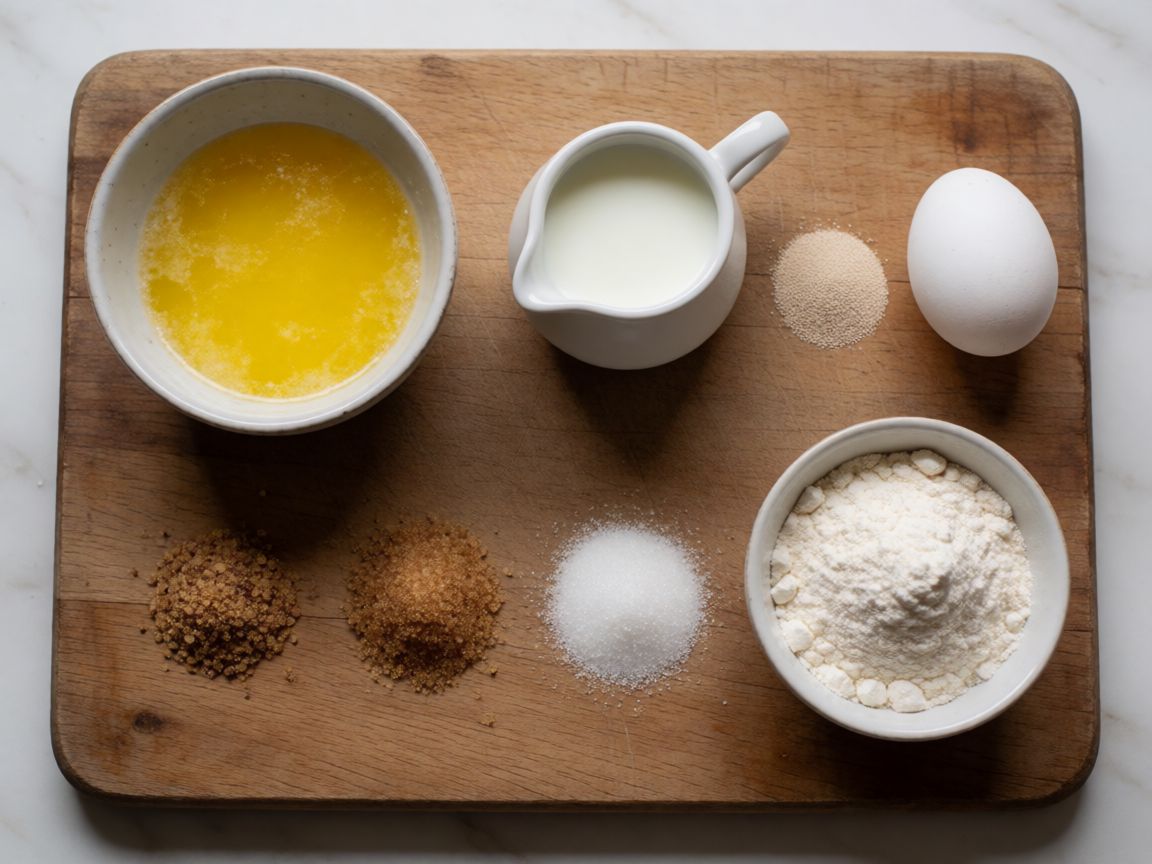
- 40 g Butter melted and cooled to room temperature
- 200 ml Milk at room temperature
- 10 g Yeast
- 1 pcs Egg
- 30 g Sugar
- 1 pinch Salt
- 300 g Plain flour
- 1 pinch Cardamom ground
- 175 g Brown sugar
- 150 g Butter at room temperature









Steps
Melt the brown sugar and butter together over low heat, stirring until smooth, then let it cool.
Pour the milk into a bowl and stir in the yeast.
Add the butter, egg, salt, sugar, cardamom and flour, then knead into a smooth dough.
Press the dough into the tin, make small dimples in the surface, spread over the filling, then cover with a tea towel.
Place in the fridge overnight, or for about 10 hours.
600 minLet the brunsviger rise at room temperature for 30 minutes.
30 minBake in a fan (convection) oven at 180°C for 25 minutes.
25 min
What was changed
The oven temperature was adjusted to for display on UK ovens.
Brunsviger is a Danish soft yeast bread baked under a skin of molten brown sugar and butter — not a cake with icing on top, a bread with its sugar baked into the surface. The name comes from Braunschweig, Brunswick: in the eighteenth century that city refined cane sugar for half of northern Europe, and the dark, cheap leftovers from the process — the brown sugar that didn't make it into the good white loaves — ended up on bakers' counters at low prices. Someone pressed it into bread dough instead of wasting it, and a regional habit became a named dish. No magic, just a sugar refinery with surplus stock.
What decides whether this works is temperature at two moments, not one. First: the caramel has to be cool when it meets the dough, not hot off the stove. Some say pour it on while it's still runny and hot, like toffee over nuts — no, because hot sugar sitting on live yeast scalds the cells right where you need them working, and you get dense, gummy patches under the crust instead of an even rise. Cooled to room warmth, it sits on top and waits.
Second: the overnight rest is cold on purpose. Some say yeast dough always needs somewhere warm to prove — no, not here. Ten hours in the fridge is a slow fermentation, deliberately throttled, and it's doing two jobs at once: building a deeper, slightly sour flavour that a quick warm rise never gets to, and letting you do the kneading the night before and the baking the next morning, which is the only way yeast baking fits around an actual life.
Go through the ingredients and the logic holds up, step by step. The 40 g melted butter in the dough is there for tenderness — fat shortens the gluten strands so the crumb stays soft rather than chewy — and it's cooled before it goes in so it doesn't cook the egg or stun the yeast on contact. Milk at room temperature, not fridge-cold and not warmed on the stove: yeast works fastest around body heat and slows hard below it, so skin-temperature milk gives it a fair, gentle start rather than a shock in either direction. Any milk with some fat in it will do; a splash of oat milk with a knob of extra butter gets you most of the way there if dairy's not in the house.
Ten grams of fresh yeast is roughly half a standard dried sachet — fresh yeast is mostly water, dried is concentrated, so don't measure them like-for-like by weight. The egg gives structure and a little colour to the crumb; the 30 g sugar in the dough is modest on purpose, because the real sweetness of this bread comes later, from the topping — this amount is just enough to feed the yeast a little and round off the flavour, not to make the dough itself a sweet one. The pinch of salt isn't seasoning so much as a brake: without it yeast runs too fast and the dough blows past its best structure before it's baked.
Three hundred grams of plain flour, and plain is the right word for British flour here — this isn't bread that needs chewing, so a strong bread flour with its higher protein would only make it tougher. Soft, ordinary plain flour gives the open, slightly cakey crumb that's meant to sit under that heavy sugar crust without fighting it. Cardamom is the one truly Nordic note in the dough — buy the pods and crack them yourself if you can, because ground cardamom loses its punch within weeks on a shelf and you'll taste the difference. Cinnamon will substitute, but it changes the bread's identity rather than just standing in for it.
The topping is its own small chemistry: 175 g brown sugar melted with 150 g butter is an emulsion of fat and dissolved sugar, and it only behaves — spreadable, glossy, not grainy — once it's been allowed to cool down from the pan. Darker sugars (muscovado, dark brown) bring more molasses bitterness and a deeper colour; lighter ones give a cleaner sweetness. Use unsalted butter here if you can, since the sugar is already doing the heavy flavour lifting — if all you have is salted, go easy on the pinch of salt in the dough so the two don't stack up.
Covering the risen dough with a tea towel rather than a proper proofing lid is exactly right for an ordinary kitchen, and it's doing a real job, not just standing in for something better: it stops a dry skin forming on the surface while still letting the dough breathe, which cling film pulled tight would trap and sweat under. The thirty minutes at room temperature after the fridge night is the dough waking back up — cold yeast is sluggish, and this step makes sure there's gas already moving before the oven heat takes over, because oven spring alone won't rescue dough that's still half-asleep when it goes in.
A fan oven at 180°C circulates heat evenly round the tin, which matters here because you're cooking a soft crumb and a sugar crust at the same time and don't want one to finish before the other. If your oven has no fan setting, conventional ovens generally run a touch cooler for the same number, so nudge it up and watch rather than trust the dial. And patience is part of the method here in a way that's easy to skip past: the whole overnight cold rise exists because good flavour in yeast bread is bought with time, not heat — rush it with extra warmth and you get a quicker rise and a flatter taste.