
 AI photo
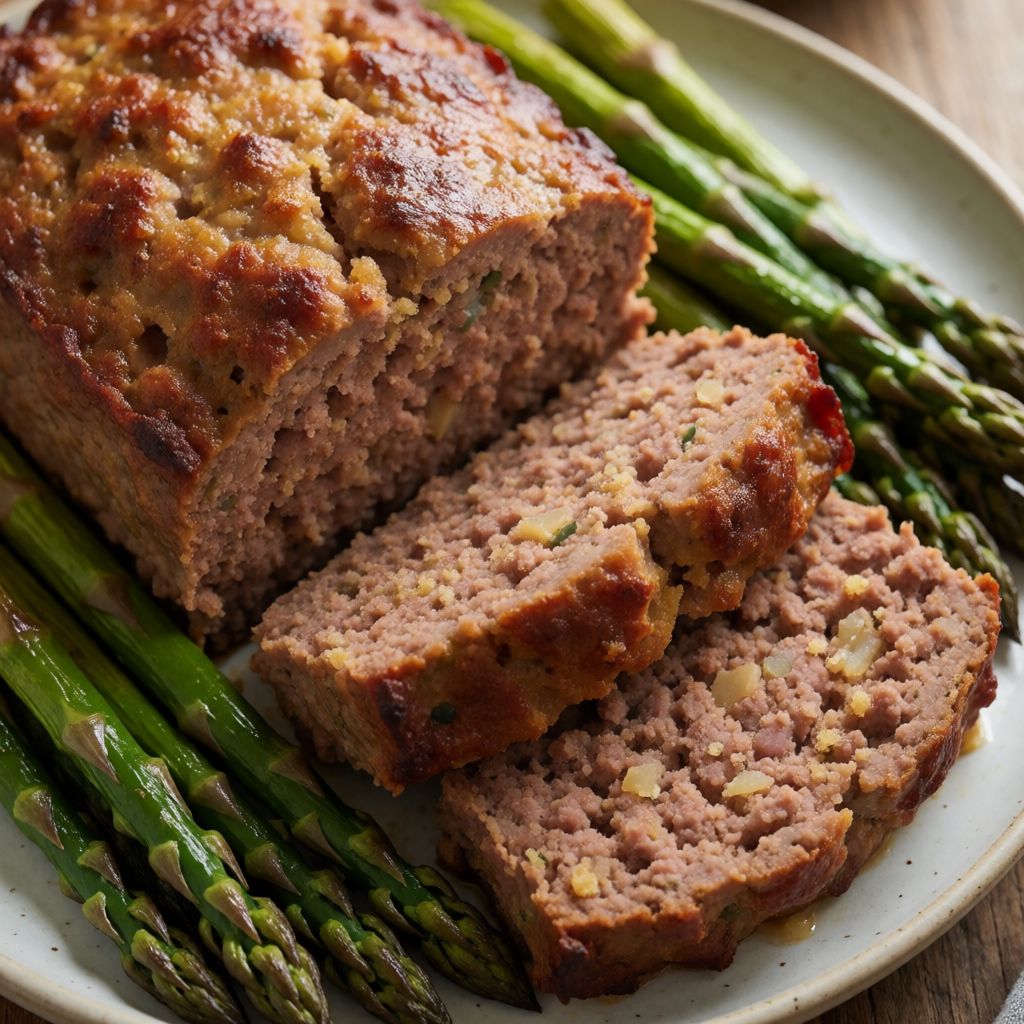
Baked Meatloaf with Asparagus
A rich baked meatloaf with asparagus mixed through the mince, wrapped in thin beef, for a homely roast-style dinner.
Labels are worked out automatically from the ingredients and can be wrong. Check the packaging if it matters to you.
Ingredients
- 1 kg Minced beef
- 150 g Thinly sliced beef to wrap the loaf
- 200 g Chicken and turkey sausage
- 4 tbsp Breadcrumbs
- 6 pcs Asparagus
- 2 pcs Eggs
- 1 clove Garlic
- 1 bunch Parsley
- Nutmeg to taste
- 1 bunch Thyme
- Olive oil to taste
- Salt to taste
- Black pepper to taste












Steps
Chop the parsley and garlic, and fry them in a pan with olive oil.
Trim the woody ends off the asparagus, rinse and cut into rounds about 1 cm thick.
Add the asparagus to the pan with the parsley and garlic, and cook for about 10 minutes, stirring.
10 minIn a large bowl, combine the minced beef with the eggs, breadcrumbs, chicken and turkey sausage, thyme, nutmeg and the cooled asparagus.
Season with salt and black pepper, and mix vigorously until the mixture is smooth and firm.
Place the mixture on a sheet of baking paper, shape it into a cylinder, wrap with the thinly sliced beef and transfer to a loaf tin.
Bake the meatloaf at 200°C for 20-25 minutes.
22 minCover with foil and continue baking for a further 35-40 minutes. It is ready when the centre reaches 71°C.
What was changed
Thinly sliced beef and Chicken and turkey sausage replace the pork fatback and pork sausage with beef and a chicken-and-turkey sausage, so the dish contains no pork.
This is not a burger scaled up to loaf size — it's closer to a kofta that forgot to stay round. Mince on its own has no structure: cut into it and it falls apart like wet sand. Three things here give it a spine: the vigorous mixing, the thin beef wrapped around it, and asparagus that's cooked, not raw, before it goes in.
"Mix until smooth and firm" is not decoration, it's physics. Salt plus mechanical work pulls the sticky protein out of the muscle fibres, and that glue is what holds a slice together when you cut it. Skip the kneading and no amount of egg or breadcrumb saves you — the loaf will separate at the first knife cut, meat on one side of the blade, nothing on the other.
The asparagus is fried with the garlic and parsley first, then cooled, for one reason: raw vegetable is mostly water, locked inside its cells, and that water comes out in the oven whether you want it or not. Cook it in the pan and the water leaves there, as steam, taking nothing but itself — leave it raw and it leaks into the mince later, turning a firm loaf into something closer to a damp brick.
The thin beef wrap does the same job bacon does round a joint on a Sunday — no bacon needed here. A bare mince surface hit by 200°C oven air dries and crusts long before the centre is anywhere near done. The wrap takes that heat first, renders a little fat as it goes, and bastes the loaf the whole time it sits in the tin.
On the mince itself: don't chase a high fat percentage thinking it buys juiciness. Some say fattier mince is always the safer bet for a loaf — no, because the moisture here comes mostly from the egg-and-breadcrumb mix and the pre-cooked asparagus, not from rendered fat. Ordinary 15–20% fat mince is enough; anything leaner will just taste dry no matter what you do around it.
The breadcrumbs are a panade — a dry starch that drinks up the egg and sits between the meat fibres so the tightening protein network doesn't squeeze every bit of moisture out as it cooks. Fresh or dried crumbs both work; even a crumbled stale slice of white bread does the job. The only criterion: something that can hold liquid without adding a taste of its own.
The chicken and turkey sausage is there for texture, not flavour. It's already seasoned and loosely bound, and it keeps the dense beef mince from setting into one solid brick — more Sunday joint, less sausage roll. If you haven't got it, squeeze the meat out of any plain sausages you trust, or add a touch more breadcrumb and egg and season it yourself.
Garlic and parsley go into the pan raw but come out of it cooked — raw garlic sitting whole inside a baked block stays sharp in patches; cooked with the asparagus, it spreads evenly through instead of hitting you in one bite.
Nutmeg here is as much a British habit as a borrowed one — it arrived in English kitchens through the same spice trade that put it in mince pies and white sauces, worked into minced meat for a background warmth rather than any heat. Use it with a light hand; too much turns metallic rather than warm. Thyme should lose its woody stems before it goes in the bowl — leave them whole in the mixture and all you get is bitterness, not flavour; the stems are only good for scent if you tuck them under the loaf in the tin.
For the wrap, ask a butcher for the cut used for stir-fry strips or minute steak — anything sliced thin enough to bend round the loaf without tearing. No butcher handy? A sharp knife on a part-frozen piece of topside or flank will slice thin enough yourself. On temperature: 200°C first sets the wrap — you want it matte and firm to the touch, not still shiny and raw-looking, before you reach for the foil. The foil then drops how much direct heat reaches the meat, so the middle finishes slowly instead of racing the outside to overcook. The real finish line is 71°C at the core, checked with a probe — this is one of the few times eye and touch won't warn you in time, so don't guess. Some say a loaf like this needs a long rest like a roast joint — no, because it's already held together by egg and crumb; five to ten minutes is enough for the juice to settle before you slice.