
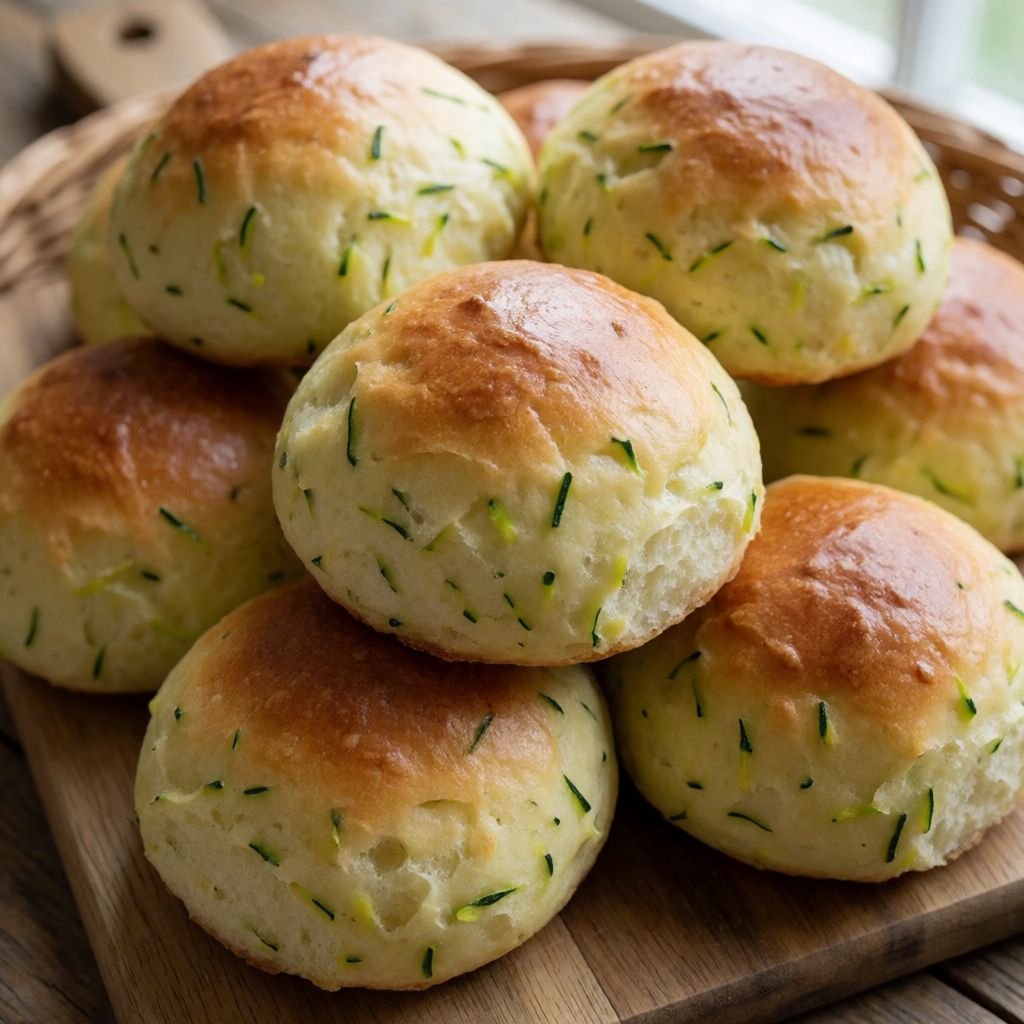
 AI photo
Courgette Buns
Soft yeasted buns made with grated courgette, rolled oats and wholemeal flour, lovely with a cup of tea.
Labels are worked out automatically from the ingredients and can be wrong. Check the packaging if it matters to you.
Ingredients
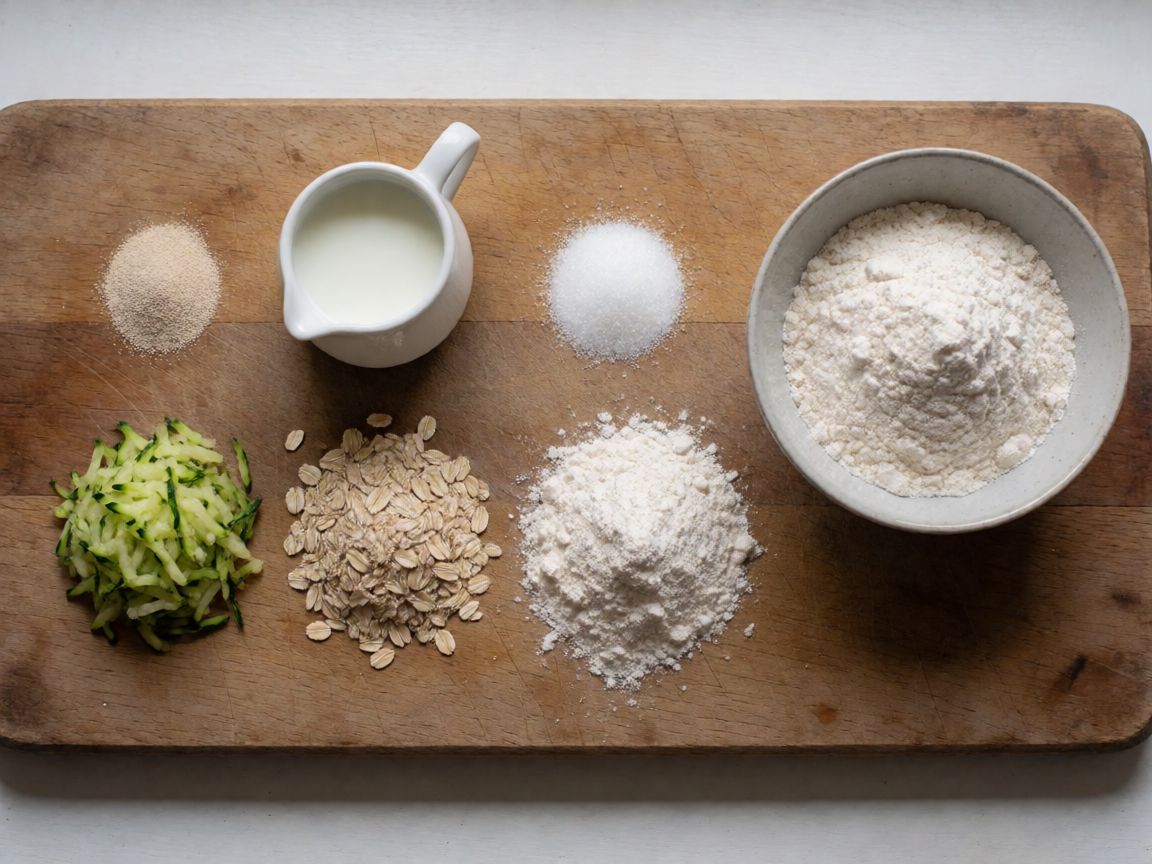
- 10 g Yeast
- 300 ml Water at room temperature
- 100 ml Buttermilk
- 1 tbsp Sugar
- 1 tsp Salt
- 150 g Courgette coarsely grated
- 75 g Rolled oats
- 75 g Wholemeal flour
- 400 g Plain flour









Steps
Stir the yeast into a bowl with the water, then add the buttermilk, sugar, salt, grated courgette, rolled oats and wholemeal flour.
Mix the dough well, then add the plain flour and knead the dough with a mixer or a spoon in the bowl.
Cover the dough and let it rise for 1 hour on the kitchen worktop.
60 minPut the dough in the fridge until the next day.
Turn the dough out onto a floured surface, cut it into buns, and sprinkle with rolled oats.
Place the buns on a baking tray lined with baking paper.
Bake the courgette buns in a preheated fan oven at 200°C for 18-20 minutes, until golden brown.
19 minBefore serving, let the buns cool slightly on a wire rack.
These aren't sweet buns — they're rolls. Something to tear open next to a roast, or split and buttered with the Sunday tea. The courgette inside isn't a flavour statement — courgette barely has a flavour to begin with — it's there to do a job: hold water inside the dough so the crumb stays soft for a day or two instead of going stale by evening, the way a plain white roll does.
What decides whether these work isn't the kneading, it's the patience. The dough goes in the fridge overnight before it ever sees the oven. That's not a convenience step you can skip to save time — cold, slow fermentation is where the flavour actually builds. Yeast working fast and warm just inflates a dough. Yeast working slow and cold has time to break starches down into something that tastes of more than flour. Bakeries have known this for a century: you mix in the evening, you bake what rose overnight, and the night shift does the work while everyone else sleeps. You're borrowing that trick for twelve bread rolls in a flat in the UK, which is a fair swap.
Some say you must squeeze grated courgette dry before baking with it, or it'll make everything soggy. No — not here. That advice comes from cakes and fritters, where the courgette's water has nowhere to go and pools under the crust. In a yeasted dough, that water is simply hydration. It gets absorbed into the flour and used to build gluten, same as the water in the bowl. Squeeze it dry here and you've just made the dough too stiff and starved the yeast of the softness it needs to rise properly.
Yeast first, not flour first — that's the order the recipe wants, and it matters. Yeast dissolved straight into room-temperature water wakes up gently; thrown onto dry flour with salt sitting right next to it, salt starts drawing water out of the yeast cells before they've had a chance to get going. 10 g fresh yeast is what's written; if you only have dried, use roughly half that weight and let it sit a few minutes in the water until it looks faintly frothy before moving on — that's your sign it's alive, not a stopwatch reading.
Buttermilk does two things at once: its mild acidity slows gluten from toughening too fast, which is why these buns stay tender rather than chewy like a lean baguette dough, and it adds a background tang that plain milk can't. No buttermilk in the fridge — common enough, it's not a UK staple the way milk is — thin some plain yogurt with a splash of milk until it pours, or stir a teaspoon of lemon juice into milk and let it sit five minutes until it thickens slightly. The criterion is acidity plus dairy fat, not the brand.
The courgette: pick one that's firm, not the overgrown ones gone soft and seedy from sitting in a greenhouse — those carry more water than structure and will make the dough slack. Coarse-grate it so the shreds hold some bite rather than dissolving into mush; that bite is most of what you'll actually taste of it in the finished bun, a faint green note and a bit of texture, nothing more. No courgette — grated carrot gets you the moisture but trades the green note for sweetness, which changes the bun, not ruins it.
Oats and wholemeal flour are both doing fibre and chew; plain flour is doing structure. This is the balance to respect: oats and wholemeal have little to no gluten-forming protein, so the more of them you use relative to plain flour, the denser and more crumbly the bun gets, because there isn't enough gluten network left to trap the gas the yeast is making. The recipe's ratio — roughly a fifth oats, a fifth wholemeal, the rest plain — is close to the ceiling of what you can add before the buns stop rising properly and start sitting flat. Don't push it further without expecting a denser result; that's the trade, not a mistake.
Sugar here isn't sweetening the bun, it's feeding the yeast — a tablespoon is enough to get fermentation started without turning these into a sweet roll. Salt, a teaspoon, is doing the opposite job: slowing the yeast down just enough that it doesn't exhaust itself and collapse before the dough's had its slow night in the fridge, and giving the crumb actual flavour, since unsalted bread tastes like nothing but soft air.
Once baked, get them onto a wire rack, not a plate. A plate traps the steam coming off the hot crumb against the base of the bun, and that steam turns the bottom crust soft and slightly gummy within minutes — the same reason a loaf left in its tin goes damp underneath. A rack lets that steam escape downward and the crust stays what the oven made it: set, not stewed in its own moisture.