
 AI photo
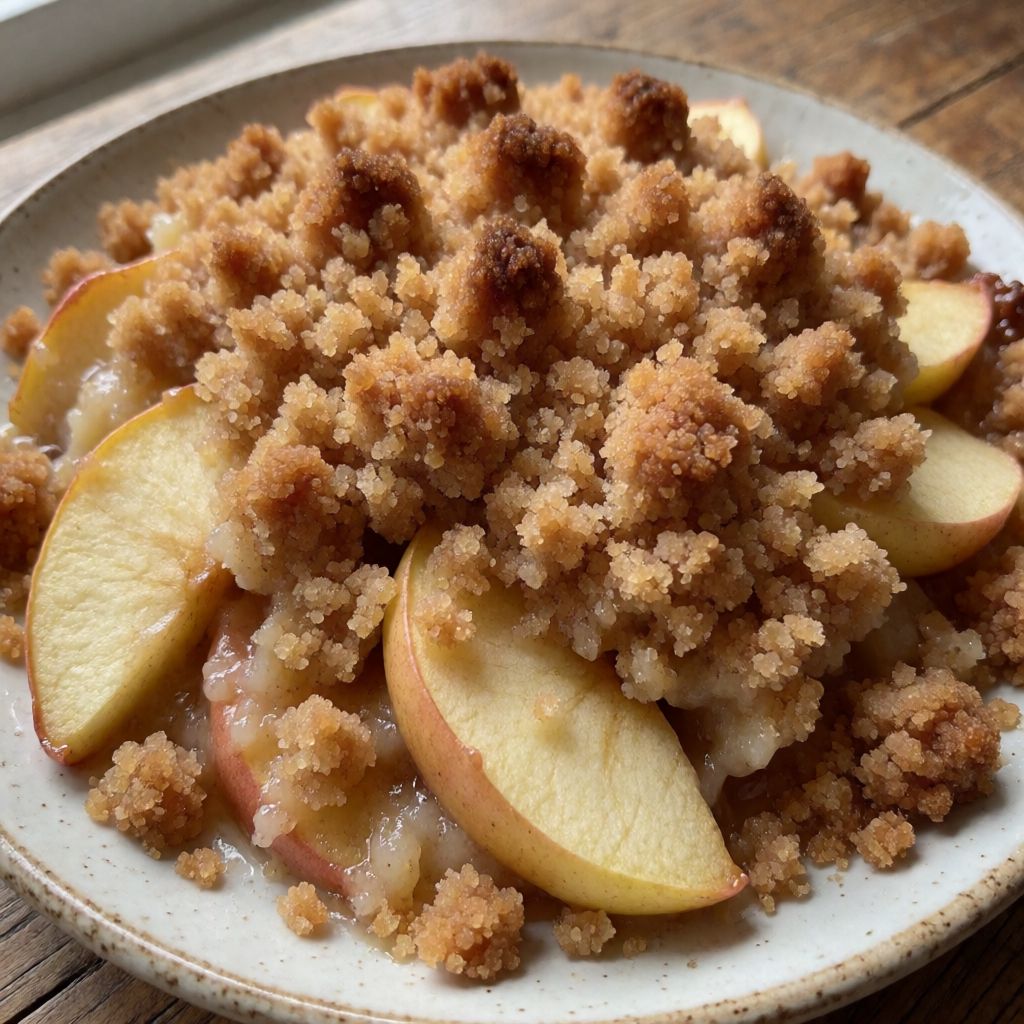
Cinnamon-Scented Apple Crumble
A comforting apple crumble with a hint of cinnamon, topped with a buttery crumbly topping.
Labels are worked out automatically from the ingredients and can be wrong. Check the packaging if it matters to you.
Ingredients
- 200 g Plain Flour
- 100 g Sugar
- 1 tsp Vanilla Extract
- 130 g Butter
- 600 g Apple
- 70 g Brown Sugar
- Lemon Juice
- Lemon Zest
- Cinnamon to taste









Steps
Put the flour and sugar into a large bowl. Add the butter, cut into cubes, and the vanilla extract.
Rub the ingredients together with your fingertips until coarse crumbs form.
Put the crumble mixture in the fridge while you prepare the filling.
60 minPeel and dice the apples.
Add the brown sugar, lemon zest, lemon juice and cinnamon. Mix well.
Spread the apples in an even layer in the bottom of the baking dish.
Scatter the crumble mixture over the apples, covering them completely.
Bake the apple crumble at 180°C until golden.
30 minRemove from the oven, let cool slightly, and serve.
A crumble is really two mixtures that are never meant to merge: a dry, fatty rubble on top and a wet, sweet fruit underneath. What decides whether it works is whether that top layer stays a rubble right up until it goes in the oven. Rub butter into flour and sugar, and you want it to look like coarse breadcrumbs — some pea-sized, some finer, none of it a paste. The moment it starts clumping into a dough, you've made pastry by accident, and pastry baked loose on top of stewed apple turns into a flat, leathery biscuit, not a crumble.
The apples underneath do their own work. Dice them even, because uneven pieces cook unevenly — the small ones collapse to mush while the big ones stay raw at the core, and you end up with a filling that's both soupy and crunchy in the wrong places. Lemon juice isn't there for flavour alone; cut apples go brown the moment air hits the exposed flesh, and the acid slows that down while you finish prepping. The sugar and cinnamon are there to season fruit that, on its own, swings between tart and bland depending on the apple you bought.
Some say a crumble needs oats in the topping. No — that's a different, later invention, often American, added for crunch and thrift. The classic British crumble is just flour, fat, sugar, rubbed by hand. It exists at all because it's cheaper and faster than pastry: no eggs, no rolling pin, no blind-baking a case. Rationing-era cooks wanted a Sunday pudding that used flour and fat sparingly and apples that grew in every garden — the crumble was the lazy, economical cousin of the pie, and it's stayed that way.
Flour: plain, not self-raising. You're not after lift here, you want structure that holds its shape as crumbs, not a topping that puffs and softens like a scone. If self-raising is all you've got, it'll still work, just slightly cakier on top — not a disaster, just a different texture.
Butter: cold, cubed, straight from the fridge. The mechanism of "rubbing in" is simple — your fingertips coat flour in little pockets of fat without melting it, so in the oven those pockets of butter melt fast, releasing steam that keeps the crumb from compacting into a solid sheet. Warm butter skips straight to greasy dough. This is also why the recipe sends the mixture back to the fridge for an hour before you touch the apples — your hands have warmed it while rubbing, and it needs to firm up again before it meets a hot oven, or you'll get crumb that slumps and fries in its own fat instead of staying crumbly. Any fat that's solid at room temperature and firms up again when chilled will do the same job — a baking margarine works, though it tastes of less.
Sugar plays two different roles and that's why there are two kinds. White sugar in the topping crisps and lightly caramelises, giving you that gold crust. Brown sugar in the filling brings molasses notes that sit well with cooked apple and adds a little moisture, since apples alone can bake dry depending on variety.
Apples: 600 g for six people is a modest layer, not a deep one — this is a crumble with a thin, generous cap, not a fruit pie in disguise. Choose on texture, not brand: you want flesh that softens under heat but doesn't collapse to puree before the top has browned. A Bramley will break down further and fluffier; a firmer eating apple like a Granny Smith holds more shape. Either is fine — just know which one you're getting, because it changes whether your filling ends up as chunks or near-sauce.
Lemon zest does a different job from the juice — the oils in the zest carry aroma without adding liquid, so you get a lift of citrus without loosening the filling. Cinnamon is genuinely to taste, and that's not a cop-out: too much turns dusty and slightly bitter rather than warm, so add it in stages and taste the raw apple mix as you go, the way you'd season anything else.
Vanilla extract in the crumb is a small thing but worth keeping — it rounds off the raw-flour edge that plain crumble can have, especially if your butter is a mild one. And once it's out of the oven, give it the few minutes it asks for before serving. The juices are still thin and hot at that point; as they cool slightly, the natural pectin in the apple sets them just enough that a spoonful holds together on the plate instead of running everywhere. That's patience doing its quiet work, not a formality.