
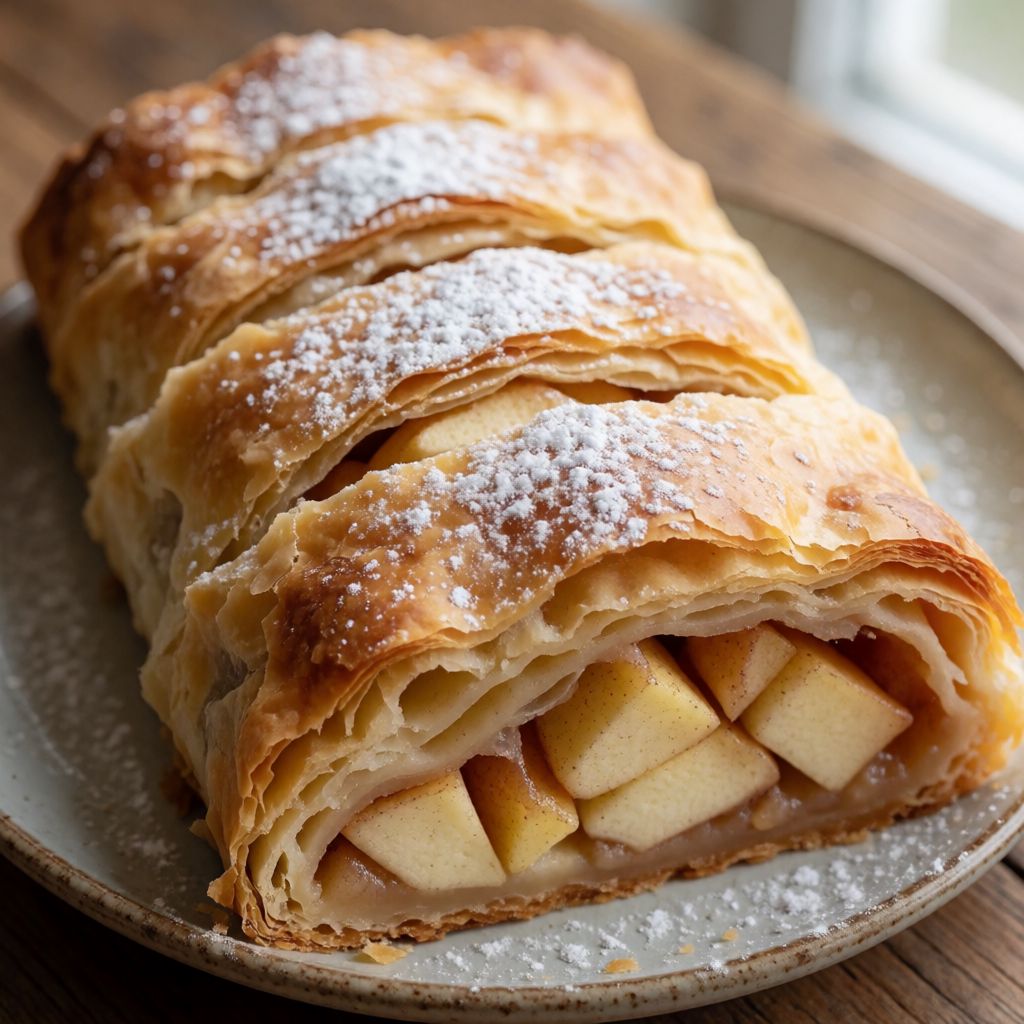
 AI photo
Apple Strudel
A classic apple strudel with raisins, pine nuts and cinnamon, wrapped in thin homemade pastry.
Labels are worked out automatically from the ingredients and can be wrong. Check the packaging if it matters to you.
Ingredients
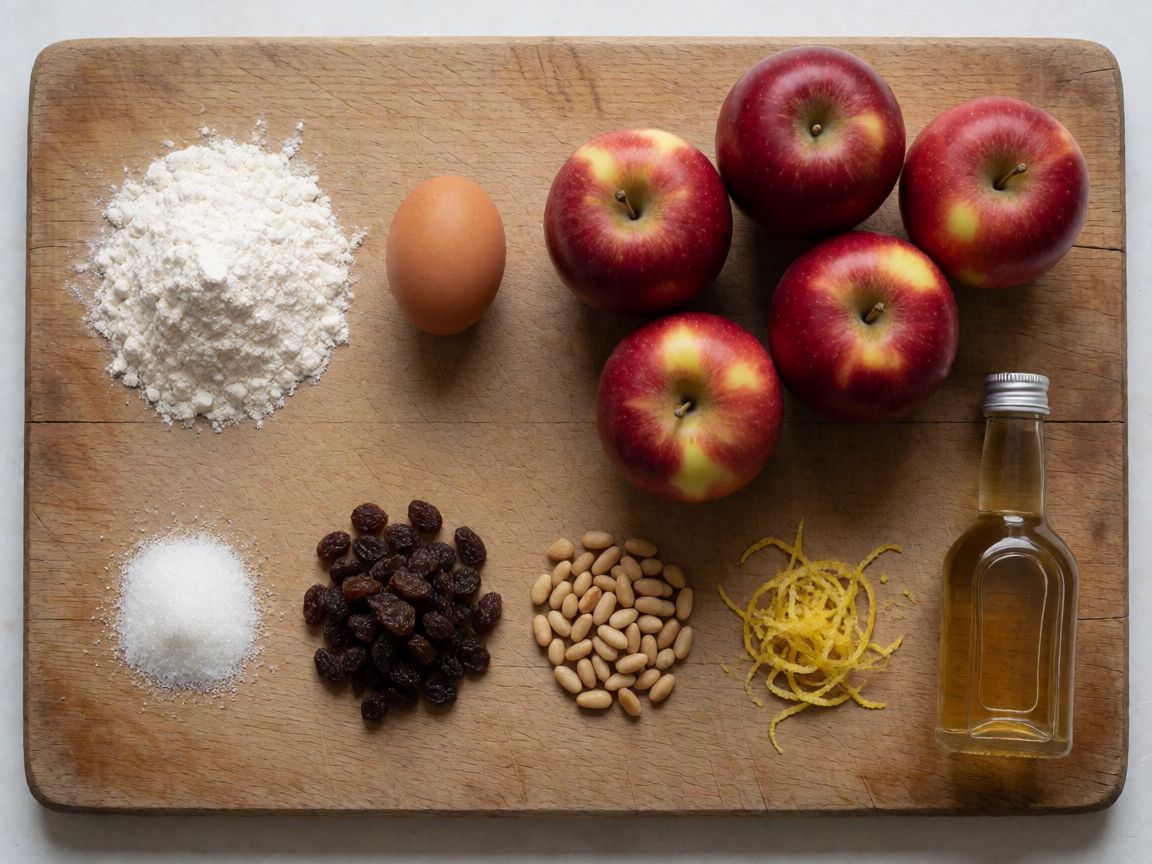
- 160 g Plain flour
- 1 pcs Egg
- 40 ml Water
- 1 tbsp Olive oil
- pinch Salt
- 5 pcs Apple
- 40 g Caster sugar
- 50 g Raisins
- 40 g Pine nuts
- 1 pcs Lemon zest
- 40 ml Rum
- pinch Cinnamon
- 50 g Butter
- 50 g Breadcrumbs dried
- 1 tbsp Icing sugar for dusting, to taste










Steps
Peel the apples, cut into small cubes and place in a bowl with the raisins, rum, lemon zest, sugar and cinnamon.
Mix the apple mixture and leave for 30 minutes.
30 minToast the pine nuts in a dry pan, let cool and add to the apple filling.
In a bowl mix the flour with the egg, water, olive oil and salt. Quickly knead into a smooth, even dough.
Transfer the dough onto baking paper and roll out with a rolling pin into a very thin rectangular sheet.
Brush the sheet with melted butter and sprinkle with breadcrumbs.
Spread the apple filling evenly, leaving a few centimetres free on each side.
Fold each edge of the dough inward and roll the sheet into a log from the short side.
Transfer the strudel onto a paper-lined baking tray, brush with butter and bake at 180°C for 30 minutes.
30 minContinue baking at 170°C for a further 25-30 minutes.
27 minLet the strudel cool for at least 3 hours, then dust with icing sugar and cut into slices.
180 min
A strudel is a logic problem before it's a pastry: how do you get a paper-thin sheet of dough to hold a kilo of wet fruit without turning to porridge at the seams. Everything in this recipe answers that one question. The dough is stretched until it's almost see-through — not because thin is elegant, but because a thick sheet would need longer baking, and by the time the inside cooked the outside would be leather. The breadcrumbs aren't decoration, they're a sponge: dry crumb sitting between pastry and apple juice, soaking up what the fruit weeps so the bottom doesn't go soggy. Lose that layer and you get a crisp top and a wet, collapsed base — every time.
The filling is a short macerate, not a cook. Half an hour with sugar, rum and lemon zest pulls juice out of the apple by osmosis, same principle as salting cucumbers for a salad — the cell walls give up water to the stronger sugar solution around them. That pre-drawn juice is exactly what the breadcrumbs are there to catch later. Skip the resting and the apple releases its water in the oven instead, straight into the dough, with nowhere for it to go.
Myth worth killing here: some say strudel dough needs yeast, like it's a bread. No — there's no rise in this dough at all, it's a lean, elastic dough closer to pasta than bread, and its whole job is to stretch without tearing, not to puff. That's what the egg and oil are doing in there — fat and protein for elasticity, not lift.
Flour, egg, water, oil, salt — that's the whole dough, and each one earns its place. Plain flour, nothing strong or "00" needed, because you're not after chew, you're after thinness; a weaker gluten network actually stretches more obligingly under your hands. The egg gives structure and a faint richness so the sheet doesn't taste like wallpaper paste. Oil — any oil with no smell of its own, so a neutral sunflower or light olive oil works, but skip anything that announces itself, like a peppery extra virgin — keeps the dough supple enough to pull thin without cracking. In a London kitchen, on an ordinary worktop with no kazan-sized table to stretch dough over, you won't get the translucent, newspaper-readable-through-it sheet some bakers manage. Accept that. Roll it as thin as your rolling pin and nerve allow, and if it tears, patch it — the folded edges and the log shape hide small sins.
Apples: you want ones that hold shape under heat rather than collapse to mush, something firmer and slightly tart — a Bramley will break down into a soft purée (lovely for pie, wrong here), so reach for something like Braeburn or Granny Smith instead, anything with backbone. The lemon zest isn't there for flavour alone — it also slows the apple's browning and cuts the sweetness, because sugar alone makes this cloying rather than pleasant. Raisins plumped in rum do double duty: the alcohol pulls moisture into them so they don't stay hard little pellets in the finished bake, and rum's warmth (you can swap in dark rum, brandy, or just more apple juice if you're keeping it dry) keeps the filling from tasting one-note sweet.
Pine nuts toasted dry in the pan, no oil — because they're already fat-rich, their own oil will release and toast them from inside once the pan's hot enough to make them smell nutty rather than just warm. That smell is your cue, not a clock. Let them cool before adding to the filling or they'll keep cooking in residual heat and go from gold to bitter, the same ginger-to-burnt line that catches out onions left one minute too long. No pine nuts in the cupboard — walnuts or almonds, chopped small, do the same job: textural contrast against soft fruit.
Butter brushed onto the dough before baking, and again partway through, is what gives you colour and shatter on the crust — butter browns through the Maillard reaction at a temperature plain dough brushed with nothing would just pale and dry out at. Icing sugar at the end is purely for the eye and a last hit of sweetness on the tongue; it has no structural job, so dust it only once the strudel's fully cool, otherwise it melts into sadness instead of sitting as a fine white coat.
On the oven: starting hotter (180°C) sets the pastry and starts the colour, then dropping to 170°C lets the inside finish cooking through without the crust going past gold into bitter dark brown. Judge it the way you'd judge anything baked in a British oven that runs its own slightly eccentric temperature — not by the clock on the wall but by colour: deep amber-gold, no paler, and firm when you tap it, not still soft and yielding like underbaked bread.
Feeds six as a proper pudding slice, more if it's just a cup of tea and a sliver alongside it — and tea with milk, if we're honest about what it'll be served with here, cuts right through the sweetness, same job the lemon zest is doing inside the strudel itself.