
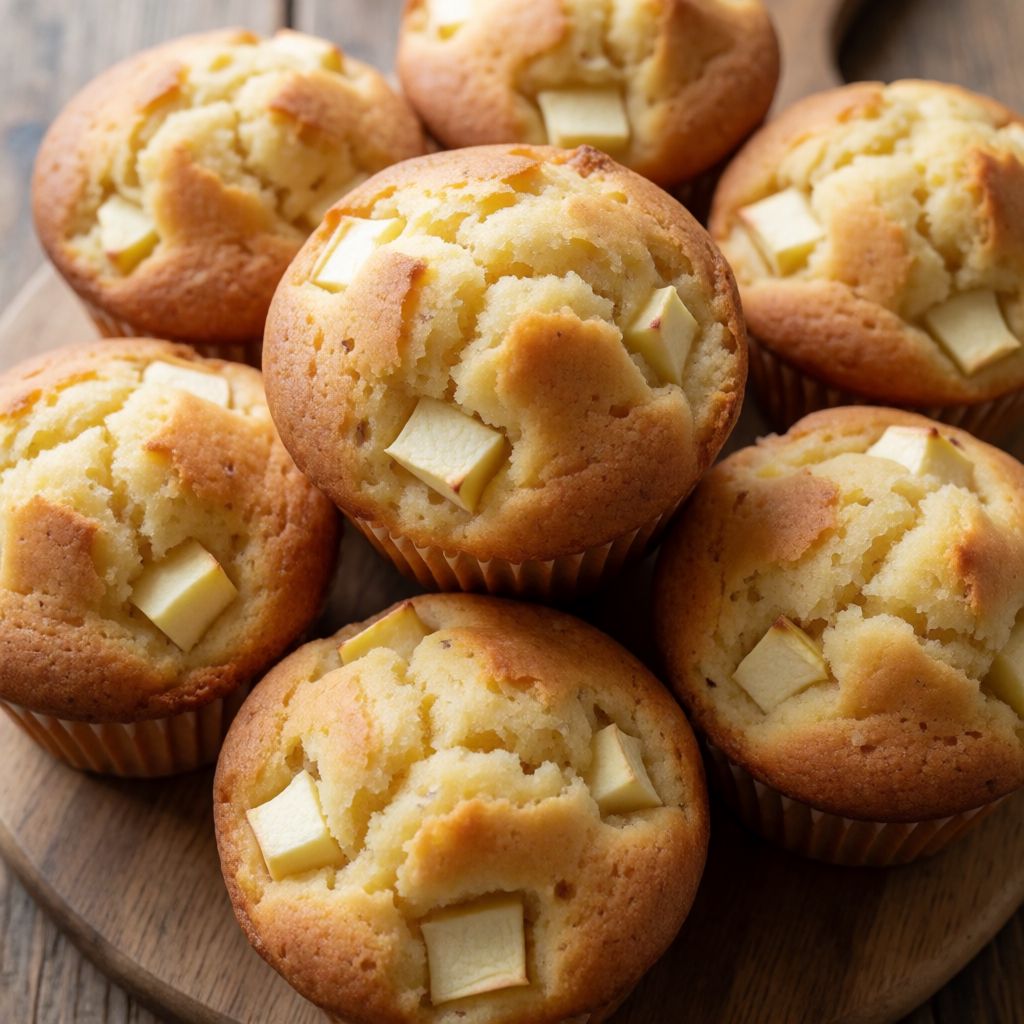
 AI photo
Apple and Yogurt Muffins
Soft muffins with apple and yogurt, topped with thin apple slices before baking.
Labels are worked out automatically from the ingredients and can be wrong. Check the packaging if it matters to you.
Ingredients
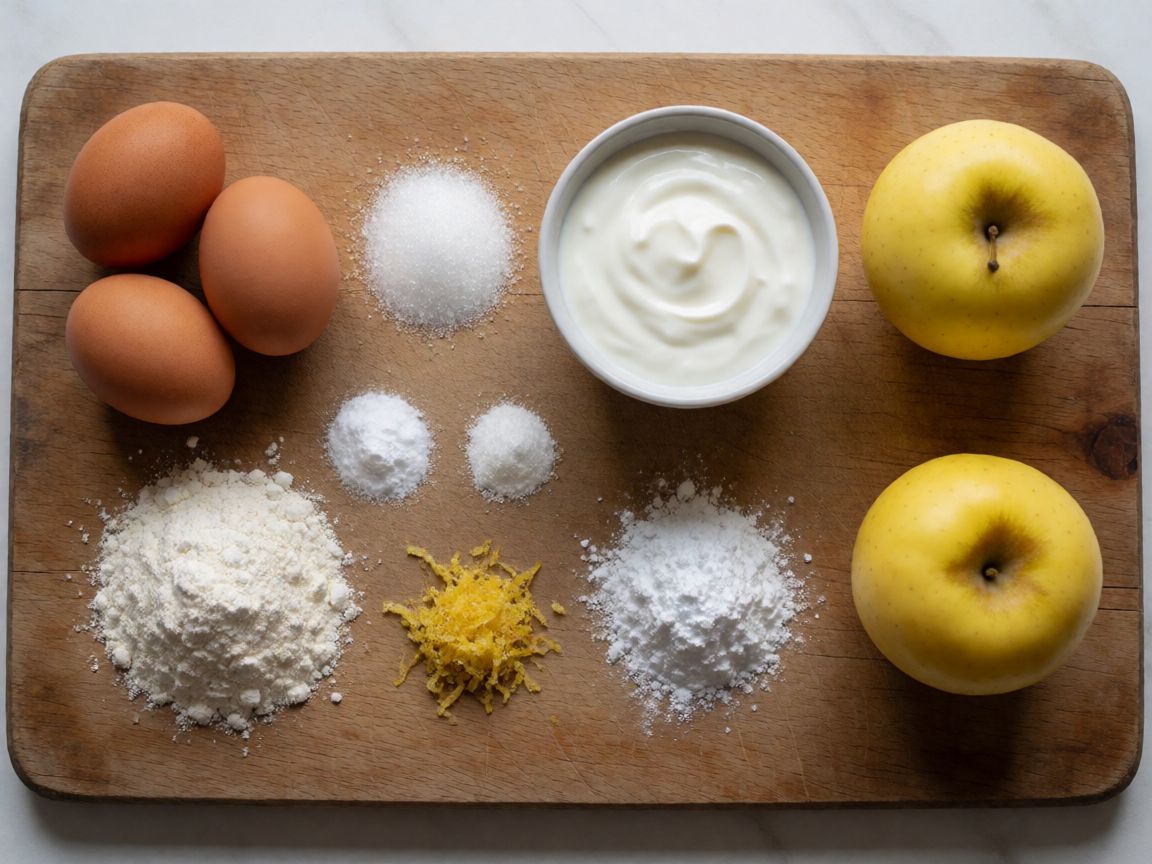
- 3 pcs Eggs
- 160 g Sugar
- 125 ml Yogurt
- 100 g Vegetable oil
- 250 g Flour
- 16 g Baking powder
- 1 pcs Lemon zest from an unwaxed lemon
- 2 pcs Apple Golden Delicious
- Icing sugar to taste









Steps
Crack three room-temperature eggs into a large bowl, add the sugar and beat with a mixer until light and fluffy.
Add the yogurt and vegetable oil, gently folding so the mixture doesn't lose its volume.
Add the lemon zest and mix in.
Sift the flour with the baking powder and fold into the batter, mixing gently until smooth.
Peel the apples, remove the cores and cut into thin slices.
Grease and flour the muffin tin (or line with paper cases), then pour in the batter, filling each only to about two-thirds full.
Arrange the apple slices on top of each muffin before baking.
Bake the muffins in an oven preheated to 180°C.
20 minServe once cooled, dusted with icing sugar.
A muffin is just a quick bread held up by baking powder instead of yeast — no waiting for anything to rise on its own, no kneading, no proving. That's the whole appeal: you mix, you pour, twenty minutes later you have something. What decides whether these work is air and gluten, and both are won or lost in the first two steps.
Beating the eggs and sugar until "light and fluffy" isn't decoration — you're whipping tiny bubbles into the mixture, and those bubbles are your only rising agent besides the baking powder. Fold in the yogurt and oil roughly, and you knock that air straight back out; the muffin bakes flat and dense instead of domed. Same reasoning applies to the flour: mix it in gently until just smooth, not vigorously — flour develops gluten the moment it meets liquid, and gluten makes bread chewy and muffins tough. A muffin wants tenderness, so you stop stirring the second the streaks disappear. People say "mix well to avoid lumps" — don't; a few small lumps in the batter cost you nothing, overmixing costs you the whole texture.
Filling the cases two-thirds full isn't caution, it's arithmetic: baking powder and trapped air both expand with heat, and a case filled to the brim has nowhere for that expansion to go except over the sides, onto your oven floor, where it burns and smokes. Two-thirds leaves room for the dome.
Golden Delicious holds its shape and stays mildly sweet rather than collapsing into mush — that's why it sits on top rather than inside. Any firm, not-too-sour apple does the same job; a British Cox or Braeburn is a fine stand-in.
180°C is the temperature at which the batter sets fast enough to lock in the air you whipped into it before it has time to escape, while the surface browns without the apple slices on top turning to leather. A domestic oven with a fan and a thermometer you trust is enough; there's no kazan or special vessel involved here, this is as ordinary as baking gets, which is exactly why it's a weeknight recipe and not a showpiece.
On the eggs: room temperature matters because cold eggs chill the fat in the butter or oil later and refuse to hold air as readily when whipped — this is the one place in the recipe where temperature genuinely changes the outcome, not just a habit someone repeated without asking why.
Sugar here does double duty: sweetness, yes, but also it's what you're creaming against the eggs to trap air in the first place — the crystals cut through the egg foam and help stabilise the bubbles. Don't swap in a liquid sweetener without rethinking the structure; you'd lose the whipping effect entirely.
Yogurt brings acidity and moisture without the raw egginess that plain milk can carry, and that acidity gives the baking powder something to react against for a cleaner rise — plain yogurt, not the sweetened kind, or a sour cream if that's what's in the fridge, thinned slightly.
Vegetable oil, not butter, is the choice because oil stays liquid at room temperature and keeps the crumb moist for days — butter would set firm as the muffin cools and the texture would turn drier, closer to cake. Use any oil with no smell of its own: sunflower, rapeseed (common enough in a UK kitchen already), not olive oil, which would announce itself where it has no business being tasted.
Baking powder, not yeast, because yeast needs time to work and muffins are built on the opposite premise — speed. Sift it with the flour so it's distributed evenly through the batter rather than clumped in one bite, which would give you one over-risen muffin and five flat ones.
Lemon zest from an unwaxed lemon — the wax coating on supermarket lemons isn't harmful in small amounts, but it carries no flavour and can leave a faint film; unwaxed or well-scrubbed is the real criterion, not brand loyalty.
Patience here isn't about long hours, it's about not skipping the beating step because you're in a hurry, and not opening the oven door in the first fifteen minutes "just to check" — every time you open it, heat drops and the dome you're building can sink before the structure sets. Let it finish its twenty minutes, then look: a skewer comes out clean, the apple slices have softened and caught a little colour at the edges. That's your cue, not the clock.