
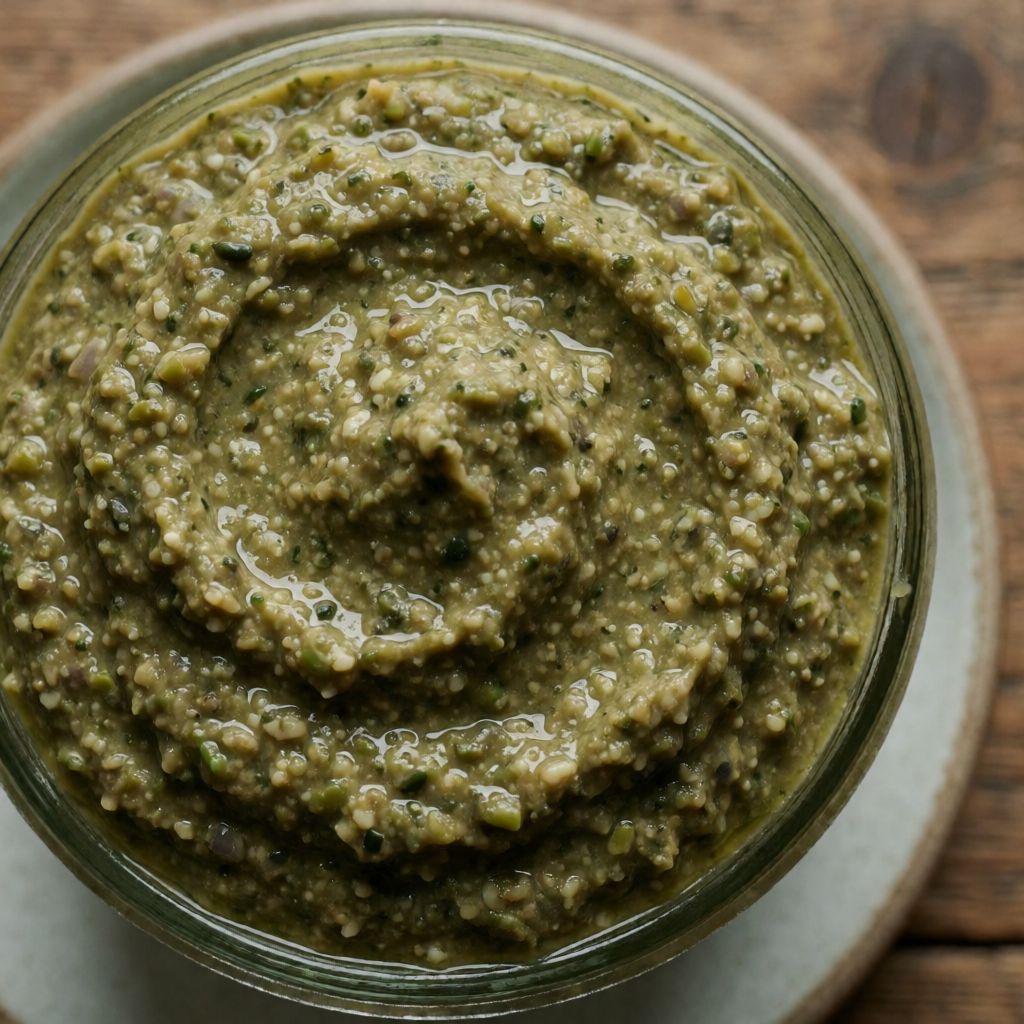
 AI photo
Asparagus Pesto
A fresh pesto made from lightly cooked asparagus, almonds and two cheeses.
Labels are worked out automatically from the ingredients and can be wrong. Check the packaging if it matters to you.
Ingredients







Steps
Wash the asparagus thoroughly and trim off the toughest, woody part of the stems, then slice it into rounds along with the tips.
In a pan, lightly sauté the shallot in olive oil, add the asparagus and cook for about 10 minutes until tender.
10 minTransfer the asparagus to a blender, add the almonds, pecorino, parmesan, salt, black pepper and a little olive oil, then blend until smooth.
Serve immediately with pasta, or transfer to a jar and keep for up to one day.
This is pesto in the old sense of the word — pestare, to crush — not basil's pesto specifically. The idea is simple: take something green, break it down with oil and hard cheese and nuts until it turns into a paste you can toss pasta in. Basil can take that crushing raw, cold, in a mortar, because a basil leaf is soft tissue, mostly water and essential oil cells that burst the moment you bruise them. Asparagus is a stem. Stems carry structural fibre, the stuff that holds the plant upright in the field. You cannot crush that cold and get anything but green string. So this version cooks the asparagus first — a shallot sweated gently, then the asparagus added and softened — and only then does it go into the blender. Same crushing logic, different physics.
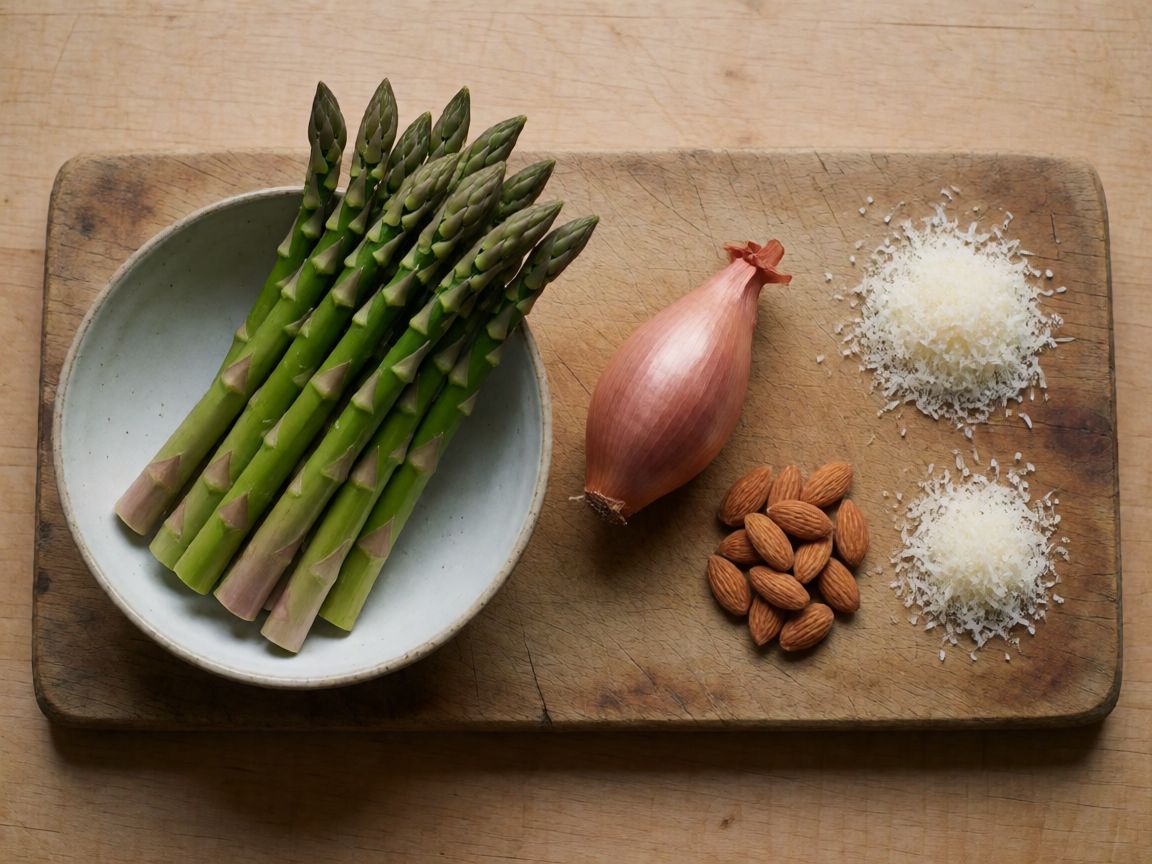
Asparagus: look for tight, closed tips and stalks that snap crisply when you bend them raw — a stalk that bends limp before you've bought it is already losing moisture and will give you a wetter, duller sauce. In the UK the honest native season is short, roughly May into June; outside that window you're buying imported spears, usually from Peru, which is not a tragedy here because the asparagus gets cooked down anyway and the sauce is forgiving of a slightly tougher import stalk in a way a simple steamed side dish isn't. 250 g is one generous bunch — enough sauce for four portions of pasta, not four portions of asparagus.
Shallot: the criterion is a mild allium with low water content, so it sweats down to sweetness quickly instead of flooding the pan with liquid that then has to cook off before anything softens. A shallot does this better than a large onion, which carries more water and a sharper raw bite that doesn't fully disappear in ten minutes. If you only have onion, use less of it and give it longer over gentle heat before the asparagus goes in — you're buying the same softness, just paying more time for it.
Almonds or walnuts: the job of the nut is fat and a little texture, something to help the paste emulsify rather than separate into oil and green grit. Almonds are the more neutral choice — mild, mostly fat, no bitterness to fight with the asparagus. Walnuts bring their own sharper, slightly tannic edge, which some people like against the grassiness and some find competes with it. Either works; the test is simply that the nut has enough oil in it to bind, so a very lean, dry nut is the wrong substitute.
Pecorino and parmesan together are doing a specific job, not just doubling up on cheese. Pecorino, made from sheep's milk and cured with more salt, gives the paste most of its seasoning. Parmesan, from cow's milk, is rounder and nuttier and softens that saltiness rather than fighting it. Use one without the other and you either under-season or overdo the sharpness. Both need to be a hard, aged, low-moisture cheese — that's the real criterion, because a soft or young cheese adds water instead of flavour and loosens a paste that should hold its shape on a fork. Grana padano is the honest stand-in for either if that's what's in the fridge, and a vegetarian hard cheese works the same way structurally if rennet is the issue.
Olive oil here isn't playing the usual silent role of a cooking fat with no opinion of its own — it's part of the final flavour, so use one with some character, not the cheapest neutral bottle. You want an oil you'd be happy to taste on its own, because in the blender you will.
And on keeping it: a day in a jar in the fridge is honest storage, not preservation. This isn't the kind of pesto sealed under a film of oil that keeps for weeks — the asparagus keeps oxidising, the green dulls further, and after a day it's past its best rather than improved by resting, the way some sauces are. Make it, use it that day or the next, and don't expect patience to reward you here the way it does with a stew. The patience in this one is spent earlier — in trimming properly and letting the shallot and asparagus actually soften before you reach for the blender.