
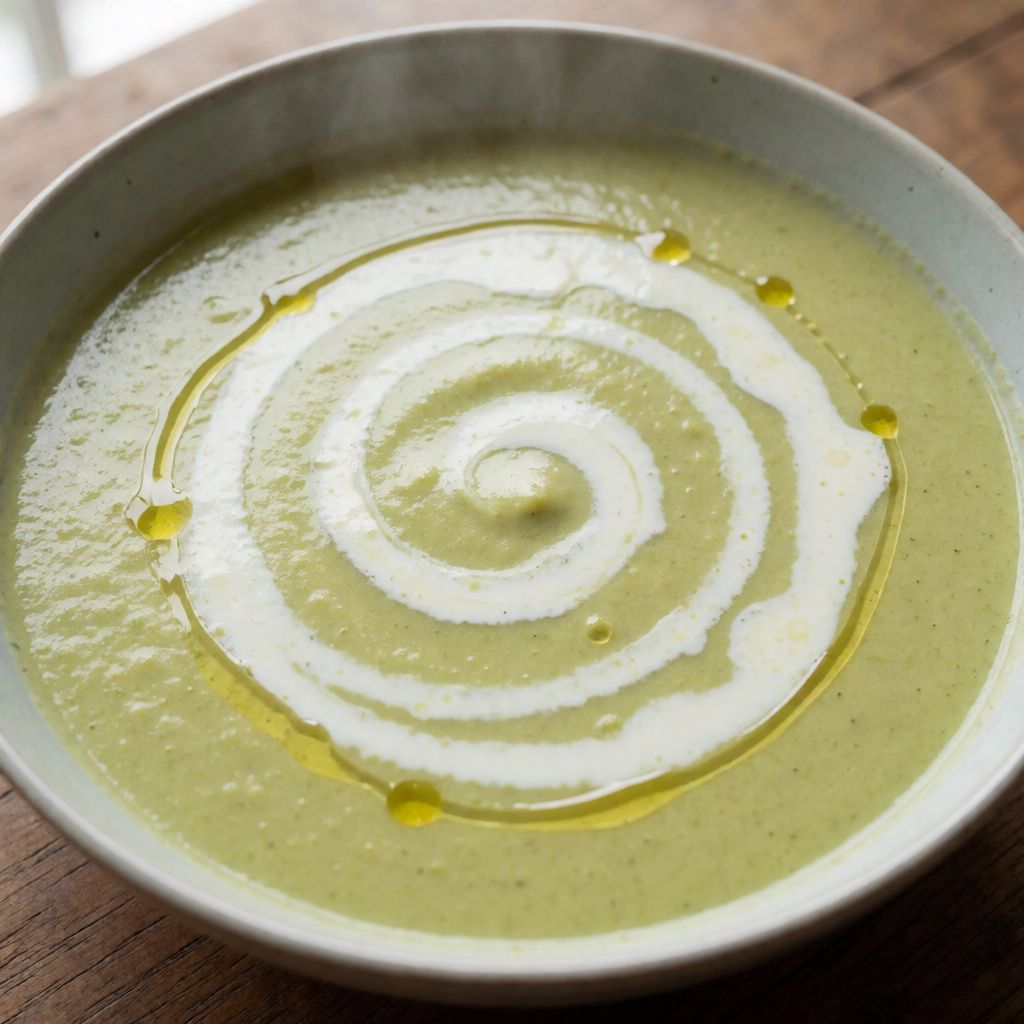
 AI photo
Cream of Asparagus Soup
A simple cream of asparagus soup, finished with crisp asparagus tips.
Labels are worked out automatically from the ingredients and can be wrong. Check the packaging if it matters to you.
Ingredients
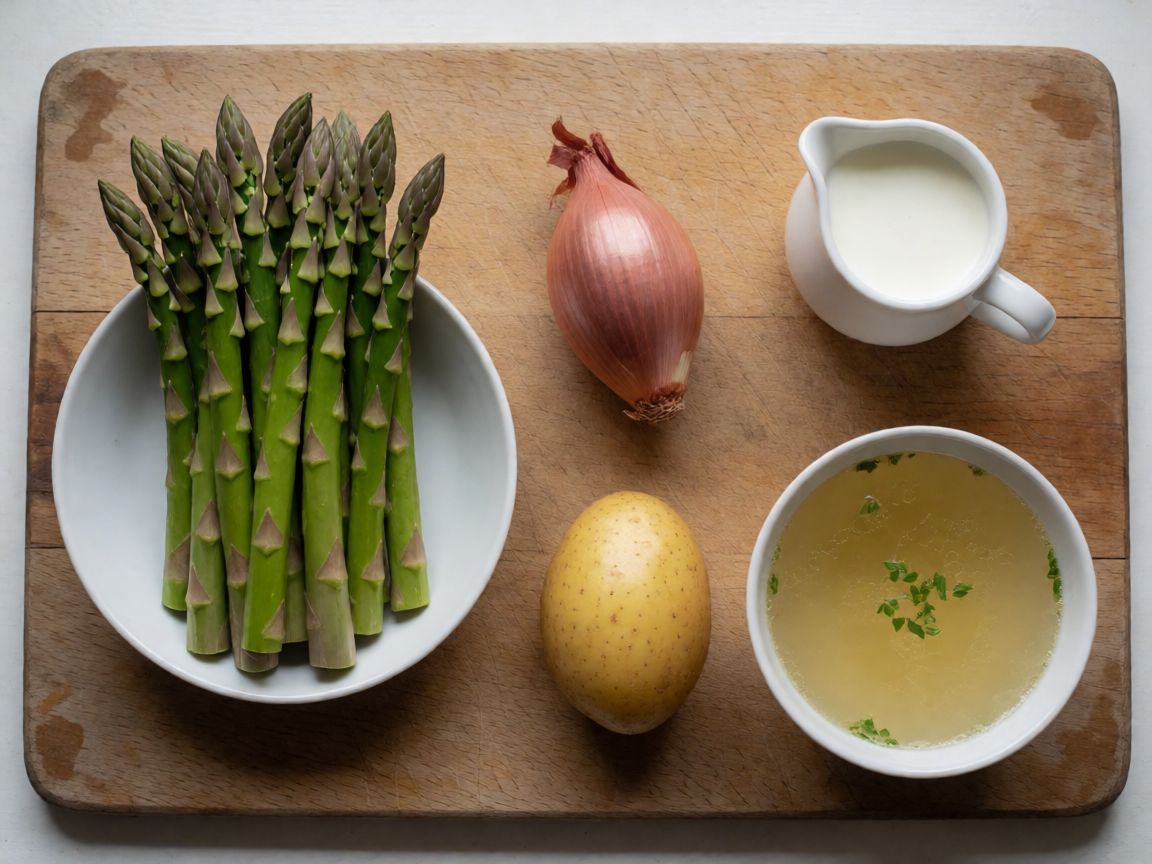
- 650 g Asparagus
- 1 pcs Shallot
- 1 pcs Potato
- Vegetable stock to taste
- Olive oil to taste
- 100 ml Cream
- Salt to taste
- Black pepper to taste








Steps
Make a vegetable stock in the traditional way with celery, carrot, onion and courgette, strain and set aside.
Rinse the asparagus, trim off the hard stem ends, peel the lower part and cut into pieces; set 12 tips aside separately.
Peel the potato and cut into pieces.
Pour olive oil into a pot, add the finely chopped shallot and sauté until translucent.
Add the potato, cook for a few minutes, then add the asparagus, season with salt and pepper and sauté.
Add the vegetable stock and cook until tender.
In a pan with a drop of olive oil, fry the reserved asparagus tips until crisp.
Transfer the cooked asparagus to a blender and blitz until creamy.
Pour the blended mixture back into the pot, add the cream, stir and warm through over a low heat.
Serve the soup, topping each bowl with three crisp asparagus tips.
Cream of asparagus soup is really two dishes layered in one bowl: a soft, spoonable purée underneath, and three crisp little green exclamation marks on top. The whole trick is keeping those two textures from ever becoming one thing. Everything else — the shallot, the potato, the stock — is there to make the purée taste of asparagus and nothing else, because asparagus on its own is thin and grassy and needs a backbone.
What decides whether it works is the potato, and most people get its job wrong. It isn't there for flavour — it's there for starch, to thicken the purée without you needing flour or a roux. Too little potato and the soup pours like water; too much and you're eating potato soup with a green tint and you've lost the asparagus. One medium potato for 650g of asparagus is already close to the ceiling.
The second decision point is the stock. Some say water would do — no, because asparagus stalks are mostly water and fibre, and a weak stock gives you a weak soup no blender can fix. A proper vegetable stock (celery, carrot, onion, courgette, simmered and strained) carries background sweetness the asparagus can lean on. If you haven't got time to make one, a good bought stock, not a cube dissolved in a mug of hot tap water, is the honest substitute — just taste it unsalted first, because this soup takes its seasoning from the stock as much as from the salt pot.
Asparagus itself splits into two ingredients the moment you look at it closely. The woody lower half, once peeled and trimmed, is where the flavour and fibre live — that's what goes into the pot to be cooked soft and blended. The tender tip is a different texture entirely, and if you throw it in with the rest and simmer it down to purée, you've wasted the one part of the vegetable that was never meant to go soft. Setting 12 tips aside at the start isn't fussiness, it's recognising that one vegetable is doing two jobs in this dish.
The shallot earns its place by being sautéed to translucent, not browned. This is the sweet, patient base under the soup — a shallot pushed to brown picks up bitterness and a sharper onion punch that fights the delicate asparagus flavour you're trying to protect. Any mild allium with a slow, gentle sauté works if shallot isn't to hand — a small white onion, cooked a touch longer and more gently, is the honest substitute; red onion or a big strong onion will shout over the asparagus.
The potato: one medium one, peeled, cut into pieces small enough to cook through before the asparagus overcooks. Its only job is starch — body without flour, without cream doing all the thickening work on its own. If you're out of potato, a small piece of parsnip or a few spoonfuls of cooked rice blended in will thicken similarly, though the flavour drifts further from clean asparagus the further you stray from potato.
The vegetable stock is the one step some cooks skip, swapping in plain water "to save time" — don't. Asparagus stalks, once peeled and trimmed, don't carry enough of their own savour to flavour a whole pot of liquid; the stock is doing half the seasoning before salt ever enters. If you're making your own, celery, carrot, onion and courgette simmered and strained gives you a clean, not-too-sweet base that doesn't compete with the asparagus. Bought stock is fine as a stand-in, but check the salt content before you season anything else, since a strong stock cube can oversalt a soup that's meant to taste gently green.
The cream goes in at the end, off the boil, over a low heat just to warm through — not because boiling cream is dangerous, but because hard boiling it after adding can split the fat and leave you with a greasy film instead of silkiness. 100ml for four bowls is a finishing touch, not a base; this is a vegetable soup wearing cream, not a cream soup wearing vegetables. If cream isn't wanted, a splash of whole milk or a spoon of crème fraîche stirred in off the heat gets you most of the same softness, with less richness.
Patience shows up twice here and both times it's invisible if you skip it: in sautéing the shallot slowly enough that it turns sweet rather than sharp, and in frying the tips hard and fast rather than gently, so they crisp at the edges instead of going limp and grey. A domestic hob won't give you kazan-level fierce heat for that second step — just use the smallest pan you have with the least oil, get it properly hot before the tips go in, and don't crowd them, or they'll steam each other soft instead of browning.