
 AI photo
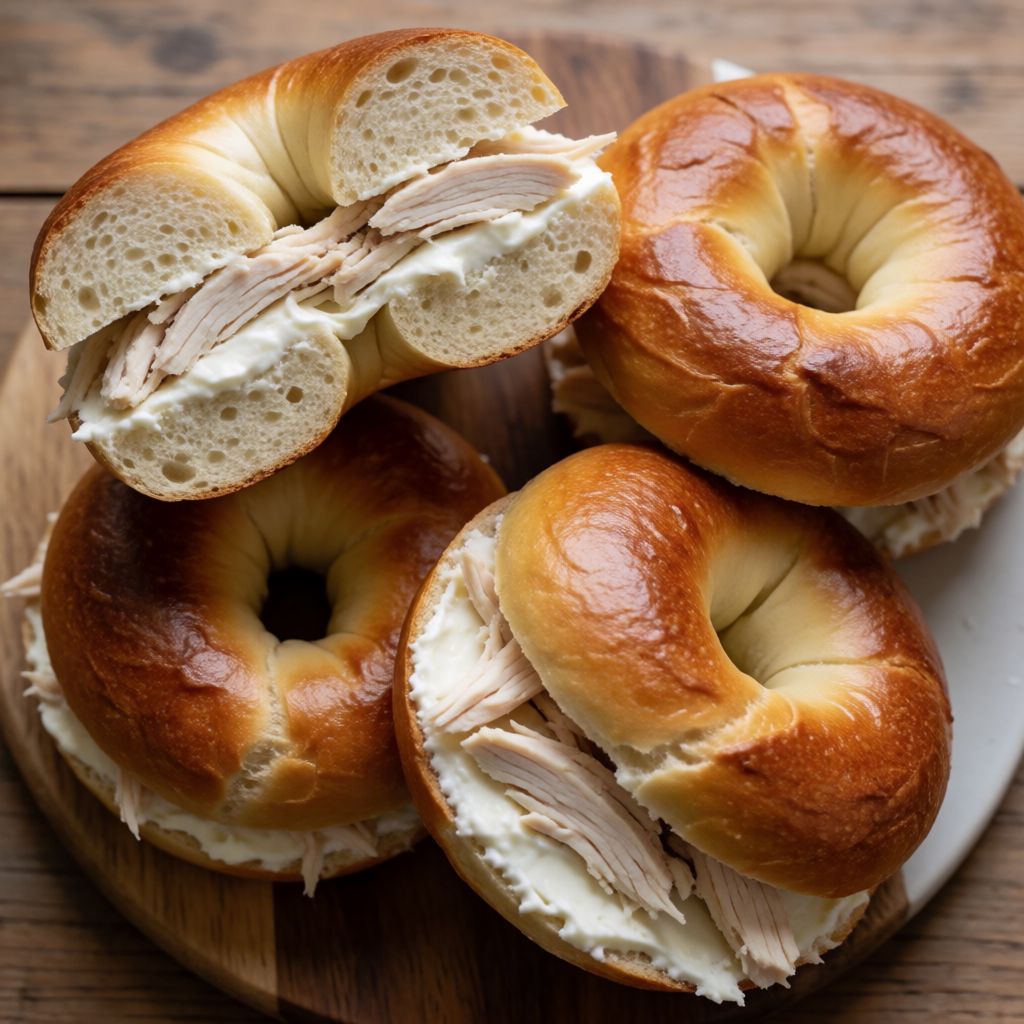
Homemade Bagels with Cream Cheese and Chicken
A simple recipe for homemade bagels filled with cream cheese, chicken and bacon.
Labels are worked out automatically from the ingredients and can be wrong. Check the packaging if it matters to you.
Ingredients
- 300 ml Water
- 25 g Yeast
- 2 tsp Sugar
- 1 tsp Salt
- 425 g Plain Flour
- 2 tbsp Olive Oil
- 1 pcs Eggs beaten, for brushing
- 2 tbsp Sesame Seeds
- 2 tbsp Pumpkin Seeds
- 400 g Chicken Breast
- 60 g Bacon
- 125 g Salad Mix
- 50 g Cream Cheese













Steps
Stir the yeast and sugar into the water. Add the oil, salt, then the flour.
Knead the dough on a floured surface or in a mixer for 7–8 minutes, until firm and elastic.
8 minPlace the dough in a clean oiled bowl, cover with a clean towel and leave to rise on the kitchen counter for 1.5 hours.
90 minTurn the dough out onto a floured surface and knock it back gently. Divide into 8 equal pieces.
Shape into balls and push a finger through the centre to make a hole, stretching the dough well so the hole is large enough.
Leave the shaped bagels to rise for 30 minutes on a sheet of baking paper. Trim the paper around each bagel.
30 minBring a large pot of water to the boil; the water should only just simmer.
Lower the bagels together with the baking paper into the water, one or two at a time. Remove the baking paper from the water.
Let the bagels cook in the water for about 1 minute.
1 minRemove the bagels with a slotted spoon, brush with egg, sprinkle with topping and place back on the tray.
Once all the bagels are boiled, bake them in the oven at 200°C for about 18–20 minutes.
19 minLet the bagels cool on a wire rack.
Place the chicken breast in a pot of boiling vegetable stock and cook for 15 minutes, until cooked through.
15 minFry the bacon in a pan until crispy.
Cut the bagels, spread with cream cheese and fill with salad, chicken and bacon.
A bagel is a bread roll that got boiled before it got baked, and that one extra step is the whole story. Everything else here — the cream cheese, the chicken, the crisp bacon — is sandwich filling, and good sandwich filling looks after itself. The bagel doesn't.
Boiling first does two things that baking alone never could. It sets the crust before the oven gets to it, so instead of a soft bread skin you get that tight, slightly chewy shell — the thing that makes a bagel a bagel and not a bread roll with a hole. And it gelatinises the starch on the surface fast, which is why the glaze takes the egg wash and seeds so well and doesn't just flake off after baking.
Some say you need lye or malt syrup in the water for a "proper" New York bagel. No — that's a flavour and colour choice bakeries make at scale, not a mechanism your kitchen needs. Plain simmering water does the structural job perfectly well; what you lose is a faint malty tint, nothing more.
What decides whether the whole thing works is restraint in two places: don't let the dough overproof before it hits the water, and don't let the water boil hard. Get either wrong and the bagel deflates or turns waterlogged, and no amount of chicken and cream cheese fixes a bad base.
Start with the water temperature for the boil, because it's the step most home cooks get wrong by instinct. "Bring to the boil" in the method means get it there, then back it off to a bare simmer — the surface should shiver, not churn. A rolling boil knocks the air out of the dough and you get a dense, flat ring instead of one with a bit of spring. One minute in that gentle water is enough; any longer and the crust turns rubbery rather than chewy, because you're cooking further into the dough than you need to for the crust effect you're after.
Yeast and sugar going into the water together isn't tradition, it's just feeding the yeast something it can use immediately — sugar is simple enough to eat without the yeast having to wait on the flour to break down first. You'll see it start to foam a little; that's your sign it's alive, which matters more with fresh yeast like this than the dried kind, because fresh yeast loses potency faster and you want to catch it working.
The flour needs to be a plain one with enough gluten to hold a chewy crumb and support the hole without collapsing — bread flour if you have it, plain flour is fine too since that's what the recipe calls for and British plain flour sits reasonably high in protein already. What you don't want is a soft cake flour; the dough will be slack and the hole will close up on you during the second rise.
Kneading for those 7–8 minutes isn't about the clock, it's about the dough stopping being sticky and starting to resist you — pull it and it springs back rather than tearing. That's gluten doing its job, and it's what lets you stretch a finger-sized hole without the dough just snapping shut again, which is the usual complaint people have ("my bagels turned into rolls"). It's not a shaping failure, it's an under-kneaded dough.
The olive oil in the dough and the oiled bowl for rising are both about the same defect: dough skinning over and drying out, which gives you a tough outer layer baked right into the crumb. Any neutral or mild oil does this fine — you don't need olive oil specifically, just something that coats without fighting the flavour.
For the filling, the chicken breast poached in stock rather than roasted is the quieter, leaner choice — good for a bagel because it won't compete with the egg wash and seed crust, and poaching keeps it moist without you having to watch it like a Sunday roast in the oven. Bacon fried until crisp is there for contrast — the one crunchy, salty thing in a sandwich otherwise built from soft bread, soft cheese and soft chicken. Cream cheese plays the same role mayonnaise would, but it won't split or thin out the way mayonnaise can against warm chicken, and it holds the salad leaves in place rather than letting them slide out the side.
And patience is doing real work twice here — the 90-minute bulk rise and the 30-minute second rise aren't padding, they're the yeast actually building the structure that boiling water later sets in place. Rush either one and you're boiling a dough that hasn't got there yet, and no amount of time in the oven afterwards buys that back.