
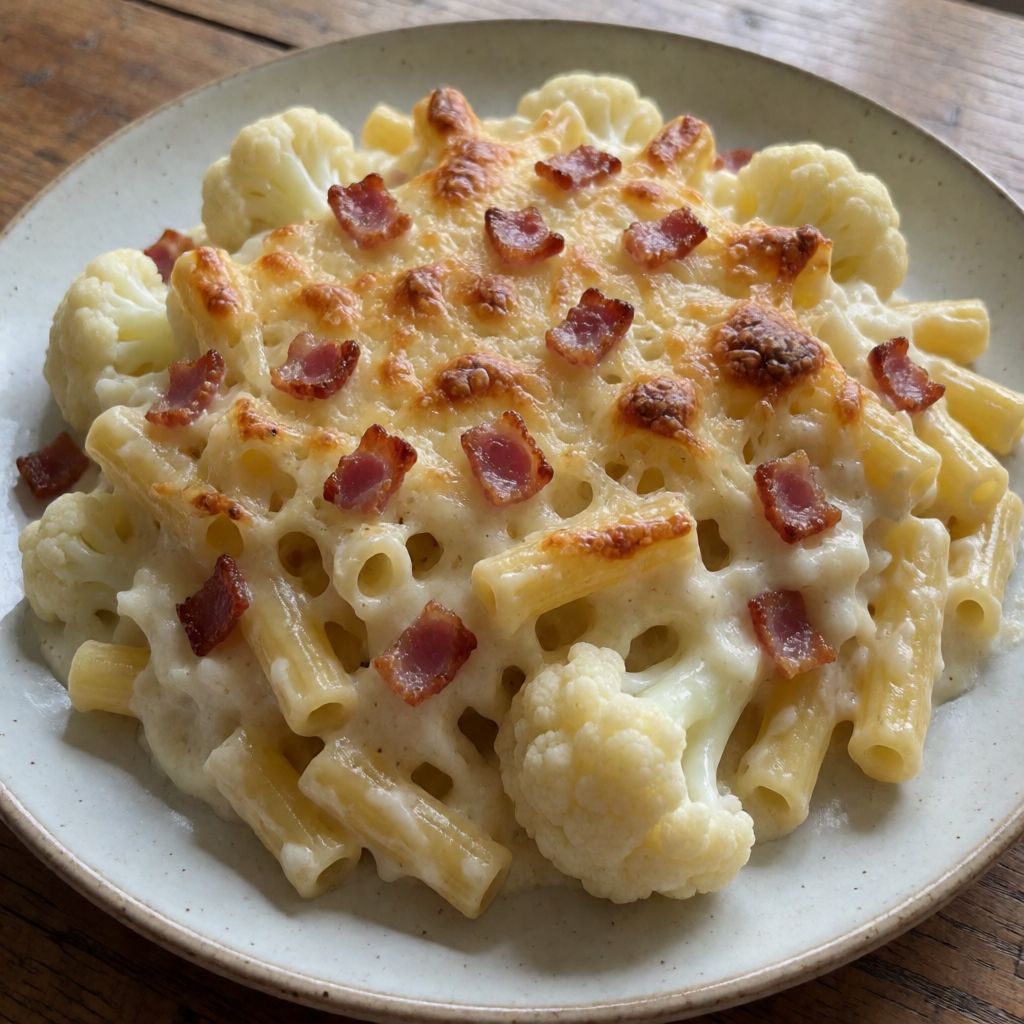
 AI photo
Baked Pasta with Cauliflower
A comforting baked pasta with cauliflower, béchamel and melted cheese, finished golden under the grill.
Labels are worked out automatically from the ingredients and can be wrong. Check the packaging if it matters to you.
Ingredients
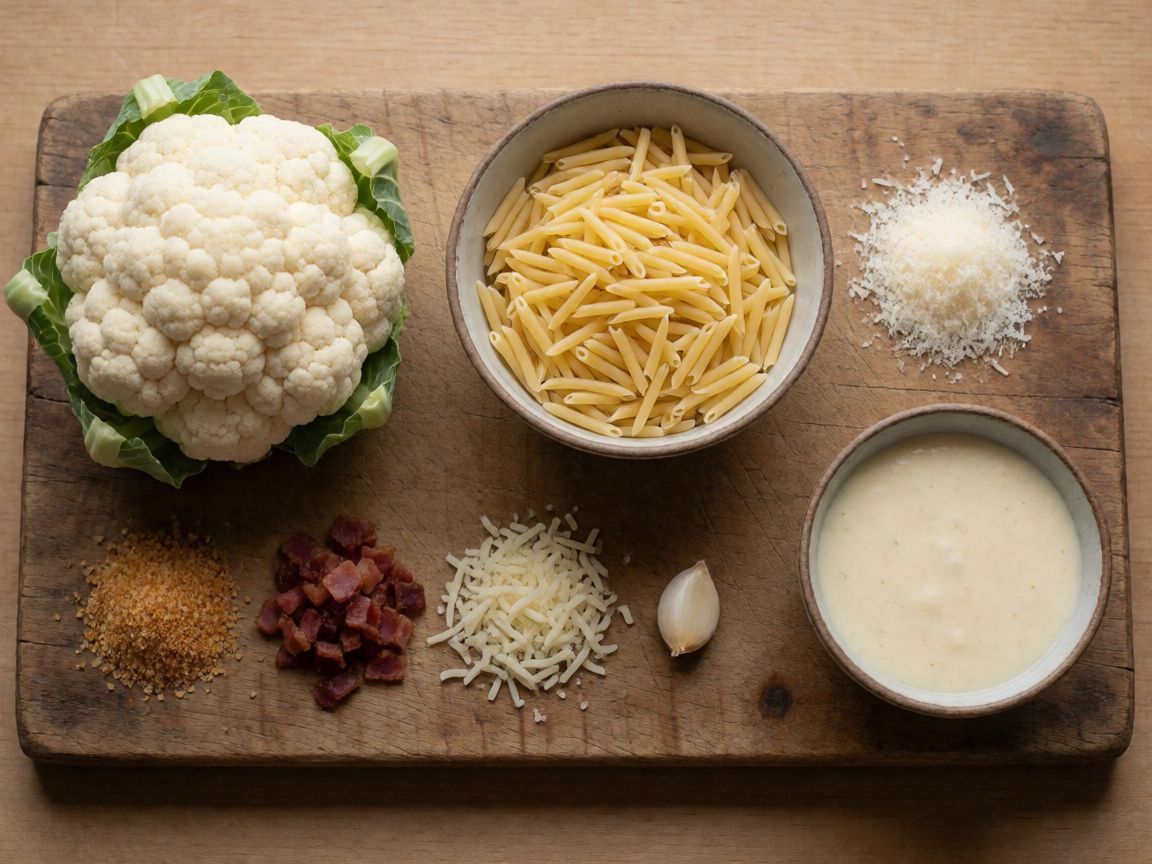
- 500 g short pasta
- 1 pcs cauliflower
- 600 ml béchamel sauce
- 50 g Parmesan
- 150 g bacon
- 300 g provolone
- breadcrumbs to taste
- 1 clove garlic
- 2 tbsp olive oil
- salt to taste
- black pepper to taste
- butter for greasing






Steps
Rinse the cauliflower thoroughly under running water, remove the leaves and cut into medium-sized pieces.
Steam the cauliflower in a steamer basket until tender enough.
10 minHeat the olive oil in a wide pan, add the crushed garlic and sauté for a few minutes, then remove it and add the cauliflower.
Sauté the cauliflower for a few more minutes, season with salt and black pepper.
Transfer to a bowl and mash into a cream with a fork or a stick blender.
Add the prepared béchamel and Parmesan, and mix until smooth.
Bring water to the boil, salt it and cook the short pasta al dente according to the packet instructions.
Drain the pasta and immediately combine it with the cauliflower and béchamel cream, then mix.
Add the diced provolone and bacon.
Grease a baking dish with butter and spoon in the pasta.
Sprinkle breadcrumbs and Parmesan over the top.
Bake in an oven preheated to 200°C on the grill setting until the top turns golden.
30 min
This is pasta pretending to be a gratin, and cauliflower pretending to be a vegetable course nobody has to feel virtuous about. The cauliflower is mashed into the béchamel, not left in florets, so what you get isn't "pasta with a side of cauliflower" but a sauce with a second backbone — starch from the pasta, cream from the béchamel, and a faint sulphurous sweetness from the cauliflower holding the whole thing together. Whether it works depends on three things: the cauliflower being cooked through but not waterlogged, the béchamel being thick enough to coat rather than pool, and the top getting proper direct heat so it browns instead of just warming through.
Some say baked pasta is just "pasta with cheese on top, in the oven." No — because a true bake has two layers of cooking doing different jobs. Everything inside the dish is already cooked before it goes in: pasta al dente, cauliflower sautéed and mashed, béchamel made. The oven's only job is the surface — melting the provolone, toasting the breadcrumbs, catching the Parmesan into a crust. If you treat the oven as the place where the dish "finishes cooking," you'll either dry out the pasta waiting for the top to colour, or pull it too soon with a pale, sweaty surface.
The short pasta matters more than the type. You want something with a hollow or a ridge — penne, rigatoni, fusilli — because the cauliflower-béchamel is a thick sauce, not a thin one, and it needs somewhere to sit rather than sliding off. A smooth tube or a flat shape will leave you with sauce pooling at the bottom of the dish and dry pasta on top. If you only have spaghetti in the cupboard, don't force it here — it'll clump.
Cauliflower is the one ingredient you can't really swap without changing the dish's identity, but if you're buying a sad, bruised specimen, broccoli will behave almost the same way structurally — it mashes and binds the same, just with a greener, more mineral flavour. What you're actually after is a vegetable that goes creamy under a fork, not fibrous.
Béchamel at 600 ml for 500 g of pasta plus a whole cauliflower is a generous ratio — this is meant to be a wet, bound bake, not a dry one. If your béchamel comes out thin (too much milk, not enough time over the heat), it will run to the bottom of the baking dish during cooking and leave the top dry while the base turns to soup. The fix isn't more flour stirred in raw — that just gives you lumps — it's patience: let it reduce gently before you add it to the cauliflower, so it holds a line when you drag a spoon through it.
Bacon here is doing a seasoning job, not a protein job — it's diced small and scattered through, so its smoke and salt turn up in bites rather than dominating. Streaky bacon, the kind you'd use for a fry-up, renders more fat and gives more flavour per gram than back bacon; if you're using British back bacon because that's what's in the fridge, that's fine, just know you're losing some of the smokiness the dish is built around.
Provolone and Parmesan are doing two different jobs and shouldn't be confused. Provolone, diced and stirred through, is there to melt and go stringy inside the bake — it's the texture you bite into. Parmesan, grated over the top with the breadcrumbs, is there to brown and crisp — it's too hard and too dry to melt the same way inside. If you've only got a block of mild cheddar, it'll melt fine inside as a provolone substitute, but it won't give you the same pull; for the top, any hard, aged, low-moisture cheese — a mature Cheddar, a Grana Padano — will crisp the way Parmesan does, because what matters for browning is low moisture, not the name on the wrapper.
The breadcrumbs aren't decoration — they're there to give the grill something dry to catch and colour quickly, before the cheese underneath has a chance to turn leathery from sitting under heat too long. Stale bread, blitzed or rubbed through your hands, works better than fresh breadcrumbs, which hold moisture and steam instead of crisping.
This feeds six as a main course, which in practice in most flats means one wide dish won't fit a British domestic oven's grill element evenly — check the corners aren't still pale while the centre's dark, and rotate the dish if your grill runs hotter on one side, which most do.