
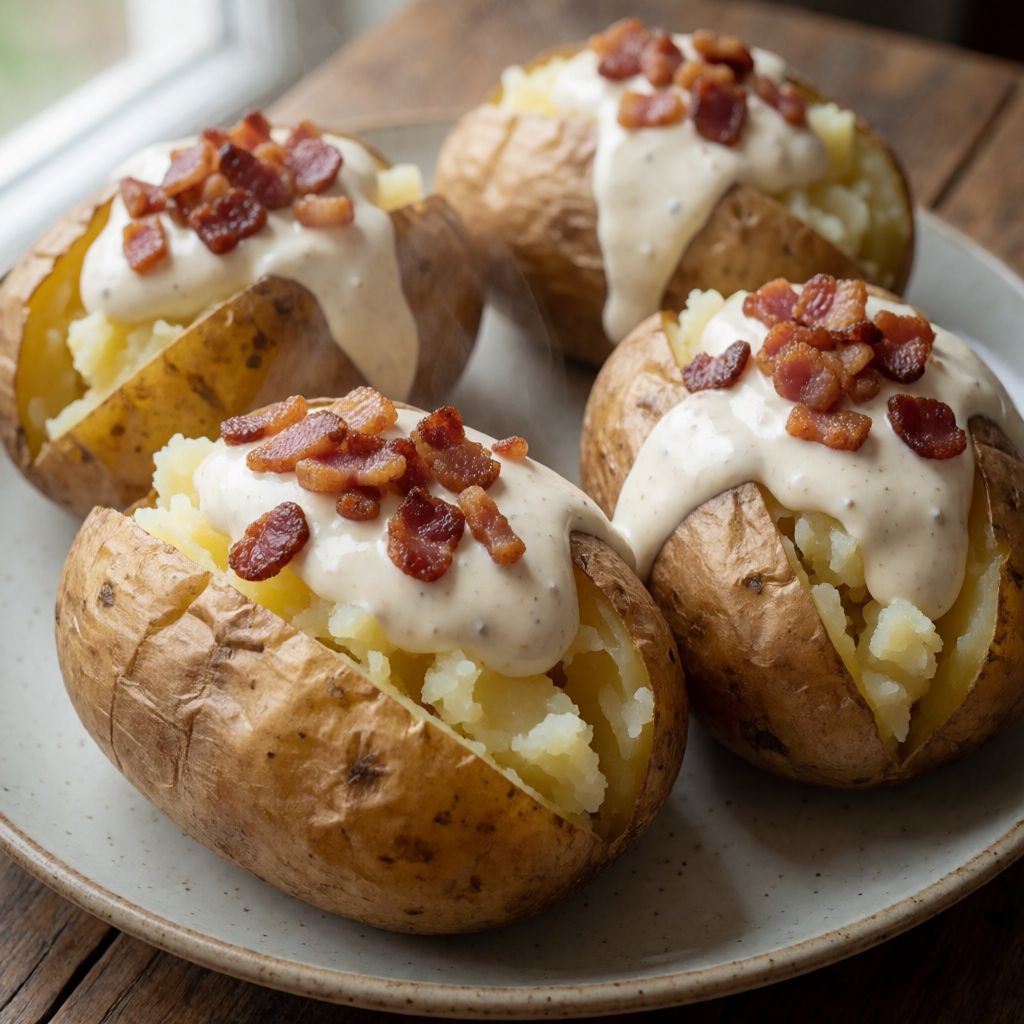
 AI photo
Baked Potatoes with Soured Cream Dressing and Apple Slaw
Crisp baked potato halves topped with a garlicky soured cream and bacon dressing, served with a fresh apple and cabbage slaw.
Labels are worked out automatically from the ingredients and can be wrong. Check the packaging if it matters to you.
Ingredients
- 1.5 kg Potatoes
- 200 g Bacon
- 1 tsp Olive oil for frying
- 0.5 pcs Lemon finely grated zest
- Salt
- Black pepper freshly ground






Dressing
- 500 ml Soured cream
- 3 clove Garlic crushed
- 2 bunch Chives finely chopped
- 2 bunch Parsley finely chopped
- 0.5 pcs Lemon finely grated zest
- Salt
- Black pepper freshly ground




Apple slaw
- 2 pcs Apples coarsely grated
- 300 g Carrots coarsely grated
- 1 pcs Pointed cabbage finely shredded
- 40 g Cranberries dried
- 25 g Sunflower seeds





Steps
Wash the potatoes and cut them in half.
Place on a baking tray lined with parchment, cut side up, brush with oil, sprinkle with lemon zest, salt and black pepper.
Bake in a preheated fan oven at 200°C for 30 minutes, or until tender.
30 minMix all the dressing ingredients (soured cream, garlic, lemon, salt, black pepper) and season well to taste.
Combine half the dressing with half the fried bacon.
In a bowl, mix the apples, pointed cabbage, carrots, cranberries and sunflower seeds, then add the second half of the creamy garlic dressing.
Mix well.
Arrange the baked potatoes, top with the creamy garlic and bacon dressing, and sprinkle with the remaining bacon and chives.
Serve with the slaw.
What was changed
Soured cream has been used instead of crème fraîche, the more familiar choice for UK shoppers.
This is a baked potato dressed up as dinner, not a side hiding next to one. The potato gets split and roasted cut-side up so the flesh — not the skin — takes the heat straight on, and that's the whole mechanism: a flat, exposed surface browns and dries while the inside steams itself soft under its own skin. Cut-side down and you just fry the bottom in its own trapped moisture — pale, slightly boiled, no character.
What decides whether it works is restraint in two places. First, size: halves, not wedges, because wedges lose too much surface tension and dry out before the centre softens — you want a potato that still fights back a little under the fork near the middle, then gives. Second, the soured cream dressing has to go on once, not twice — cold cream onto a hot, just-baked potato is an assault of temperature that the potato needs; dressing a lukewarm potato is damp and forgettable.
Some say roast potatoes mean oil in the tray, swimming — no, because here there's barely a teaspoon, brushed on, and that's deliberate. You're not confit-ing anything. A thin film does one job: stop the zest and pepper from blowing off and let the surface catch heat evenly, not deep-fry it.
Potatoes: anything floury works here, not waxy — a floury spud (your Maris Piper, King Edward, the usual Sunday-roast varieties in a British kitchen) has a drier, starchier structure that fluffs and catches at the edges rather than staying wet and dense. Waxy potatoes (new potatoes, salad types) will bake fine but come out closer to boiled — nothing wrong with that, just not this dish. Size the halves by eye: if a potato is fist-sized, 30 minutes is your floor, not your answer — the test is a skewer meeting almost no resistance in the thickest part, and the cut surface turning from wet-white to a dry, slightly golden crust at the edges.
Bacon: this is here for two different things at once — fat and crunch. Render it in a dry or barely-oiled pan until it stops spitting and goes quiet, which is the sound of the water finally cooking out of it; that's your real doneness cue, not a clock. Streaky bacon (fattier) renders more dressing-fat and crisps harder; back bacon is leaner and milder. No bacon in the house, or feeding someone who doesn't eat it — a handful of toasted nuts or crisp-fried mushrooms gives you the savoury crunch without the smoke.
Soured cream: full-fat, always — the fat is what carries the garlic and lemon flavour and stops the dressing splitting into something thin and sour-watery once it sits on a hot potato. If you can't get soured cream, natural yoghurt with a squeeze more lemon gets close, though it's sharper and thinner — add it a little at a time. The garlic goes in raw and crushed, not cooked — cooked garlic in a cold dressing turns bitter and loses its bite within the hour, so crush it last, straight into the cream.
Lemon zest, not juice, on the potatoes before roasting — juice would just steam off and do nothing at 200°C; zest is oil-bound citrus, it survives the heat and perfumes the skin instead of evaporating. In the dressing, the zest does double duty with the garlic: cuts the richness of the cream so it doesn't sit heavy, same logic as squeezing lemon over fish.
Apples and cabbage: grate the apple coarsely and use it close to assembly — cut apple browns within the hour from oxidation, nothing to do with freshness, just chemistry meeting air. A squeeze of the leftover lemon half over the grated apple, if you have one spare, slows that down. Pointed cabbage is chosen for being softer and sweeter than a round white cabbage — shred it finely because cabbage this raw needs maximum surface area to soften under the dressing's acidity in the time it takes you to plate up; a chunky cut just stays stubborn and raw-tasting. No pointed cabbage — any pale, tender cabbage will do, you're avoiding the tough, peppery dark greens here, not chasing a specific variety.
Dried cranberries and sunflower seeds are the one non-negotiable textural contrast in the bowl: without something sweet-sharp and something that crunches dry, the slaw is just wet shredded vegetables in cream, and that gets tiring by the third forkful. Any dried fruit with real tartness — dried cherries, chopped apricot — substitutes for cranberry; any seed or chopped nut substitutes for sunflower seeds, the job is crunch, not a specific flavour.
And patience, properly: the slaw wants a few minutes sitting in its dressing before it reaches the table, not because tradition says so, but because raw cabbage needs that short rest to soften at the edges without turning fully limp — serve it the second it's mixed and it's still a bit raw and squeaky; leave it an hour and it's gone soggy. A few minutes is the whole trick, and it's free.