
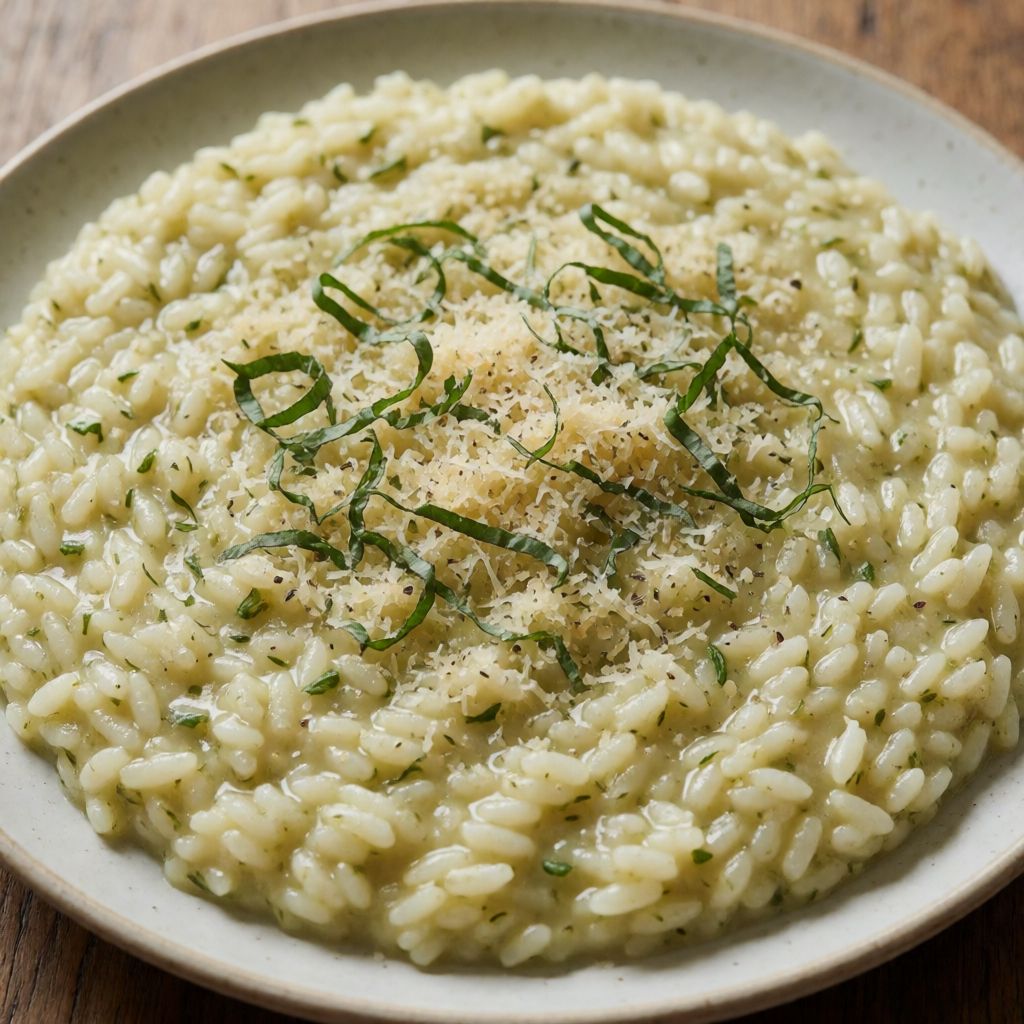
 AI photo
Basil Risotto
A creamy risotto finished with a fresh basil, walnut and parmesan paste.
Labels are worked out automatically from the ingredients and can be wrong. Check the packaging if it matters to you.
Ingredients
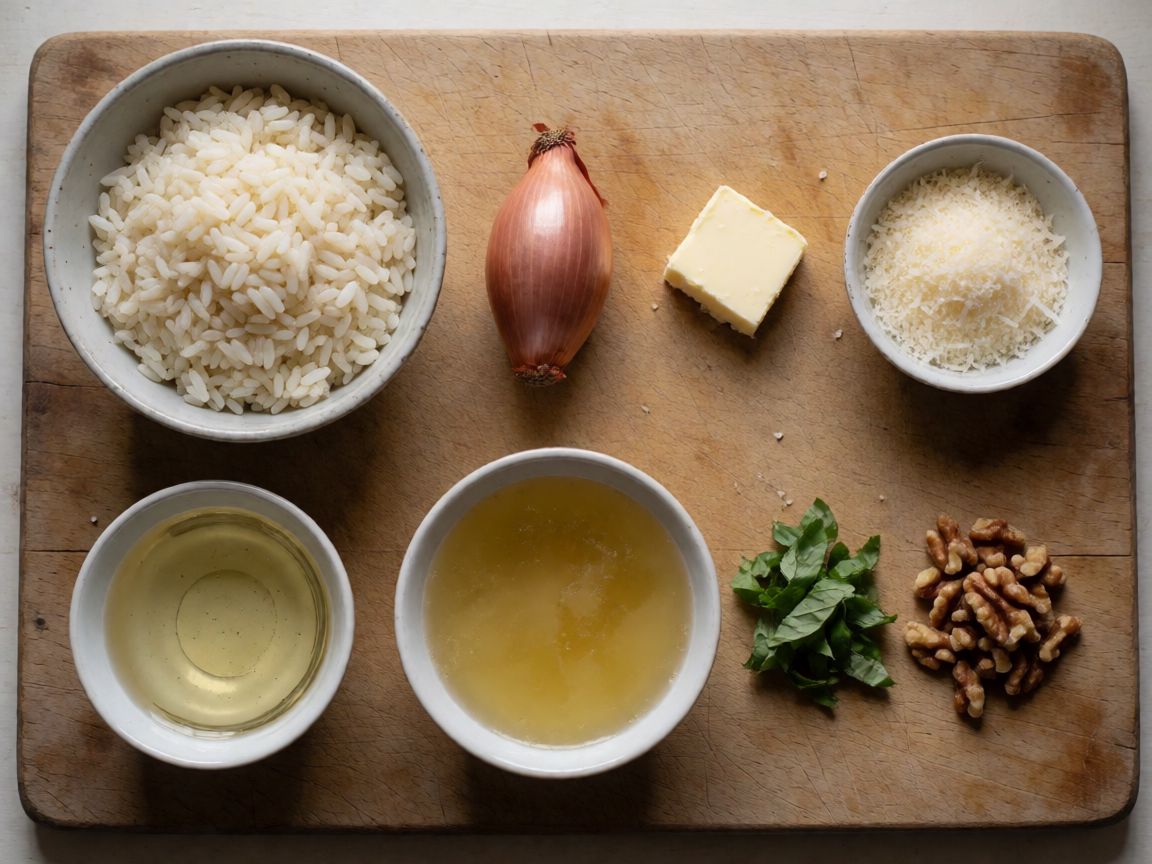
- 350 g Risotto Rice
- 1 pcs Shallot
- 10 g Butter
- Olive Oil to taste
- 1 tbsp Parmesan
- Salt to taste
- Black Pepper to taste
- 250 ml White Wine
- Vegetable Stock to taste
- 50 g Basil leaves
- 30 g Walnut
- 2 tbsp Olive Oil
- 1 tbsp Parmesan











Steps
Fry the shallot in olive oil in a pan.
Add the rice and toast it for a few minutes.
Pour in the white wine and let it evaporate completely.
Finish cooking the risotto, gradually adding the vegetable stock.
In a blender, combine the basil leaves with a pinch of salt, walnuts, parmesan and olive oil. Blend until smooth.
Adjust the salt to taste and stir in the basil paste.
Add black pepper and stir in the butter and parmesan.
Serve.
Risotto is not a rice dish you boil and drain — it's a dish you build starch around. Every grain of risotto rice (Arborio, Carnaroli, whatever's going) has an outer layer of soft starch and a firm core. Your job over thirty-odd minutes is to rub that outer starch loose into the liquid around it, so it thickens into a sauce that coats the rice, while the core stays with a bit of bite. That's the whole mechanism. Everything else — the toasting, the wine, the ladling — exists to make that happen properly.
The basil paste bolted on here is really a cold pesto without garlic, built to be stirred through hot rice at the end rather than tossed with pasta. Basil loses its brightness fast once heated — this is why you blend it raw and add it off the direct heat, after the stock stage, not during. Some cooks fry herbs into the sofrito at the start for convenience; don't, here, because basil cooked that long turns from green and peppery to dull and bitter-grassy, and you'll have spent real basil to get a flavour you could have gotten from dried.
What decides whether this works isn't the ingredient list, it's your attention at the stove. Risotto wants you standing there, stirring, topping up stock a ladle at a time, watching the liquid disappear into the rice before you add more. Walk away to check your phone and you'll either scorch the bottom or flood it and end up with rice soup. This is the one dish in the Italian repertoire that genuinely punishes multitasking.
Start with the rice itself, because it's not interchangeable with long-grain. You need a short, fat grain bred specifically to hold a lot of starch on its surface — Arborio is the one most UK supermarkets stock, Carnaroli if you find it (it holds its shape slightly better under a long stir). Basmati or easy-cook rice will not do this; they're bred for the opposite trait, to stay separate and fluffy, which is exactly what you don't want here.
The shallot goes in first and gently, in oil, not butter yet — butter burns at a lower temperature and shallot needs a few unhurried minutes to go soft and faintly sweet rather than harsh. You're not browning it, you're dissolving it into the fat so it disappears into the dish rather than sitting there as visible pieces. Toasting the rice afterwards, dry in that same fat for a couple of minutes, seals the grain's surface slightly — this is what stops it turning to mush the second liquid hits it, and it's also where you get a faint toasted-nut smell that tells you it's ready for wine.
The wine goes in and you let it vanish completely, not reduce by half. This matters because wine left unevaporated gives the finished risotto a sour, raw edge; cooked off fully, it leaves only acidity and depth, no bite. If you've no white wine open, a splash of dry vermouth does the same acidic job, or skip it and add a squeeze of lemon right at the end instead — don't substitute vinegar, it's too sharp and one-note.
Stock comes next, ladle by ladle, each one absorbed before the next goes in — this is the slow rubbing-loose of starch I mentioned. Use a hot stock, not cold from the fridge; cold stock shocks the pan back down in temperature and stalls the whole process while you wait for it to come back up, and risotto left half-hot for long stretches is when it clumps. Vegetable stock cube and boiling water is entirely fine — nobody at the stove is checking your stock's provenance, they're checking the rice.
Basil, walnuts, parmesan, olive oil, a pinch of salt, blended — that's your paste, and the proportions here (50g basil to 30g walnut) lean basil-forward rather than nut-heavy, so it stays green and peppery rather than tasting mainly of walnut fat. No walnuts, use pine nuts or a handful of blanched almonds; anything with enough oil content to blend smooth works. The second lot of parmesan and olive oil listed separately from the risotto's own parmesan and butter is not a typo — one batch flavours the paste, the other finishes the rice itself, and keeping them separate means you control salt and richness independently rather than guessing at a combined quantity.
On doneness: forget the clock entirely past the stock stage. Taste a grain — it should have given up its chalky raw-rice centre but still have the faintest resistance in the middle, not squash flat between your teeth. If it's still gritty, more stock, more time. If it's slumped and gluey, you've gone past it and no amount of butter saves it — that's the one true failure in risotto, and it's caused by inattention, not bad luck.