
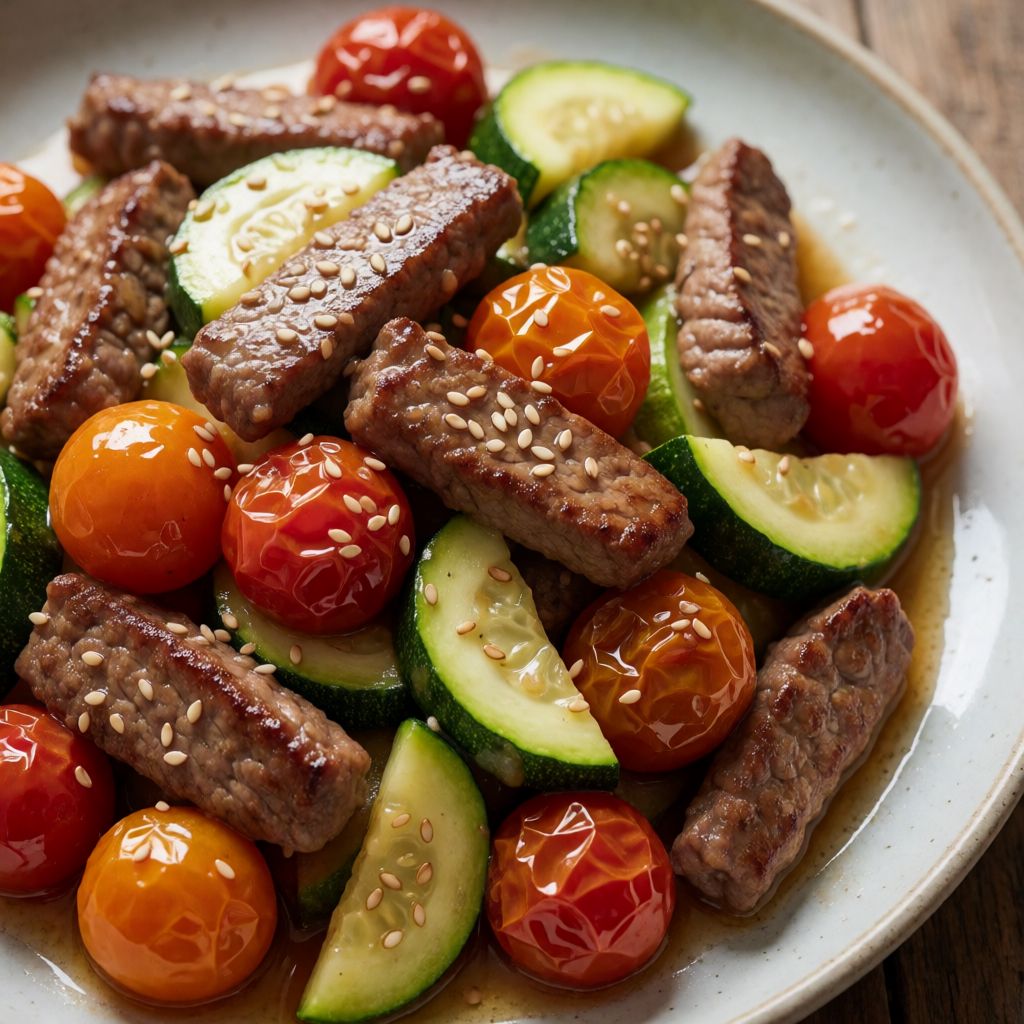
 AI photo
Beef Strips with Courgette and Cherry Tomatoes
A quick pan dish of beef strips with courgette and cherry tomatoes, finished with sesame and parsley.
Ingredients
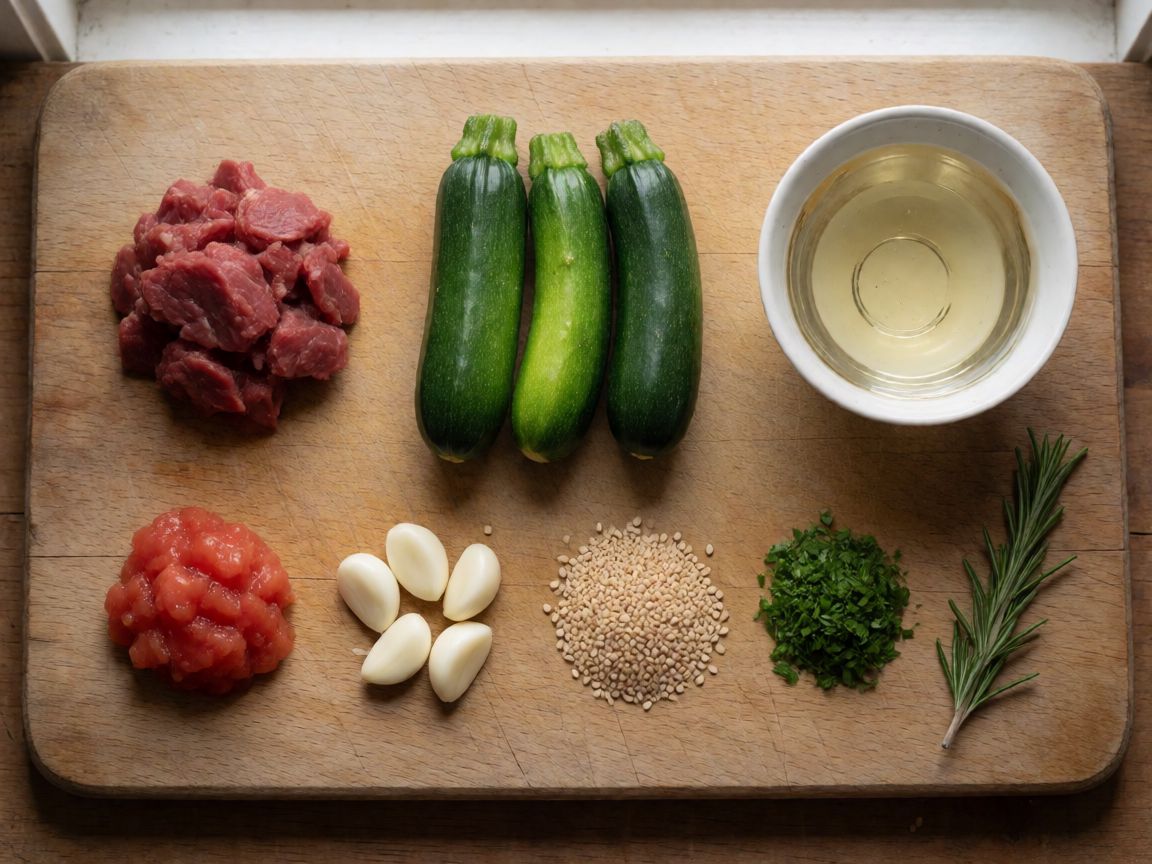
- 600 g Beef
- 3 pcs Courgette
- 300 g Cherry tomatoes
- 4 clove Garlic
- 120 ml White wine
- 2 tbsp Sesame seeds
- 1 tbsp Parsley chopped
- 1 pcs Rosemary
- Olive oil for frying
- Salt to taste
- Black pepper to taste









Steps
Wash and peel the courgettes, pat dry with paper towel and cut into pieces.
In a wide pan heat olive oil with a clove of garlic, add the courgettes and cook over high heat, stirring often.
Wash and dry the cherry tomatoes and cut them in half.
Add the tomatoes to the courgettes and cook over high heat, stirring or tossing often, until the courgettes are crisp and bright green.
Add salt and black pepper to taste, transfer the vegetables to a bowl.
Cut the beef into thin strips.
In the same pan add a little olive oil, rosemary and garlic; when they start to sizzle, add the beef and fry over high heat, stirring often.
5 minPour in the wine and let it evaporate, then add salt and black pepper to taste.
Add the vegetables to the meat and cook a little longer, stirring often.
Remove from the heat, add the sesame seeds and chopped parsley, stir and serve immediately.
This is a stir-fry wearing a Mediterranean coat — beef strips, courgette, cherry tomatoes, sharpened with wine and garlic, finished with sesame. The whole thing lives or dies on one word: high heat, kept high, from the first courgette to the last toss with the meat. Drop it to a gentle simmer and you don't get dinner, you get a vegetable stew with sad grey beef floating in it.
What decides it is water management. Courgette is basically a sponge full of water with a faint vegetable flavour attached. Thrown into a pan that isn't screaming hot, it stops frying and starts steaming in its own juice — that's how you get the soft, slightly slimy courgette everyone secretly dislikes but cooks anyway because "that's how it's done". Cooked right, it should still have some bite, that squeak of crispness, and a colour that stays green rather than fading to khaki.
The beef strips are a separate, faster fire. Thin-cut meat in a hot pan browns before it has time to leak its juices into puddle-water-grey liquid. That's the whole trick of "stir-fry" cooking, whatever country claims it: speed beats the meat to the moisture inside it.
Some say you should cook the vegetables and meat together from the start to "let the flavours mingle". No — because the vegetables release water as they cook, and that water lands straight on the meat, and boiled beef strips are a different, much sadder dish. Cook them apart, combine at the end: that's not fussiness, that's just physics with vegetables in it.
On a British hob, be honest with yourself about your gas or your induction ring. A kazan holds heat like a furnace; your widest frying pan on a domestic ring loses heat the moment you add anything cold and wet. This is why the recipe tells you to cook in batches — courgette first, out; meat second, courgette back in. Cramming everything into the pan at once is the single most common reason this dish turns watery: too much cold food dropped on a ring that can't recover its heat fast enough, so everything simmers instead of sears. Give the pan room to breathe, and give yourself the patience to do two passes instead of one shortcut.
Beef: 600 g for four people, cut into strips thin enough to cook through in the time it takes to brown the outside — if you can see daylight through a slice before you cook it, you're about right. Use a cut that doesn't need long cooking to go tender — sirloin, rump, flank sliced against the grain. Stewing beef, the kind that needs two hours in a Sunday roast gravy, will come out chewy here no matter how fast you fry it; tenderness in a quick cook comes from the cut, not from the pan.
Courgette: three medium ones, peeled and patted properly dry. Wet courgette in hot oil doesn't fry, it spits and then steams — dry it like you mean it. Cherry tomatoes bring acid and a quick burst of juice that, combined with the wine later, becomes the only sauce this dish gets — there's no stock, no flour, no thickening agent, so don't expect a British-style gravy clinging to the plate. It's a dry, bright dish, not a wet one.
Garlic and rosemary go into the oil before the meat, just long enough to flavour the fat, not to burn — burnt garlic is bitter garlic, and bitterness doesn't wash out. White wine goes in hot and needs to actually bubble off, not just sit there; you're cooking off the raw alcohol smell and leaving behind the acid that lifts the beef's fattiness. Any dry white you'd drink works; don't reach for a wine you wouldn't pour yourself a glass of, cooking doesn't hide a bad bottle, it just concentrates it.
Olive oil is there for frying with its own quiet taste, not a strong presence — any oil with no smell of its own and a tolerance for high heat will do, but olive oil's slight bitterness actually earns its place here against the sweetness of tomato. Sesame seeds and parsley go in only at the very end, off the heat — they're a last texture and smell, not an ingredient that benefits from cooking. Sesame toasted in the pan before serving is a ten-second job if you want more crunch out of it, but that's your call, not the recipe's demand.