
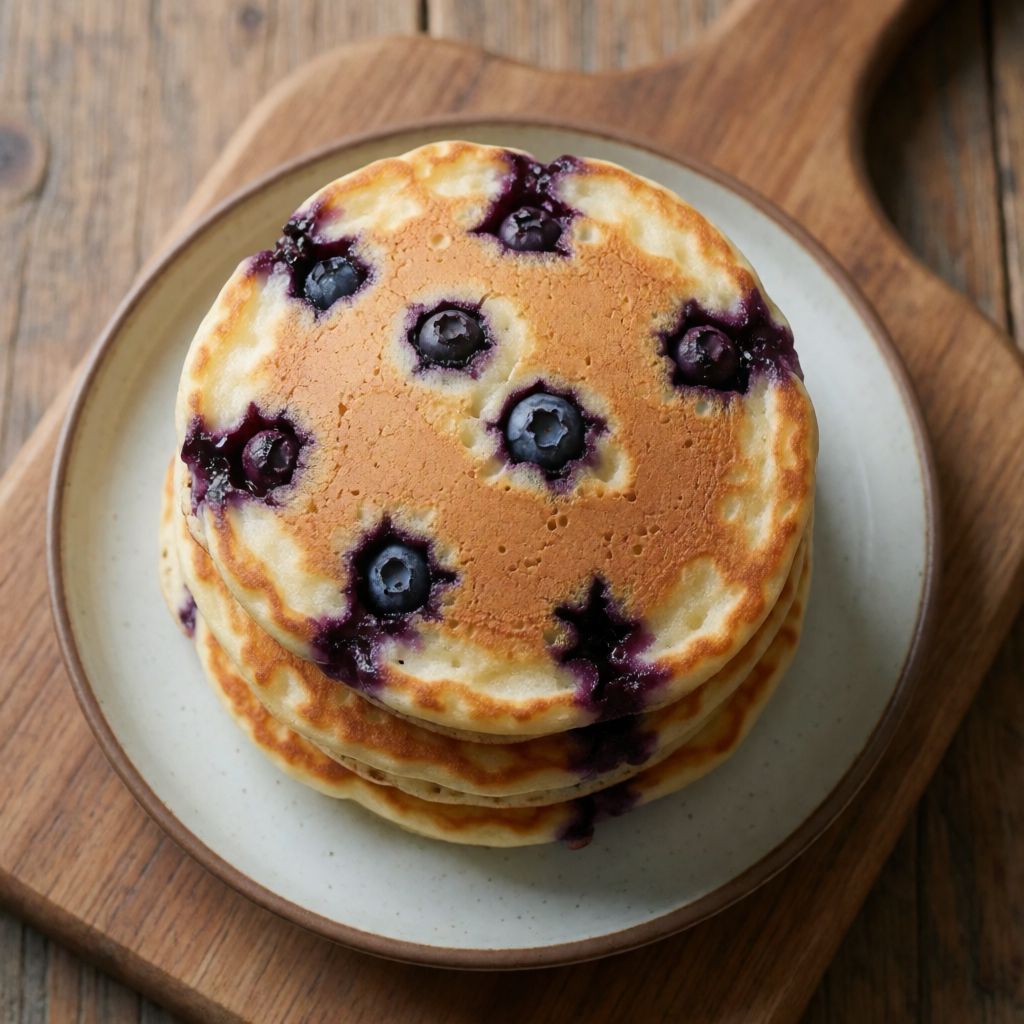
 AI photo
Blueberry Pancakes
Fluffy American-style pancakes folded with fresh blueberries, served stacked with extra berries and honey or maple syrup.
Labels are worked out automatically from the ingredients and can be wrong. Check the packaging if it matters to you.
Ingredients
- 150 g Blueberries
- 1 pcs Egg
- 150 g Greek yogurt
- 50 ml Milk
- ½ pcs Lemon juice
- ½ pcs Lemon zest
- 90 g Plain flour
- 20 g Potato starch
- 15 g Caster sugar
- 8 g Baking powder
- ½ tsp Bicarbonate of soda
- 1 pinch Salt





to serve
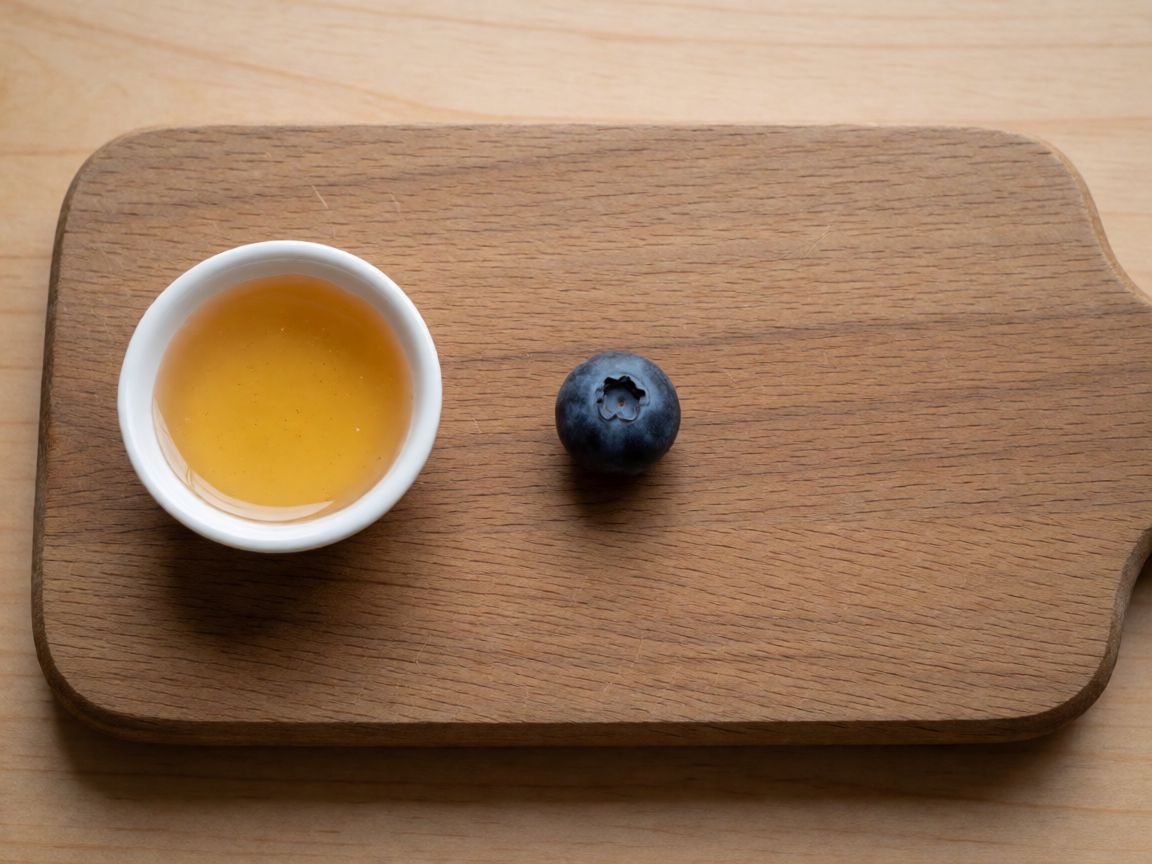
- Honey to taste
- Blueberries to taste

Steps
In one bowl, combine the egg yolk, milk, yogurt, lemon juice and lemon zest and mix until smooth.
5 minIn another bowl, sift together the plain flour, potato starch, baking powder and bicarbonate of soda, then add the sugar and salt.
5 minCombine the wet ingredients with the dry, mixing quickly with a spatula — the batter should be slightly lumpy.
2 minWhisk the egg white to stiff peaks and gently fold it into the batter with a spatula, using an upward motion so it doesn't deflate.
3 minAdd the blueberries and gently fold through to distribute them evenly in the batter.
2 minHeat a non-stick frying pan over medium heat, and if you like, melt a small piece of butter in it.
2 minLadle the batter into the pan and cook for a few minutes until bubbles appear, then flip with a spatula.
3 minCover with a lid and cook for another two to three minutes on the other side — the pancake should be puffed and golden.
3 minRepeat until the batter is used up, then stack the pancakes, top with extra fresh blueberries and drizzle with honey or maple syrup.
What makes these pancakes puff up like little soufflés instead of sitting flat like a Sunday-morning crumpet is a double act: baking powder plus bicarbonate of soda working together, and a whipped egg white folded in almost at the last second. The powder and soda react the moment they hit the wet, acidic batter — that lemon juice isn't just for flavour, it's fuel for the bicarbonate — and they keep fizzing gently while the pancake cooks. The egg white is the second lift: air trapped in protein, held there by gentle folding, released slowly as heat sets the structure around it. Lose either one and you get a pancake that's merely thick, not one that stands up on the plate.
Some say thick batter alone makes a pancake rise tall. No — thick batter just stops it spreading thin; the rise is chemical and mechanical, not textural. You could have a batter like wallpaper paste and it would still sit flat without the gas.
What decides success here is restraint at two moments: mixing the batter (step 3) and folding in the egg white (step 4). Overmix either one and you knock the air out or develop the flour's gluten too far, and the result is dense, rubbery, not light. A few lumps in the batter are not a mistake — they're where you stopped in time.
The egg does double duty, split in two. The yolk goes in with the wet ingredients for richness and a little emulsifying power, binding fat and liquid so the batter doesn't separate on the pan. The white goes in alone, whipped to stiff peaks, purely as a lifting device — protein strands stretched around air bubbles, structurally separate from flavour entirely. If you're short on patience or a second bowl, you can skip the separation and just add the whole egg to the wet mix; you'll get pancakes, just flatter ones, no soufflé effect. That's a fair trade on a weekday.
Greek yogurt and the lemon juice are doing acid work, not just taste work. The bicarbonate of soda needs an acid to react with — without it, that half teaspoon just sits there inert, or worse, leaves a faint soapy bitterness in the finished pancake, the telltale sign of unreacted soda. Yogurt's own acidity helps, lemon juice reinforces it, and the zest rides along for smell since it costs nothing extra. No yogurt on hand — buttermilk does the same acid job, even plain milk with a spoon of lemon juice stirred in and left to thicken for a minute will limp through.
Potato starch alongside the plain flour is there to cut gluten development, not to replace flour's structure. Flour alone, worked by a few knocks of a spatula, builds elastic strands that fight the rise and chew tough; starch dilutes that without diluting the thickening power, so the batter still holds shape in the pan but the crumb stays tender. Cornflour works the same way if that's what's in the cupboard — any starch with no gluten of its own.
Caster sugar here is not for sweetness so much as for browning — fine crystals dissolve fast into the batter and caramelise evenly at the pan's surface, giving you that gold rather than a patchy, pale pancake. The honey and extra blueberries at the end carry the actual sweetness; the sugar inside is a colour decision more than a taste one.
On blueberries themselves: fold them in gently and late (step 5) because they bleed. Crush them working the batter and you get grey-purple streaks through the whole pancake — not wrong exactly, but it tells you the folding was too rough, same fault as overmixing. Frozen blueberries work, but thaw and drain them first, or the extra water they weep will thin your batter and fight the rise you worked for.
Any neutral oil with no smell of its own will do for the pan if you'd rather skip the butter — butter's only there for the smell it leaves behind, nothing it does chemically. A non-stick pan matters more than the fat in it: blueberry juice that escapes and caramelises on contact with bare metal will glue a pancake down far more stubbornly than any oil shortage will cause sticking.