
 AI photo
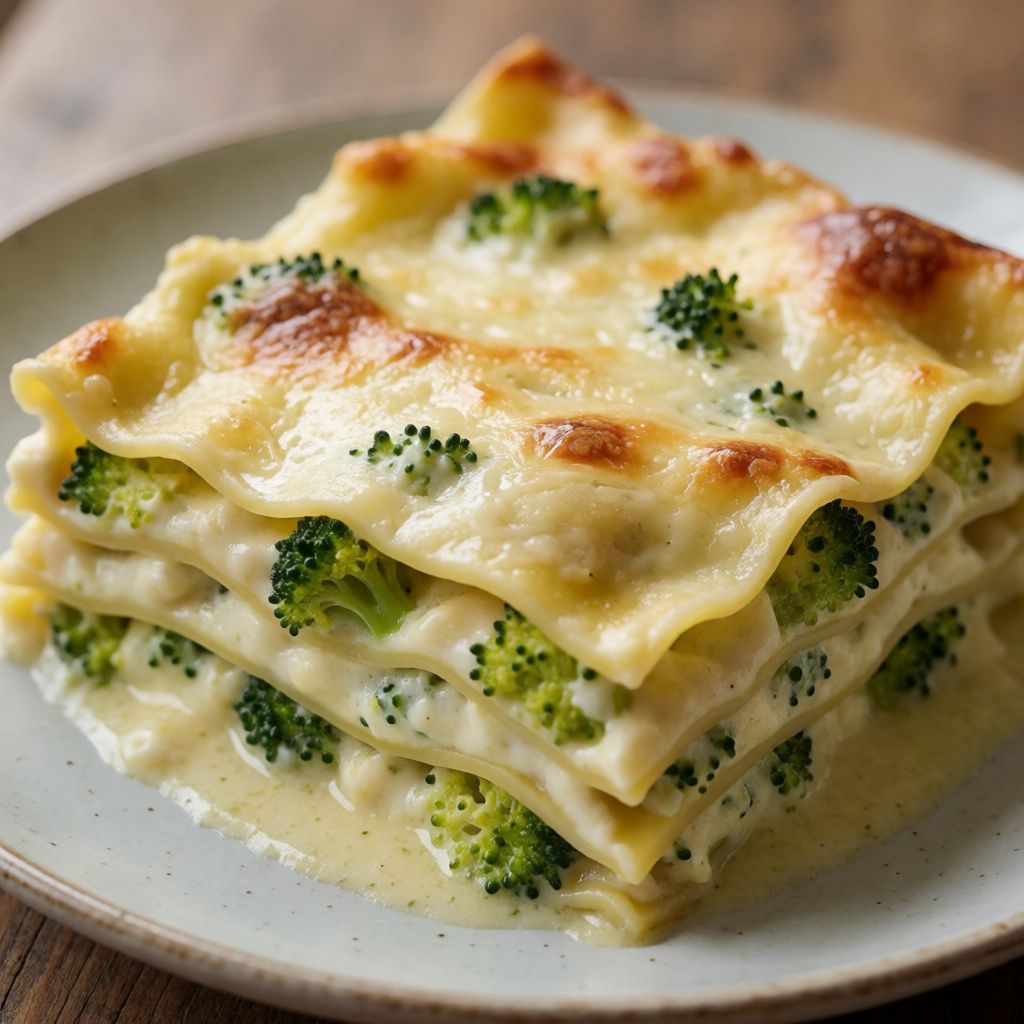
Broccoli Cream Lasagne
A creamy baked lasagne with a broccoli and cheese filling, layered with béchamel and ham.
Labels are worked out automatically from the ingredients and can be wrong. Check the packaging if it matters to you.
Ingredients
- 1 pcs Broccoli
- 120 g Cream cheese
- Milk to taste
- 20 g Butter
- 200 g Béchamel sauce
- Lasagne sheets as needed
- Salt to taste
- Black pepper to taste
- Parmesan to taste
- 150 g Ham










Steps
Boil the broccoli florets in plenty of salted boiling water until tender. Drain in a colander and let cool.
In a blender, combine the broccoli, cream cheese, a little grated Parmesan, a pinch of salt and ground black pepper. Add the milk and blend until smooth and thick.
Grease a baking dish with butter. Spread a little of the broccoli cream and some béchamel sauce over the base.
Layer the lasagne sheets (at least 4 layers) with the broccoli cream, béchamel sauce, ham and grated Parmesan.
Finish with a top layer of broccoli cream, béchamel sauce, grated Parmesan and a few small pieces of butter on top.
Bake in an oven preheated to 200°C for 25 minutes.
25 minServe sprinkled with grated Parmesan to taste.
What was changed
Cream cheese was used instead of robiola, as it is rarely found in British shops.
This is lasagne with the meat taken clean out and replaced by a green sauce that has to do two jobs at once: taste of itself, and behave like a ragù in the dish — thick enough to sit in a layer, loose enough to bleed into the gaps when it bakes. That second job is the one people forget, and it's the one that decides whether this works. If the broccoli cream comes out of the blender too stiff, it sits on the sheet like paint and never feeds moisture into the pasta above and below it. The sheets stay chalky in the middle no matter how long you leave it in the oven.
Some say broccoli for a purée has to be boiled until it's grey and falling apart — no, because that's exactly the texture you're trying to avoid, and it's also where the smell comes from. Broccoli held too long at a boil starts breaking down sulphur compounds, and that's the cabbage-water reek that puts people off broccoli for life. You want it tender enough to crush against the side of the pan with a spoon, still bright, not a second longer — then out of the water and properly drained, because wet florets going into the blender are how you end up with soup instead of cream.
The béchamel underneath and between the layers isn't decoration, it's plumbing. Its job is to carry water into the dried sheets while they bake, so you don't have to pre-boil lasagne sheets in a separate pot you don't really have room for on a domestic hob. That's the whole reason this dish can go together in twenty minutes flat: the oven does the cooking of the pasta, not your hob.
Broccoli: boil it in water salted like the sea, in a wide pan with plenty of water rather than a crowded little one — plenty of water means the temperature doesn't drop when the florets go in, so they cook fast and keep their colour instead of stewing slowly into khaki. Drain properly and let the steam escape before it goes anywhere near the blender; any water left clinging to the florets becomes water in your sauce, and water in the sauce is the one thing standing between this and a lasagne that holds its shape on the plate.
Cream cheese and milk are doing different jobs even though they go in together. The cream cheese is there to set — it has enough fat and protein to turn a vegetable purée into something that behaves like a sauce, holding air and structure instead of just being wet broccoli. Milk's only job is to loosen it back down to a consistency that pours off a spoon in a ribbon rather than falling off in a lump. The criterion for substituting the cheese is simple: any soft, mild fresh cheese that melts without splitting — ricotta beaten smooth, or mascarpone if you want it richer, both work. For the milk, whatever's in your fridge for tea is fine; whole milk gives you a rounder sauce, semi-skimmed a lighter one, it won't make or break the dish.
Butter does two separate jobs here and it's worth noticing both. Under the first layer it stops the bottom sheet sticking to the dish and drying out before the heat has worked its way up through the layers above — skip it and your base layer is the one bit of lasagne nobody wants. On top, those few pats melt down into the béchamel and help it brown and blister rather than just sitting there pale; butter browns in a way oil doesn't, because it carries milk solids that caramelise. If you're out of butter, oil will stop things sticking but you lose that top.
Parmesan's criterion is: a hard, aged cheese that melts into something crisp rather than rubbery. Parmesan does that because it's low in moisture after all that ageing. Grana Padano is the obvious stand-in, pecorino works too but it's saltier and sharper, so taste before you add more salt elsewhere.
Ham is here mostly for salt and a bit of chew between soft layers, and if there's a leftover joint from Sunday sitting in the fridge, cut it thin and use that instead of buying a pack — it's exactly the kind of dish that exists to use up a roast. Any thin-cut salty cooked meat does the same work; for a vegetarian version, sautéed mushrooms cooked down hard until the water's gone give you a similar savoury hit without the meat.
For the sheets: if you're using the dried no-boil kind, they need every drop of moisture the béchamel can give them, so don't skimp on it between layers. Fresh sheets need less, because they're already hydrated. Use a ceramic or glass dish rather than thin metal if you have one — it heats more evenly and won't scorch the base before the middle's caught up, which matters more on a domestic oven than people admit.