
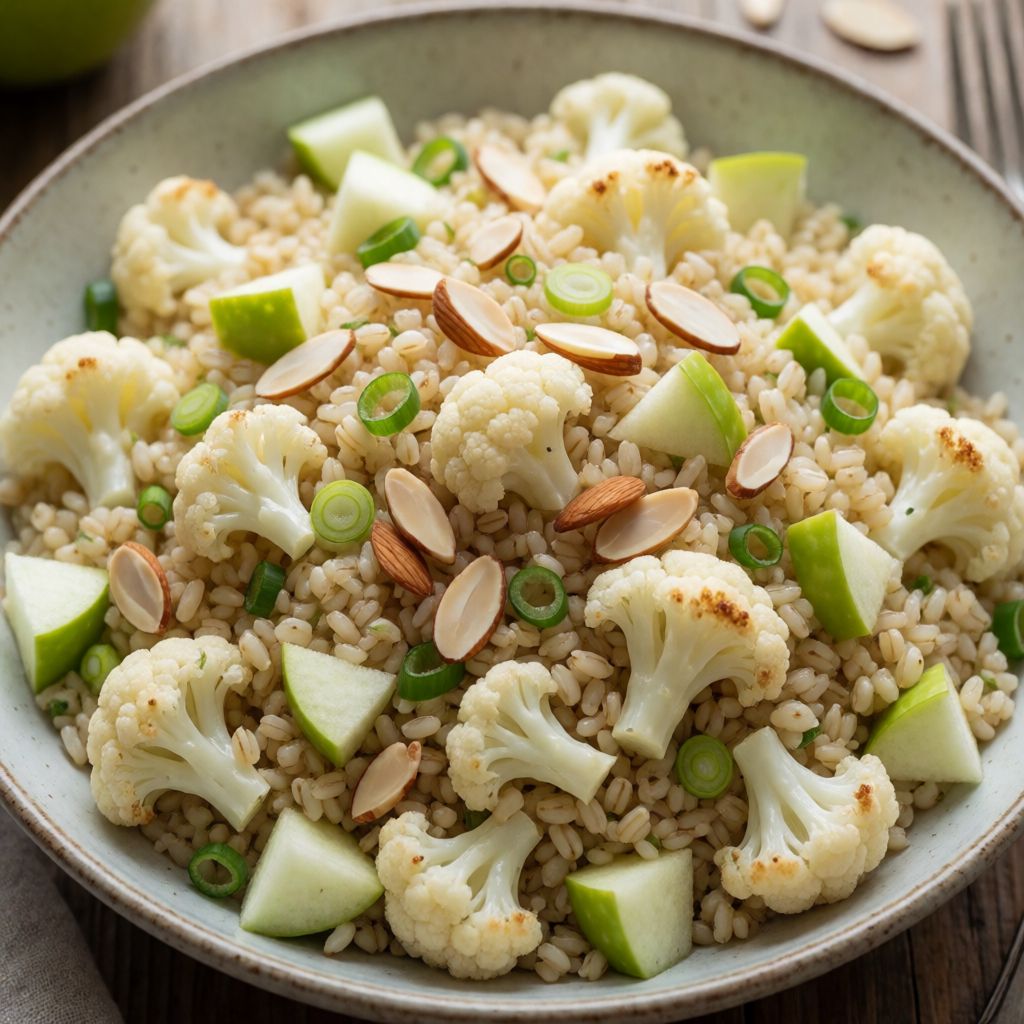
 AI photo
Apple, Bulgur and Cauliflower Salad
A fresh salad of bulgur, grated cauliflower, apple and herbs with a honey-mustard dressing.
Labels are worked out automatically from the ingredients and can be wrong. Check the packaging if it matters to you.
Ingredients
- 250 g Bulgur wheat
- 1 clove Garlic to rub the bowl
- 200 g Cauliflower finely grated
- 2 pcs Spring onion finely chopped
- 2 pcs Apple diced small
- 75 g Almonds
- 30 g Pine nuts
- 2 bunch Mint fresh, finely chopped
- 1 bunch Parsley finely chopped
- 2 tbsp Olive oil
- 2 tbsp Honey
- 2 tbsp Apple cider vinegar
- 1 tbsp Dijon mustard
- Salt to taste
- Black pepper freshly ground, to taste












Steps
Cook the bulgur according to the packet instructions, then let it cool.
Mix all the dressing ingredients in a bowl and whisk well.
Rub the salad bowl with the cut garlic clove.
Mix the finely grated cauliflower, spring onion and diced apple well into the bulgur.
Toast the almonds in a pan or oven until crisp, chop finely and add to the salad.
Toast the pine nuts until lightly golden and add to the salad along with the mint and parsley.
This is a cold grain salad, and the whole point of it is contrast managed on purpose: warm nutty bulgur against raw cold cauliflower, soft against crunchy, sweet apple against sour vinegar and sharp mustard. Nothing here is cooked at the last minute except the bulgur itself, so the salad is really an exercise in assembly — get the ratios and textures right and it holds together; get them wrong and you've made a bowl of damp grain with fruit salad on top.
What decides whether it works is moisture control, not flavour. Bulgur that's still warm or wet when you dress it will drink the dressing and go gluey, and the apple and cauliflower will weep their own water into the mix as they sit. So the grain has to actually cool — spread it out, don't leave it clumped in the pan — before anything else touches it. Some say bulgur salads are meant to be eaten warm, "like a pilaf" — no, because warm grain swells and keeps swelling against the dressing's acid, and by the time you serve it you've got soup at the bottom of the bowl.
The second thing that decides it is the cauliflower. Finely grated, raw, it's there for crunch and a faint sulphurous bite that plays against the honey and apple — not for bulk. If you grate it coarse it turns watery and bitter as it sits, because you've exposed more cell surface for it to leak from. Fine and dry is the discipline, and it's the same discipline as grating a carrot for a slaw: the finer the shred, the less time it has to sulk in the bowl before you eat it.
Bulgur is cracked, parboiled wheat — it's already been cooked once at the mill, which is why it rehydrates fast instead of needing the long simmer raw wheat berries need. That's an economic shortcut baked into the grain itself, not a modern invention: parboiling wheat before storage is an old trick for making it keep and cook quickly, and it's why bulgur turns up in salads across the Eastern Mediterranean the way couscous does — fast, forgiving, cheap. If you don't have it, use couscous (same logic, even faster) or cooked and cooled quinoa; what you're after is a neutral, absorbent grain that won't fight the dressing for attention.
The cauliflower stands in for cabbage here, essentially — raw brassica for crunch and a little bitterness to balance the honey. Choose a head that's tight and pale with no grey patches on the florets; grate on the box grater's small-holed face, not the food processor's shredding disc, because the processor cuts coarser and wetter. No cauliflower, no problem: finely grated raw broccoli stem does the same job, or even a very finely shredded white cabbage, though it'll taste rounder and less sharp.
The apple needs to be a variety that holds its shape and doesn't brown into mush within the hour — something firm and a touch tart, Granny Smith or a crisp Braeburn, rather than anything mealy. Dice it small and toss it into the bowl promptly; apple left cut and waiting on a board is apple going brown and sour from oxidation, nothing to do with the recipe, just chemistry you can dodge by timing it last.
Almonds and pine nuts are doing two different jobs, not duplicating each other — almonds for a hard, chopped crunch, pine nuts for a softer, buttery one, and toasting both is non-negotiable because raw nuts taste of very little and go soft the moment they meet dressing; toasted, the oils in them firm up and the flavour concentrates. Watch them, don't time them — almonds go from pale to honey-gold fast and keep colouring after you take them off the heat, so pull them a shade lighter than you think you want. No pine nuts, no drama: sunflower seeds toasted the same way give you the crunch without the cost, since pine nuts are expensive precisely because they're slow-grown and hand-harvested, not because they're doing anything magical.
Mint and parsley in these quantities aren't garnish, they're a third of the bulk — this is as much an herb salad as a grain one, which is the Levantine logic behind tabbouleh, where herbs can outweigh the bulgur itself. Chop them at the end, close to serving, because cut herbs oxidise and blacken at the edges the same way the apple does.
Rubbing the bowl with garlic is an old trick for getting flavour without the bite of a raw clove sitting whole in the salad — the cut surface leaves oil-soluble compounds on the bowl's surface that perfume everything tossed in it, rather than a chunk of garlic ambushing one mouthful. It's a small gesture and it costs nothing, which is probably why it survived.
On an ordinary hob: toast the nuts in a dry pan, not the oven, if you want to actually watch them — an oven hides the moment they turn from gold to too-far, and a domestic oven's heat is rarely even enough to trust unsupervised for something that burns in under a minute. One pan, nuts first, wipe it out, nothing wasted.
This feeds four as a proper side, or two as a full meal if people are hungry — it's substantial enough, with the nuts and grain, to sit next to a Sunday roast instead of potatoes, if you want a lighter plate that week. And give it the patience the recipe quietly demands: ten minutes for the bulgur to actually cool before it meets the dressing is not time wasted, it's the difference between a salad and soup.