
 AI photo
Bulgur Salad with Crispy Chicken Breast
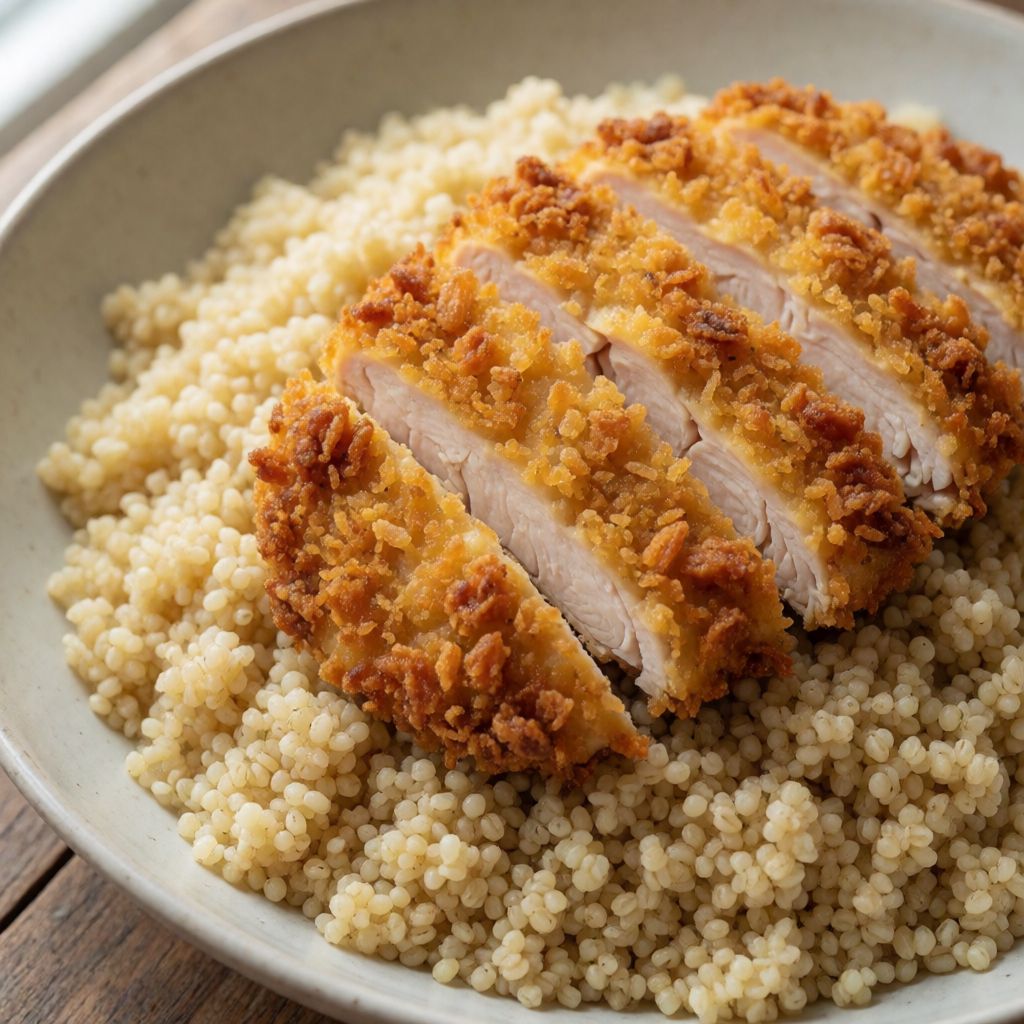
A fresh bulgur salad with crispy breaded chicken breast, broccoli, edamame and a zesty ginger-lemon dressing.
Labels are worked out automatically from the ingredients and can be wrong. Check the packaging if it matters to you.
Ingredients
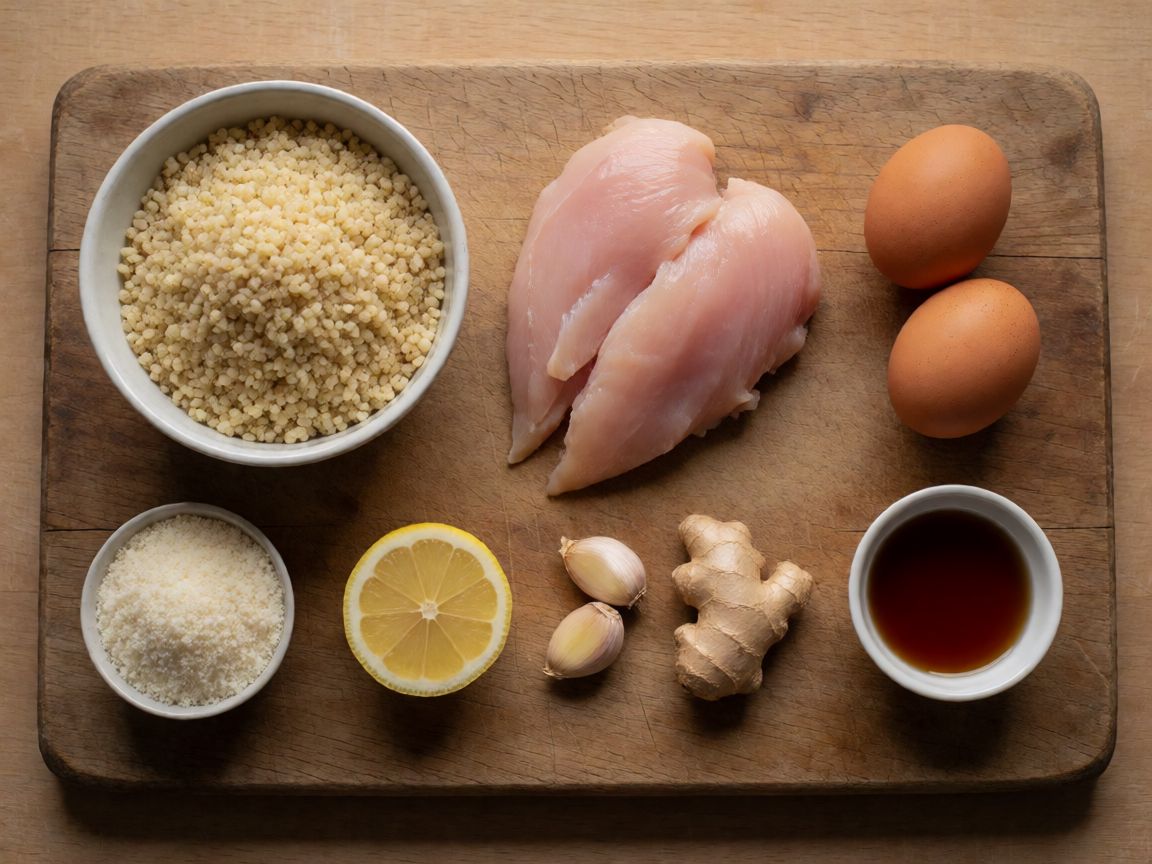
- 200 g Bulgur
- 300 g Chicken breast
- 1 pcs Egg
- 100 g Panko breadcrumbs
- 50 ml Olive oil for frying
- Salt
- Black pepper freshly ground
- 1 tbsp Olive oil
- 1 pcs Lemon juice and zest
- 1 clove Garlic crushed
- 1 tsp Ginger finely grated
- 1 tsp Maple syrup
- Salt
- Black pepper freshly ground
- 1 pcs Broccoli cut into florets
- 100 g Edamame beans
- 1 pcs Red onion
- 80 g Spinach
- 80 g Rocket















Steps
Cook the bulgur according to the packet instructions.
12 minBeat the egg in one bowl, and in another bowl mix the panko breadcrumbs with salt and pepper.
2 minFirst dip the chicken breast in the egg, then coat it in the panko mixture.
Fry in a pan over medium heat in the olive oil for about 4-5 minutes on each side.
5 minCheck that the chicken is cooked through. Slice it.
1 minMix all the dressing ingredients together and adjust to taste.
1 minPut the broccoli florets in a pan with 200 ml boiling water, cover with a lid and blanch for 2 minutes, until slightly softened but still crisp.
2 minAdd the edamame beans to the pan, stir well and leave for 1 minute.
1 minDrain the water through a sieve.
1 minMix the broccoli, edamame and bulgur with the dressing.
1 minAdd the spinach leaves and rocket together with the red onion and arrange on plates.
2 minGarnish with the crispy fried chicken breast.
This is a salad built around a contradiction: a crunchy, deep-fried chicken breast sitting on top of cold, oil-dressed grain and leaves. The whole dish works because that contradiction never actually meets — the crumb stays dry and the salad stays wet, because you fry the chicken separately and lay it on at the very end, not toss it through. The moment you stir panko-coated chicken into a dressed salad, you've made soggy chicken on wet leaves, and nobody wants that.
What decides whether it works is heat management on two fronts that have nothing to do with each other. The bulgur has to swell and cool on its own schedule — it's absorbing water, not being cooked in the usual sense, so drowning it or rushing it gives you a crunchy grain or a mush, neither of which takes dressing well. The chicken has to go in hot fat that's hot enough to seal the crumb before it drinks oil, and it has to rest a minute after frying so the crust sets instead of steaming itself soft under its own heat.
Some say you can shallow-fry breadcrumbed chicken in a thin film of oil, no problem — no, because panko needs to float a little to crisp on all sides; too little oil and it browns on the bottom while staying pale and limp on top, and you end up turning the breast four times trying to fix an edge that was never going to fix itself. Give it enough oil to come a third up the side of the breast, in a wide pan, and leave it be.
Bulgur, 200 g for four: buy the coarse grind if you have a choice, not the fine one meant for tabbouleh — coarse holds its shape against the dressing and the crunch of raw broccoli, fine turns to porridge under the same treatment. No bulgur in the cupboard — use couscous, but know you're changing the texture of the whole plate: couscous is smoother, softer, and takes less water. Cook it per the packet because every brand's grind is slightly different, but the real test isn't the clock, it's the bite — a grain that still has a faint firm centre, not a hollow one. Spread it on a tray or wide plate to stop the cooking and let steam escape; piled in a bowl it keeps cooking itself soft from its own heat, which is the commonest reason bulgur salads turn gluey.
Chicken breast: pick one of even thickness, or beat the thick end flatter yourself under cling film, because a breast that's thin at one end and thick at the other fries unevenly — the thin end is crisp and dry while the thick end is still raw in the middle, and that's how people end up overcooking the whole piece just to be safe. Egg first, then panko — the egg is glue, nothing more, so don't bother seasoning it. Panko instead of ordinary breadcrumbs because its flakes are larger and drier, with more surface to go crisp and more air between the flakes, which is why it stays audibly crunchy even once it's resting under a slightly warm salad; fine dried breadcrumbs pack tight and go leathery.
The oil for frying wants no flavour of its own — a light, neutral one, so that what you taste is chicken and crumb, not the oil. Olive oil works but use a plain one, not an estate extra-virgin you'd drizzle raw, because at frying heat its aroma burns off anyway and you'd be wasting the good stuff. Sunflower or any flavourless vegetable oil does the same job for less money. The heat you're after is the kind where a pinch of panko dropped in sizzles and rises straight away — too cool and the crumb sits there soaking up oil like a sponge before it ever browns, which is where "greasy chicken" actually comes from, not from frying itself.
The dressing is lemon, garlic, ginger, a little maple syrup and oil, and its job is to carry acidity and a thin thread of sweetness through grain, beans and bitter leaves alike — rocket and spinach both need something sharp to cut their bitterness and their iron tang. No maple syrup, use honey, the sweetness just needs to round the lemon off, it's not the star. Crush the garlic rather than slice it so it disperses into the dressing instead of sitting in lumps that one person gets a mouthful of and the next person doesn't.
Broccoli and edamame get a flash in a small amount of boiling water with a lid on, which is really just steaming with a disguise — enough heat to take the raw edge off the broccoli so it bends instead of snapping, not enough time to grey it out and strip its colour. Some say you should boil vegetables properly in a full pan of water — no, because that leaches flavour and colour straight down the sink; a couple of centimetres of water and a lid does the same softening with the vegetable sitting mostly in steam, not drowning. The edamame goes in a minute later only to warm through, not to cook — it's already cooked when frozen, you're only taking the chill off.
Red onion, raw, is there for bite and colour against all that green and brown — if its sharpness is too much for you, give it a rinse under cold water for a minute, which softens the aggressive sulphur edge without cooking it. No red onion, a shallot does the same milder job. This isn't a dish that needs a kazan or a special pan — a wide frying pan for the chicken and a saucepan for the broccoli is everything a normal flat kitchen already owns, and a plate under a loose sheet of foil does the resting job a lid would do, no special kit required. Build it at the end, chicken on top, not stirred in, and that patience of waiting those few minutes before assembling is the one ingredient that doesn't come in a packet but decides whether it's a salad with crisp chicken or a salad with soggy regret.