
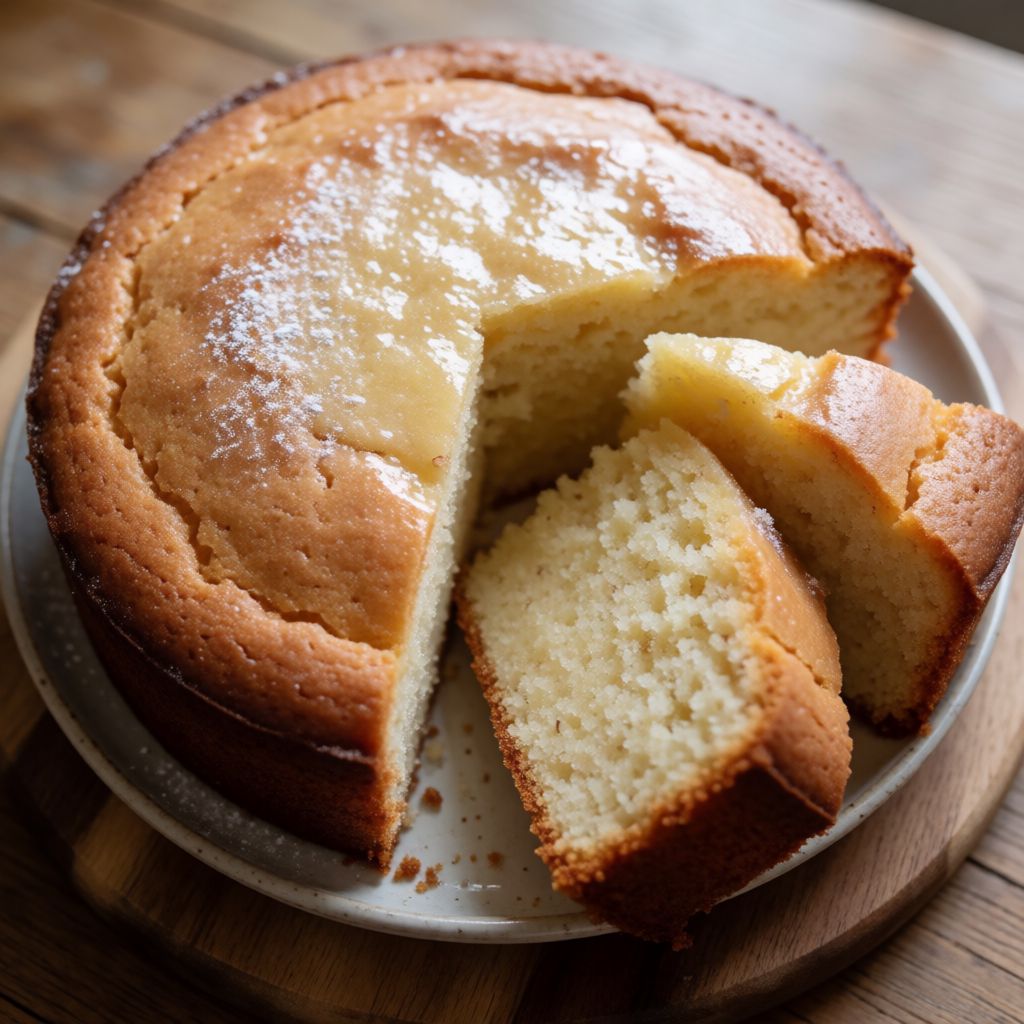
 AI photo
Cardamom Marzipan Cake
A buttery cardamom and marzipan cake, topped with a milk chocolate and cream cheese frosting and a sprinkle of hazelnuts, pistachios and cacao nibs.
Labels are worked out automatically from the ingredients and can be wrong. Check the packaging if it matters to you.
Ingredients
- 150 g Butter room temperature
- 200 g Marzipan
- 220 g Sugar
- 4 pcs Eggs
- 225 g Plain flour
- 2 tsp Cardamom ground
- 1 tsp Vanilla sugar
- 2 tsp Baking powder
- 100 g Butter
- 75 g Icing sugar
- 75 g Milk chocolate
- 150 g Cream cheese
- 40 g Hazelnuts roughly chopped
- 30 g Pistachio kernels
- 1 tbsp Chopped cacao nibs










Steps
Beat the butter, marzipan and sugar until light and fluffy. Add the eggs one at a time, beating well until the mixture is smooth.
In a bowl, mix the flour, cardamom, vanilla sugar and baking powder, then fold this mixture into the batter.
Spoon the batter into a greased 10 x 25 cm tin.
Bake in a preheated fan oven at 175°C for about 45 minutes, until fully cooked through.
45 minLet the cake cool on a wire rack, then carefully remove it from the tin.
For the frosting: beat the butter and icing sugar until pale and fluffy.
Melt the milk chocolate in a bain-marie over low heat and stir the melted chocolate into the buttercream.
Add the cream cheese and spread the frosting over the cooled cake.
Sprinkle with the chopped hazelnuts, pistachios and chopped cacao nibs.
Marzipan in a cake isn't decoration, it's an engineering decision. You're replacing part of the sugar with an almond paste that's already got its own fat and moisture locked in, so when you beat it with butter and sugar you get a denser, damper crumb than a plain sponge — closer to a German Stollen-adjacent bake than to a Victoria sandwich. That density is the whole point. It's what lets the cake sit under a heavy cream-cheese-and-chocolate frosting without collapsing or going soggy underneath.
What decides whether this works is almost entirely at the beating stage. Marzipan at fridge temperature won't break down into the butter — it'll stay in little waxy lumps that never fully integrate, and you'll find them later as odd dense pockets in the baked cake. Grate it, or warm it in your hands, before you even start. Some say marzipan can't be creamed like butter because it's "a paste, not a fat" — no, because it's roughly a third oil by weight; it creams just slower, and if you give up on it after thirty seconds you'll under-aerate the whole base.
Cardamom here isn't a flavour sprinkled on top of almond, it's doing a specific job: cutting the marzipan's sweetness with something resinous and a bit medicinal, so the cake reads as a spice cake with almonds rather than a candy bar with flour added. Two teaspoons, ground fresh if you can — pre-ground cardamom loses its top note within weeks and you're left mostly with the bitterness, which throws the balance the wrong way.
The butter does double duty — room temperature for the cake, cold-ish and beaten long for the frosting. In the cake, soft butter traps air when creamed with sugar; that trapped air is your only rise beyond what the baking powder gives you, since this batter is too heavy for eggs alone to lift. Butter that's too warm turns oily and won't hold air — if yours has gone translucent and shiny, it's past the point of no return and the cake will be denser than intended, not in the good way. Any unsalted block butter works; don't swap in margarine here, its water content is wrong for creaming and you'll get a gummy crumb.
Eggs go in one at a time for a reason that has nothing to do with tradition and everything to do with emulsion. Butter-sugar-marzipan is a fat-heavy mixture; egg is mostly water. Dump all four in at once and the mixture splits — you'll see it curdle, go grainy, lose the glossy look. Added slowly, with real beating between each, the fat can absorb the water bit by bit. If it does split anyway, a spoonful of the flour mixed in brings it back; that's not a failure, that's the fix built into most cake recipes whether they admit it or not.
Baking powder is carrying weight the eggs can't. With that much fat and sugar per flour, this is not a cake that will rise on its own structure — two teaspoons is a proper dose, not a token one, because the batter needs real lift against real density. Don't be tempted to cut it back for a "purer" result; you'll get a cake that's dense in the dull way, not the good moist way.
For the frosting, cream cheese alongside a chocolate buttercream is there to loosen it — straight chocolate buttercream sets quite firm and can taste one-note sweet against a spiced cake. Cream cheese brings it back toward tangy and spreadable, so use a full-fat block type, not the whipped tub kind sold for bagels, which carries extra water that will thin your frosting past the point of holding its shape on top of the cake. Melt the chocolate in a bain-marie, meaning a bowl over — not touching — simmering water: direct heat on chocolate seizes it into a grainy mess before you've even noticed, because chocolate burns at a far lower point than most people expect from something that looks so solid.
The topping — hazelnuts, pistachios, cacao nibs — isn't there to impress anyone with variety. It's texture contrast against a cake and frosting that are both soft; without some crunch on top, every mouthful is the same give. Roughly chopped, not ground, or you lose that contrast entirely and they just melt into the frosting visually and texturally. If you've no pistachios, any nut with a bit of bite and not too much of its own strong flavour will do the same job — flaked almonds, toasted, are the obvious domestic substitute, and they echo the marzipan besides.
Give the cake real time to cool before frosting — not because tradition says so, but because warm cake plus cream-cheese frosting means a frosting that slides straight off, chocolate butter going glossy and loose rather than holding its shape. A wire rack lets air under the cake so the bottom doesn't steam itself soggy against a plate; if you haven't got one, balance it on an upturned bowl, anything that lifts it clear. Patience here isn't optional politeness, it's the difference between a frosted cake and a cake wearing a puddle.