
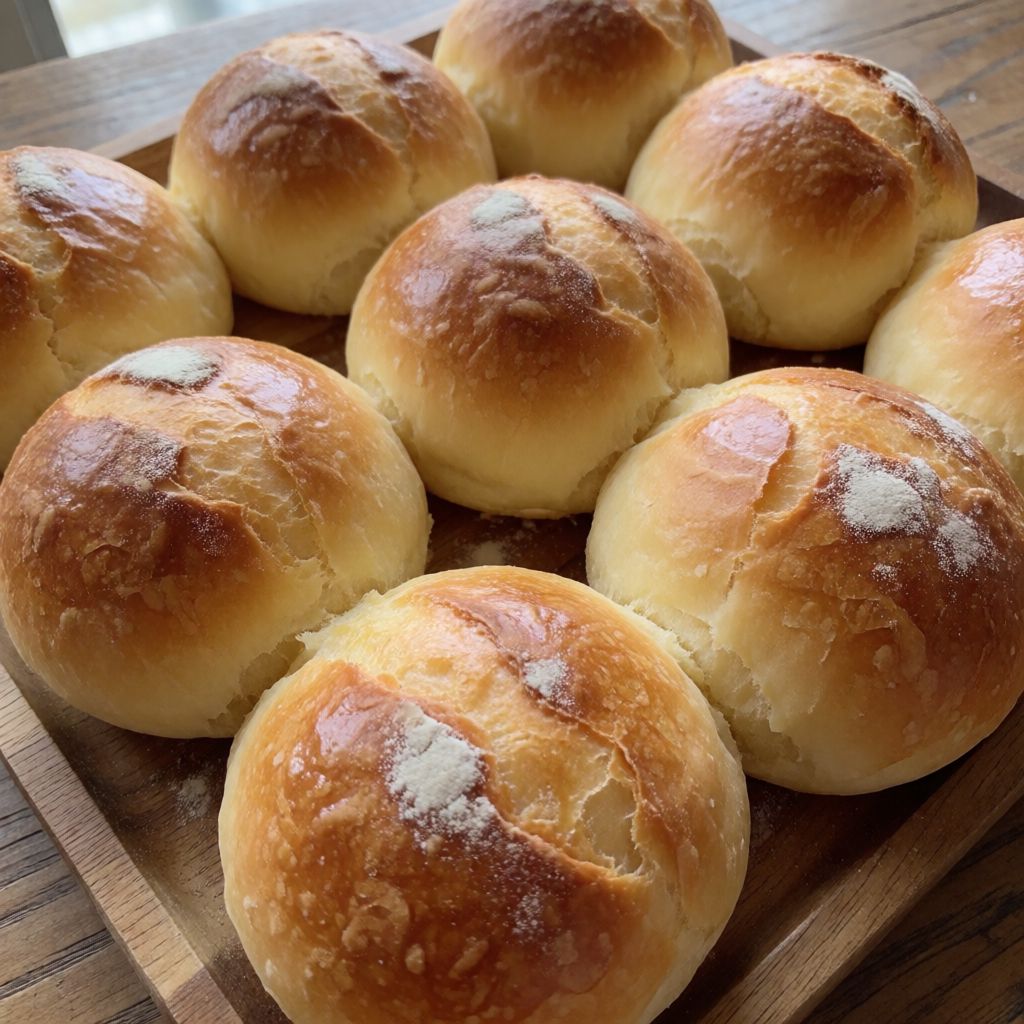
 AI photo
Cheese Buns
Soft yeasted buns stuffed with grated cheddar and parsley, folded into the dough and baked until golden.
Labels are worked out automatically from the ingredients and can be wrong. Check the packaging if it matters to you.
Ingredients
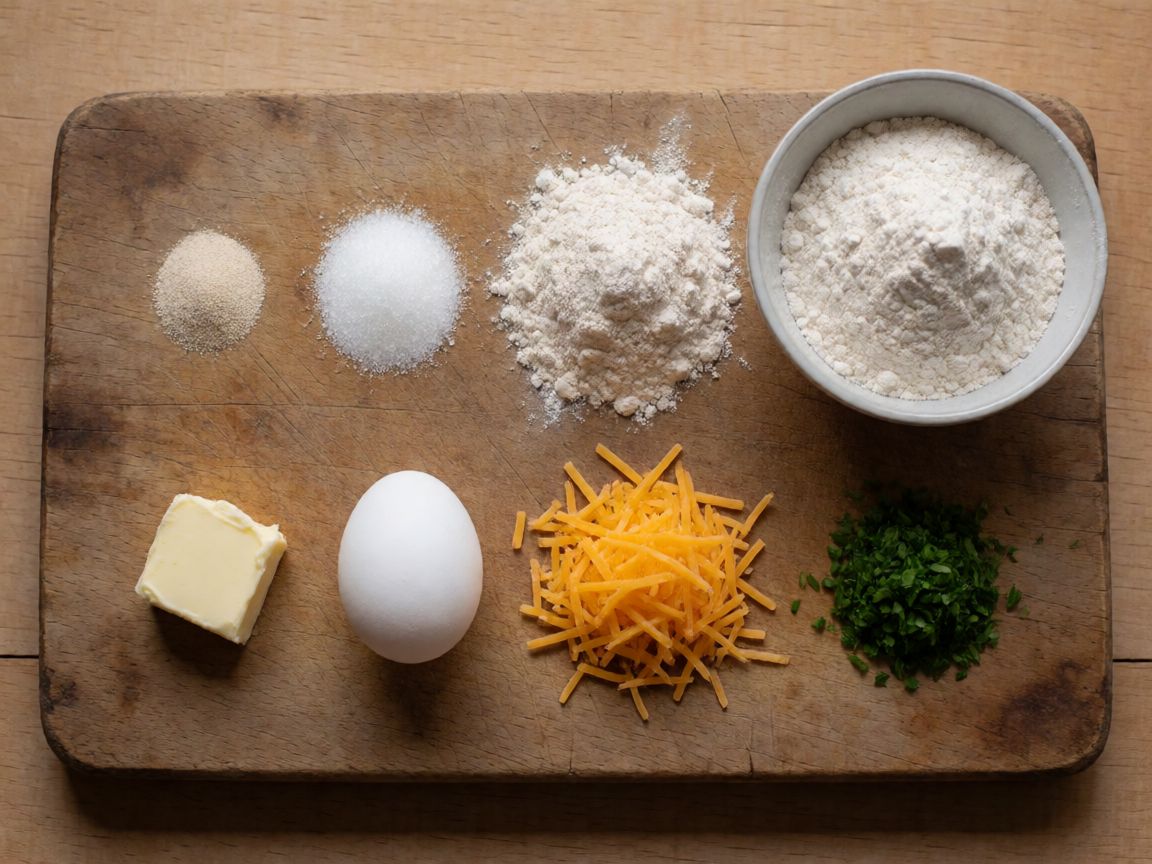
- 20 g Yeast
- 300 ml Water
- 1 tsp Sugar
- 1 tsp Salt
- 75 g Wholemeal Flour
- 400 g Plain Flour
- 50 g Butter
- 1 pcs Egg
- 175 g Mature Cheddar freshly grated
- ½ bunch Parsley finely chopped







Steps
Stir the yeast into the water in a bowl and add the sugar, salt and wholemeal flour.
3 minMix well — ideally using a mixer.
Add the plain flour and knead the dough for 5 minutes.
5 minAdd the butter, cut into small cubes, and knead the dough for another 5 minutes.
5 minLeave the dough to rise on the kitchen counter for an hour and a half.
90 minTip the dough onto a floured surface and make a well in the middle of the dough.
2 minCrack the egg into the well and add the coarsely grated cheddar and parsley.
2 minFold the dough slightly around the filling and use a dough scraper to cut the dough into small pieces.
3 minMix the dough with the filling using the scraper and cut the dough again with the scraper.
2 minDivide the cut dough into the needed number of buns and place each piece on a baking tray lined with parchment.
Leave the buns to rise for 60 minutes, covered with a clean tea towel.
60 minBake in a preheated fan oven at 200°C for about 15–17 minutes, until golden and fully cooked through. Serve while still hot and freshly baked.
16 min
These are not dinner rolls with cheese sprinkled on top. The cheese and egg and parsley go into the dough itself, in one messy, deliberate fold, so that every bun has pockets of melted cheddar running through it rather than a crust stuck on the outside. That one decision — mixing the filling in at the end, chopped roughly rather than kneaded smooth — is what separates a cheese bun from a plain bun that happens to have cheese nearby.
What decides whether they work is restraint at two points: how much you knead once the butter goes in, and how much you knead once the cheese goes in. The first kneading builds gluten — you want it, it's what holds a bun together instead of a brick. The second kneading you want to sabotage on purpose. Use the scraper, cut and fold, don't squeeze it into a smooth ball, or the cheddar smears into the dough instead of sitting in it as streaks, and streaks are what give you that pull-apart, stringy bite when it's hot.
Some say you can't get a proper rise on a kitchen counter in a British flat because it's too cold. No — you can, you just need the patience the recipe asks for twice: ninety minutes first, then another hour after shaping. Yeast doesn't care about your schedule, it cares about time and warmth, and a flat with central heating on is warm enough. The dough roughly doubling, feeling light and slightly wobbly when you nudge the bowl — that's your cue, not the clock.
Yeast first, water second, and the sugar is not for sweetness — it's food, a quick sugar the yeast can eat immediately while it works out what to do with the flour's starches. Fresh yeast (20g) foams within minutes if the water isn't too hot to kill it and not too cold to stall it; water that feels like a warm bath on your wrist is close enough — no thermometer needed, your skin already has the sensor. If you've only got dried yeast, use about a third of the weight and let it sit in the water a few minutes before going further — fresh yeast is just more forgiving of impatience, dried needs that head start.
The wholemeal flour in step one isn't tradition for its own sake — it's there because wholemeal ferments faster and gives the yeast a head start with more surface and more to feed on, before the plain flour, with its tighter gluten network, comes in to build structure. If you've no wholemeal, use plain flour throughout; you lose a little flavour, not the bun.
Butter goes in after the first knead, not before, because fat coats flour and blocks gluten from forming — add it too early and you'll fight the dough for structure it never built. Cut it cold and small so it works through evenly rather than melting into a slick that the dough can't absorb. Any firm, low-moisture fat with a mild flavour of its own will do this job; butter just happens to taste like something you want in a cheese bun.
Cheddar should be mature — not for sharpness as a flavour statement, but because mature cheddar has less moisture and breaks down into firmer pockets when baked, rather than melting into a wet slick that turns your dough gummy underneath. Grate it coarsely, not finely — fine grated cheese melts and vanishes into the crumb; coarse grated cheese survives as a pocket you can bite into. Parsley is for colour and a green, grassy note cutting the fat — any soft herb with no bitterness works, chives or a little spring onion top if that's what's in the fridge.
The egg in the well does two jobs: it's part of the filling flavour, but cracked raw into the centre like that, it also loosens the dough locally so the scraper can fold everything through without you overworking the whole batch by hand. Twelve buns from this amount feeds a Sunday brunch table comfortably, with one or two left for someone who claims they're not hungry and then is.
A domestic fan oven at 200°C is hot enough to set the crust and melt the cheese pockets before the inside dries out — that's the whole timing logic, 15 to 17 minutes is the window where that balance holds, and "about" is doing real work in that sentence. Pull them when the tops are gold, not pale, and the bottom sounds hollow when you tap it; a pale top means the inside is still raw dough no matter what the clock says.