
 AI photo
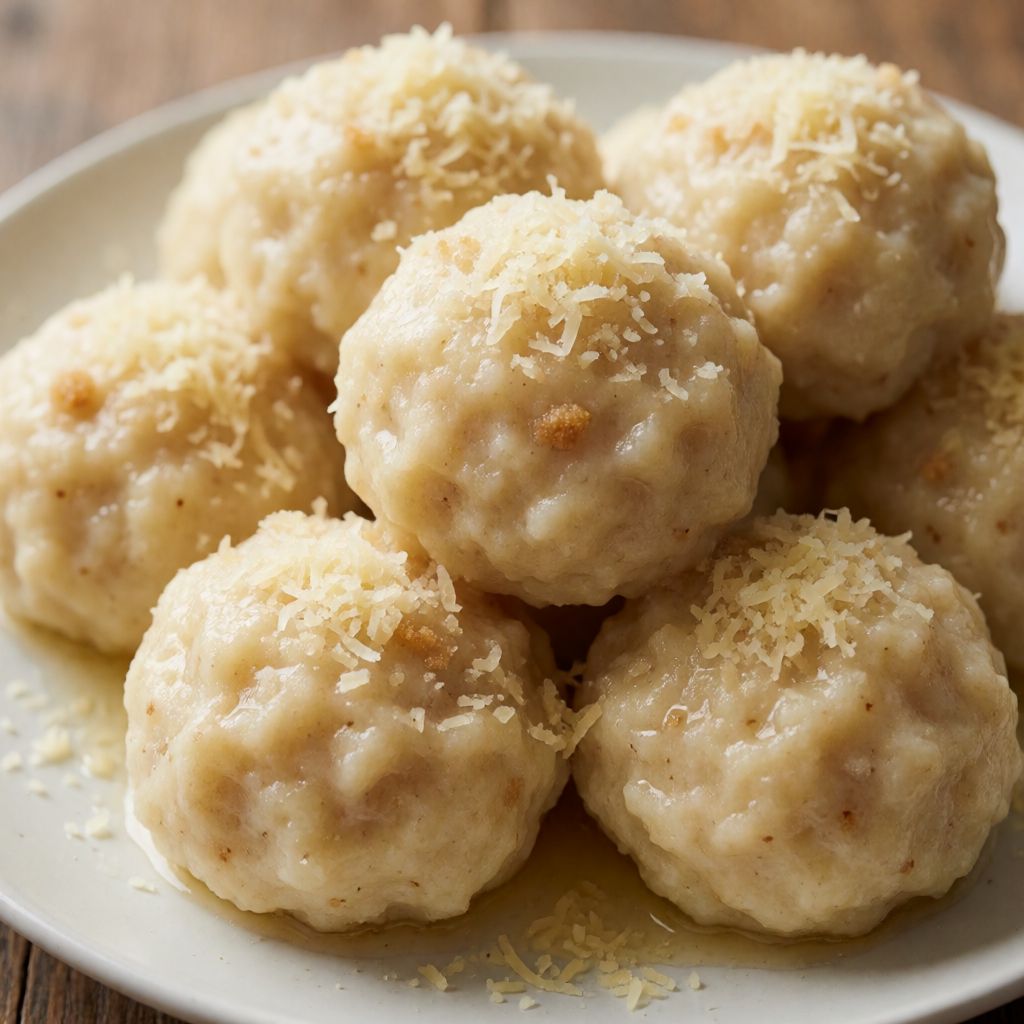
Cheese Bread Dumplings
Hearty bread dumplings packed with cheese, shaped into balls the size of a tangerine.
Labels are worked out automatically from the ingredients and can be wrong. Check the packaging if it matters to you.
Ingredients
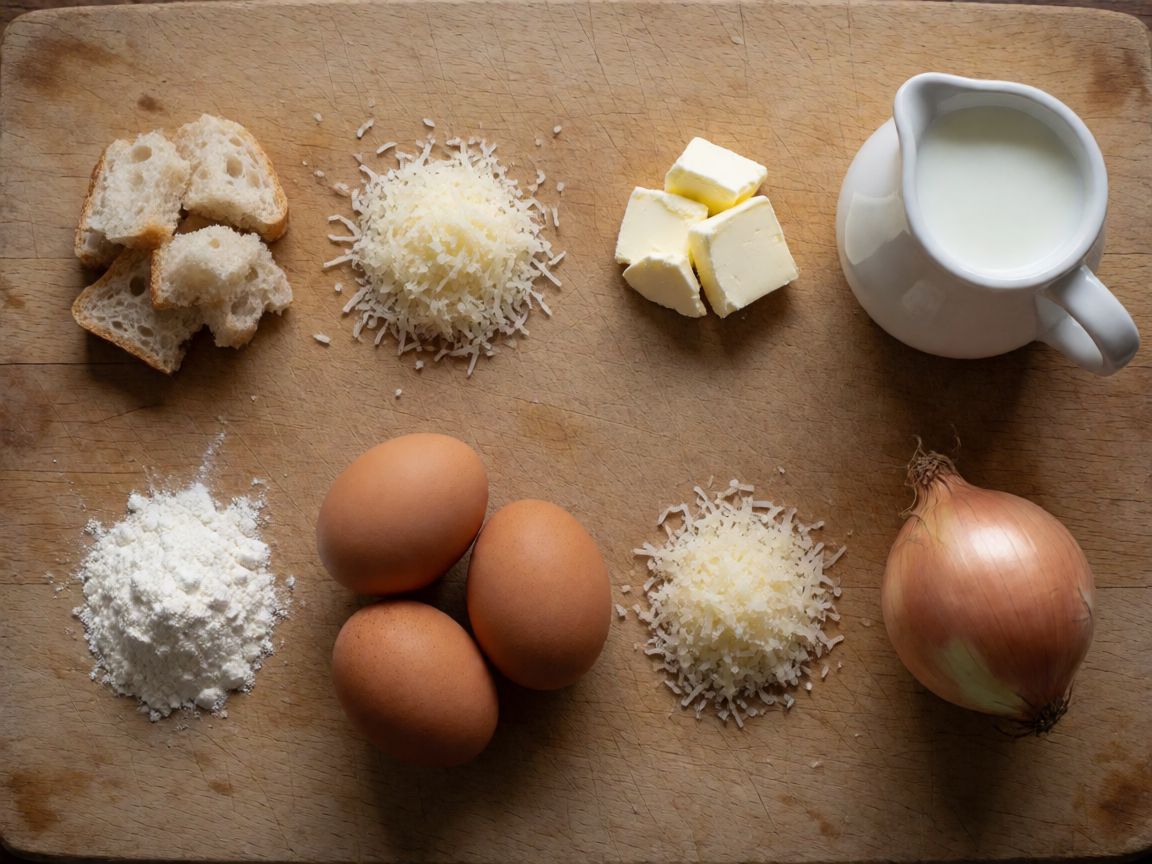
- 300 g Stale bread
- 300 g Asiago
- 250 ml Milk
- 100 g Butter
- 50 g Plain flour
- 3 pcs Eggs
- 100 g Parmesan
- 1 pcs Onion
- Chives to taste
- Salt to taste
- Black pepper to taste










Steps
Finely chop the onion and fry until golden in a pan with 40 g of melted butter.
Cut the Asiago and stale bread into small cubes, mix in a bowl, then add the chives and the fried onion.
Beat the eggs until fluffy, add the milk and mix well.
Pour the egg mixture into the bowl with the rest of the ingredients and knead by hand, adding more milk or bread as needed.
Season with salt and pepper, then shape into dumplings the size of a tangerine.
Coat the dumplings in flour and boil in small batches in simmering water.
20 minMelt the remaining 50 g of butter in a pan.
Lift out the dumplings with a slotted spoon, transfer to a plate and drizzle with the melted butter.
Sprinkle with Parmesan, garnish with chives and serve hot.
This is stale bread refusing to die quietly — canederli, if you want the proper name, though nobody in the Alto Adige kitchens that invented them was writing menus. Bread that's gone past its best, cheese, egg, milk: squeeze them into a ball the size of a tangerine and boil it. The whole dish is a frugality trick dressed up as comfort food, and it only works if you respect what stale bread actually is.
What decides whether this holds together or falls apart in the water is moisture control, not a clever hand. Stale bread is dry and porous — that's the point, it drinks the egg-and-milk mixture instead of turning to mush the way fresh bread would. Some say you need fresh bread for a "better" texture — no, because fresh bread has no structure left to hold once it's wet; it collapses into paste. Stale bread keeps its crumb shape even soaked, like a sponge that still remembers being a sponge.
The second thing that decides success is the water itself. It should be simmering, not boiling hard — a rolling boil will knock the dumplings against each other and against the pot, and they'll shed crumb into the water and loosen at the seams. A gentle simmer, surface just trembling, lets them firm up from the outside in before anything agitates them.
Shape them when the mixture is cohesive but not wet-handed — if it's sticking to your palms in strings, you need more bread; if it won't bind at all, a splash more milk. That's not weakness in the recipe, that's bread being inconsistent loaf to loaf, which is exactly why the method says "as needed" instead of a fixed number.
Start with the bread, because everything else is built around compensating for it or complementing it. "Stale" here doesn't mean mouldy or rock-hard — it means dried out enough that it's lost its elasticity and gained the ability to absorb liquid without disintegrating. In the UK, where the Sunday roast leaves you with a loaf nobody finished, a white farmhouse or a day-old baguette sitting on the counter uncovered is exactly right. If your bread is fresh, don't force the recipe — slice it and leave it out overnight, or give it ten minutes in a low oven just to dry the surface, not to toast it. Toasted bread tastes of char; dried bread tastes of nothing, which is what you want, because the cheese and onion are doing the talking.
Asiago is the backbone cheese, and its job is to melt into pockets rather than fully dissolve — it's a semi-firm cheese with enough fat to go soft but enough structure to stay in cubes through the knead. If you can't get it, any cheese that melts without turning oily — a young Gouda, a mild Cheddar even, since this is a British kitchen — will do the job. What you're choosing for is behaviour under heat, not flavour pedigree: you want something that softens, not something that weeps grease into the water and clouds it.
The milk and eggs are not for taste. They're the glue — egg proteins set when heated and lock the bread crumbs together, while milk keeps the crumb soft enough to swell properly before that setting happens. Beating the eggs "until fluffy" first is not decoration: it incorporates air that keeps the final dumpling from turning dense and leaden, which is the real failure mode people blame on "bad bread" when actually it's under-beaten eggs.
The onion fried in butter until golden is there for sweetness and savoury depth that raw onion can't give — raw onion in a dumpling would stay sharp and crunchy where you want softness throughout. Golden, not browned past it: browned onion turns bitter and that bitterness has nowhere to hide once it's folded into bland bread. Watch for the onion going from white to translucent to pale gold — that's the window. Push past it to deep brown and you've added a burnt note you can't cook out later.
The flour coating before boiling is a defect-prevention step, not tradition for its own sake: it's a seal. Boiling water hitting raw bread-and-egg surface directly would start dissolving the outer crumb before the egg inside sets, and you'd lose dumpling into the pot as cloudy starch water. The flour forms a thin skin that gelatinises fast and holds the shape together for the first crucial minute in the water.
Twenty minutes in simmering water is the lower bound, not a stopwatch instruction — a dumpling the size of a tangerine needs time for heat to travel to its centre, and that depends on how tightly you packed it and how cold your fridge made the mixture. The real test is weight and firmness: lift one with the slotted spoon and press it gently — it should feel set through, not squashy in the middle, and it floats higher once it's cooked because the inside has firmed rather than stayed dense with raw egg.
Finishing with melted butter and Parmesan over the top rather than mixed in is deliberate separation of jobs: Parmesan inside the dumpling would just melt into the mass and vanish; grated on top with hot butter, it stays as texture and salt-hit against the soft dumpling. This is the same logic as finishing a risotto with butter off the heat — fat and sharp cheese do more work as a coating than as an ingredient. Patience here isn't about the clock on the simmer — it's about not rushing the bread's soak before you shape, and not crowding the pot so each dumpling has room to hold its shape without bumping its neighbours.