
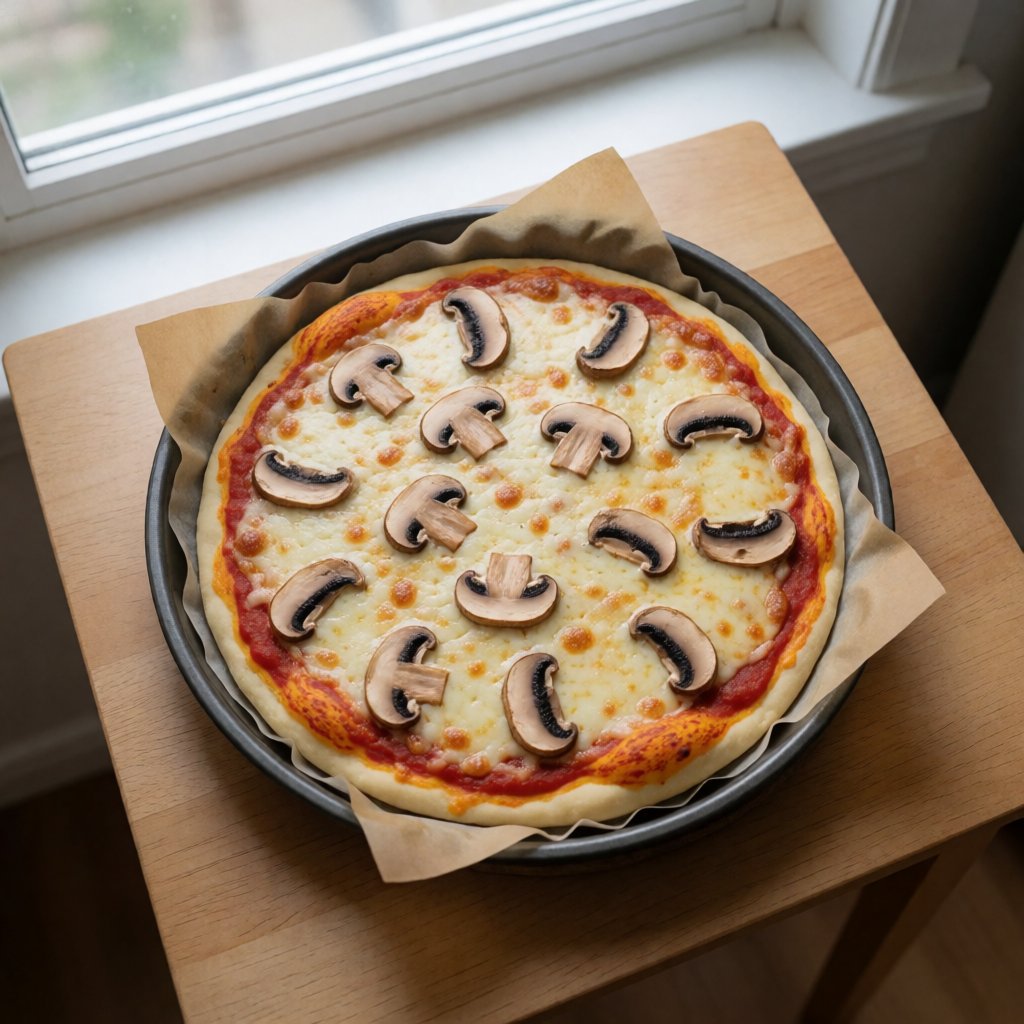
 AI photo
Cottage Cheese Pizza Crust
A quick cheese-based pizza crust topped with tomato sauce, mozzarella and mushrooms.
Labels are worked out automatically from the ingredients and can be wrong. Check the packaging if it matters to you.
Ingredients
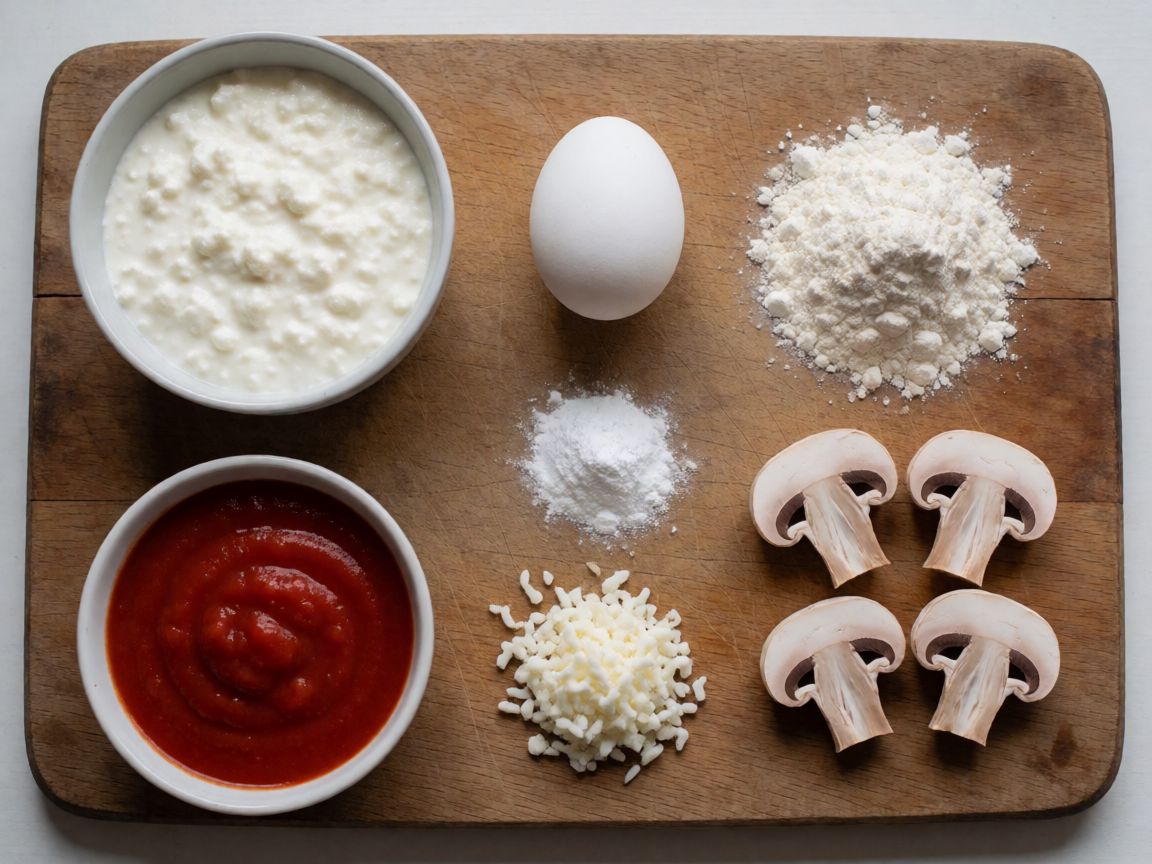
- 250 g cottage cheese pureed
- 1 pcs egg
- 100 g plain flour
- 1 tsp baking powder
- 1 pinch salt
- 3 tbsp tomato sauce
- 100 g mozzarella
- 4 pcs mushrooms sliced






Steps
Mix the cottage cheese, egg, flour, baking powder and salt; roll out into a 25cm round and transfer onto a parchment-lined baking tray.
Place the tray in the oven and bake the crust for 12 minutes at 200°C.
12 minTop the crust with tomato sauce, mushrooms and cheese, then bake for another 12 minutes.
12 minTake the tray out of the oven.
This isn't a pizza with the dough swapped out — it's a different mechanism wearing a pizza's clothes. A yeasted base works because gluten stretches and ferments and then puffs under heat. Here there's no yeast, no stretch, nothing to prove. The base is curd cheese and egg set by heat into something solid enough to hold sauce and cheese. Same round shape, same toppings, completely different physics underneath.
What decides whether this works is the first bake, before anything goes on top. Cottage cheese is mostly water held in curd pockets. Puree it and mix it with egg and flour and you still have a wet paste. Put sauce and mushrooms straight onto that and bake once, and you get a soggy middle for life — no amount of extra time fixes it, because the moisture has nowhere to go once it's sealed under toppings. The 12 minutes at 200°C before topping isn't decoration, it's drainage: the surface firms, steam escapes upward while it still can, and only then does the base become something that can carry weight without collapsing into it.
Cottage cheese is the whole base, so puree it properly — don't just stir it, actually break the curds down smooth with a stick blender or push it through a sieve. Whole curds hold their water in little pockets; leave them whole and the base bakes unevenly, dry and crumbly in one bite, gummy and wet two centimetres over, because some pockets release their water into the mix and others don't. Cheap supermarket cottage cheese sometimes sits in a visible pool of thin liquid in the tub — tip that off, or even drain the curds in a sieve for a few minutes, before you puree. The criterion for a substitute: any fresh curd cheese that purees smooth and isn't swimming in its own whey. Quark does this well. Ricotta works if you drain it first — ricotta is looser by nature and will make a wetter base if you don't.
The egg is doing one job: coagulating under heat so the curd and flour don't just stay a paste. Without it you'd have a base that falls apart when you lift a slice, because there's nothing holding the protein mesh together once the water's gone.
Flour and baking powder are small amounts for a reason — this isn't bread, so you're not after gluten strength, you're after something that soaks up a bit of the remaining moisture and lifts the whole thing just enough that it isn't a dense slab. Plain flour is fine; strong bread flour would be wasted here, since you're never going to knead or stretch it to need that strength. If you're out of baking powder, don't skip it outright — a flat pinch of bicarbonate with something acidic (a squeeze of lemon in the mix) does a rougher version of the same lift.
Mushrooms weep water as they cook, which is exactly the enemy this base has already spent 12 minutes fighting off. Slice them thin so what little liquid they release has time to steam off in the second bake rather than sit as a puddle on top of your sauce. Mozzarella — go for the low-moisture block kind, not fresh buffalo mozzarella in its brine; fresh mozzarella brings liquid back into a dish that doesn't need any more of it. The criterion: a cheese that melts by stretching, not by weeping.
A UK oven and tray aren't a pizza oven or a stone, and that's fine — parchment on a tray does the job of stopping the base sticking, but don't expect the blistered, charred-edge look that radiant stone heat gives. This dish isn't chasing that look anyway; it's chasing a base that holds its shape when you pick up a slice.
Last thing, and it costs you nothing but a bit of standing still: let it rest two or three minutes out of the oven before cutting. Straight out, the base is at its softest and the weight of the sauce and cheese will slide it apart under the knife. A couple of minutes of patience and it firms up enough to cut clean.
·