
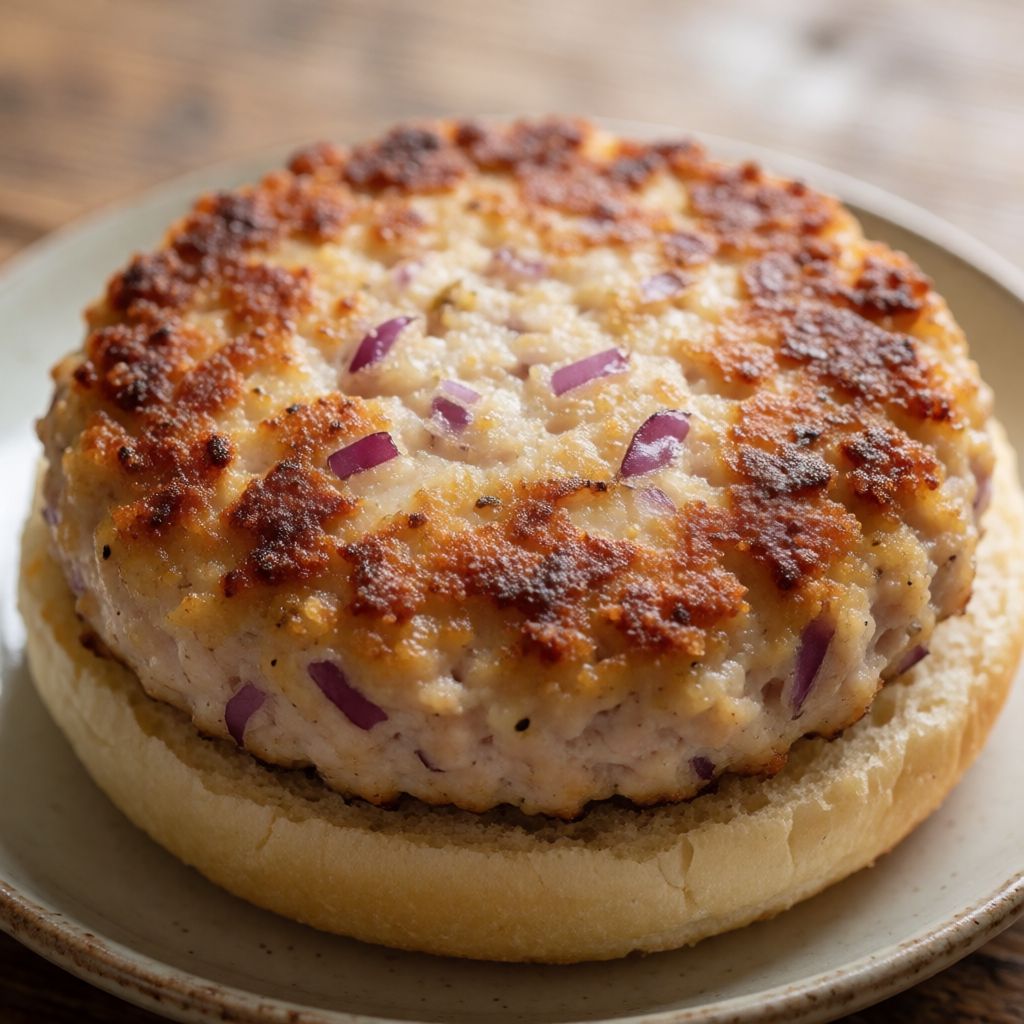
 AI photo
Chicken Burger
A juicy chicken burger with apple, mango chutney and a tangy mustard mayo.
Labels are worked out automatically from the ingredients and can be wrong. Check the packaging if it matters to you.
Ingredients
- 500 g Chicken mince
- 1 pcs Red onion finely chopped
- 1 clove Garlic crushed
- 1 pcs Apple coarsely grated
- 1 pcs Egg
- 1 pcs Lemon juice and zest of half
- 1 bunch Parsley
- 0.25 pcs Mango finely chopped
- 1 tbsp Mango chutney
- 1 pinch Cayenne pepper
- 1 bunch Dill finely chopped
- 1 tbsp Butter for frying
- 1 tbsp Olive oil for frying
- Salt
- Black pepper
- 3 tbsp Mayonnaise
- 1 tbsp Mango chutney
- 1 tsp Dijon mustard
- Salt
- Black pepper
- 4 pcs Burger bun
- 125 g Lettuce
- 0.5 pcs Cucumber sliced
- 0.5 pcs Mango sliced
- 1 pcs Apple thinly sliced



















Steps
Put the chicken mince in a bowl with the other ingredients and mix well.
Let the mixture rest in the fridge for about half an hour.
30 minShape the burger patties and fry them in a pan with butter and oil over medium heat.
15 minSpread the sauce on the buns and assemble the burgers with the filling.
A chicken burger is a trust exercise. Beef mince holds together because it has fat and a bit of connective tissue binding it; chicken mince has neither in any useful quantity. It's lean, it's wet, and left alone it falls apart in the pan like a sandcastle at high tide. So everything here — the egg, the grated apple, even the rest in the fridge — exists to solve that one problem before you solve the flavour problem.
What decides whether this works is the patty holding its shape while the inside still cooks through, because chicken, unlike beef, is not a "medium" option — there's no pink stage you're allowed to leave it at. It has to go fully opaque, juice running clear, and the only way to get there without drying out the outside into cardboard is to not rush the fry and not flatten the patties too thin.
The grated apple is doing real work, not just flavour: its sugars and moisture keep the lean mince from seizing up into a dry puck as it cooks, the same logic behind grated onion in meatballs. The chutney and mango in the mix push this toward something sweeter and sharper than a plain burger — closer to a curry-night burger than a barbecue one, which is honestly a very British move: take an Indian condiment, put it in a bun, call it Tuesday.
Some say chicken burgers are bland by nature — no, they're bland when the only seasoning is salt and the only moisture is hope. Here you've got lemon zest, cayenne, mustard in the sauce, chutney twice over. The blandness complaint is really a complaint about a different recipe.
The resting time in the fridge isn't ceremony — it's the egg and the grated apple's juice finding their way into the mince proteins, firming the mixture so it holds a shape under its own weight. Skip it and you're trying to fry porridge. Half an hour is the lower bound; if your kitchen is warm, or you're not ready yet, leave it longer and it only gets easier to shape.
Chicken mince itself: buy it with a visible flecks of fat if you can, usually thigh mince rather than pure breast — breast alone is drier than Sunday sermon. If your shop only does breast mince, that's fine, just lean harder on the apple and don't skip the butter in the pan, because you've removed your margin for error and the fat has to come from somewhere.
The red onion goes in raw and finely chopped rather than cooked down first — this is a flat-dweller's recipe, nobody's firing up a second pan to sweat onions for a burger. Raw, it softens enough during the rest and the fry; finely chopped is the point, because a chunk of raw onion in a bite is unpleasant in a way that disappears once it's fine.
Mango chutney appears twice, in the patty and in the sauce, and that's not laziness — it's one jar doing two jobs with two different effects: cooked into the mix it mellows and spreads sweetness through the meat, stirred raw into mayonnaise it stays sharp and sits on top as a counterpoint. Any fruit-based sweet-sour pickle works if you've no chutney — a fig jam loosened with a little vinegar, say — the role is sweetness with acid, not the specific fruit.
Butter and olive oil together in the pan: olive oil raises the point at which butter would otherwise burn, and butter gives you the flavour and the browning that oil alone won't. Any neutral oil with no smell of its own does the same safety job if you've no olive oil to hand — sunflower, groundnut — the butter is non-negotiable for taste.
On the bun: lettuce and cucumber for the cold crunch, sliced apple for a second hit of the same sharp-sweet note that's already in the patty, so the burger doesn't taste like two unrelated dishes stacked on top of each other. Mustard in the sauce is there for bite — Dijon specifically, because English mustard is sharper and hotter and would fight the chutney instead of sitting next to it. A medium heat on a domestic hob for frying means: enough to hear a steady sizzle, not a violent spit, and you judge doneness by pressing the centre and watching the juice run clear, not by a stopwatch — the timer is only there to stop you wandering off entirely.