
 AI photo
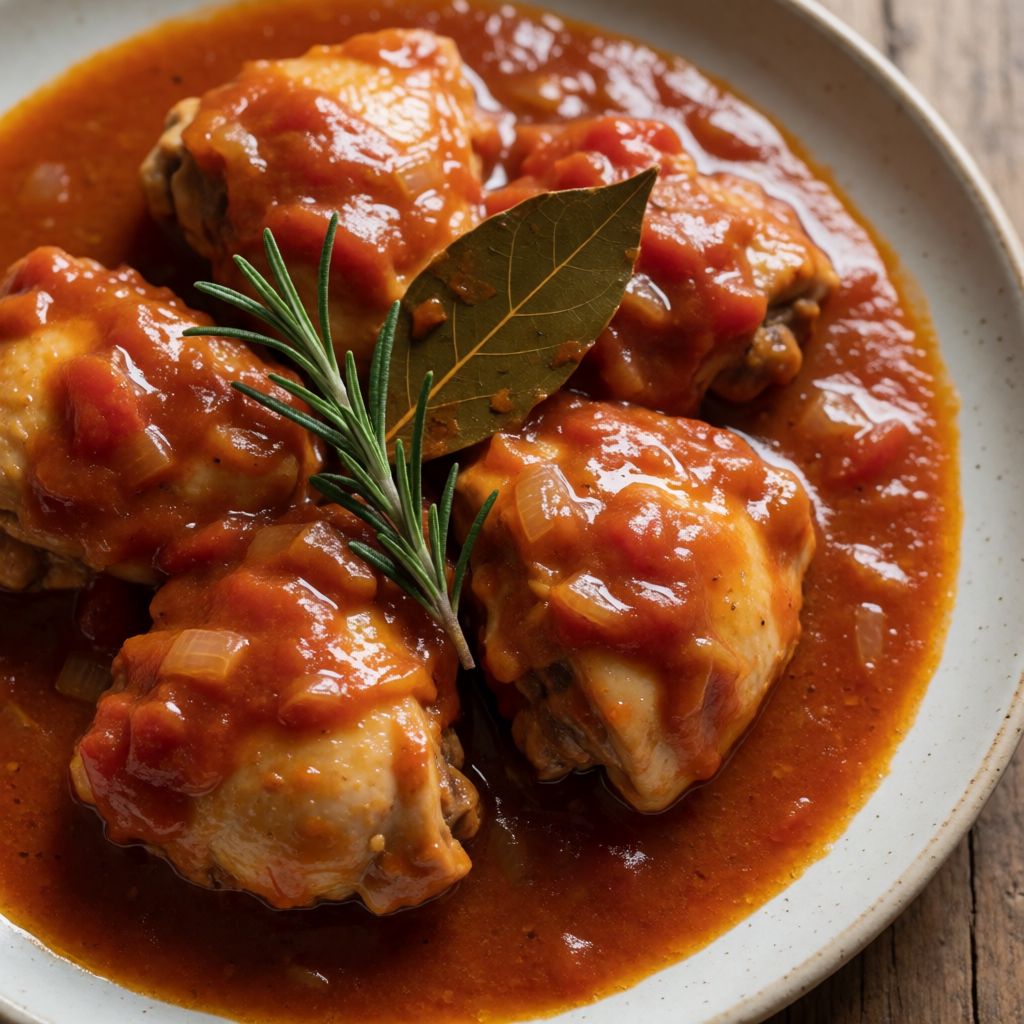
Mother-in-Law's Chicken
A hearty chicken bake stewed with onion, tomato, red wine and lemon.
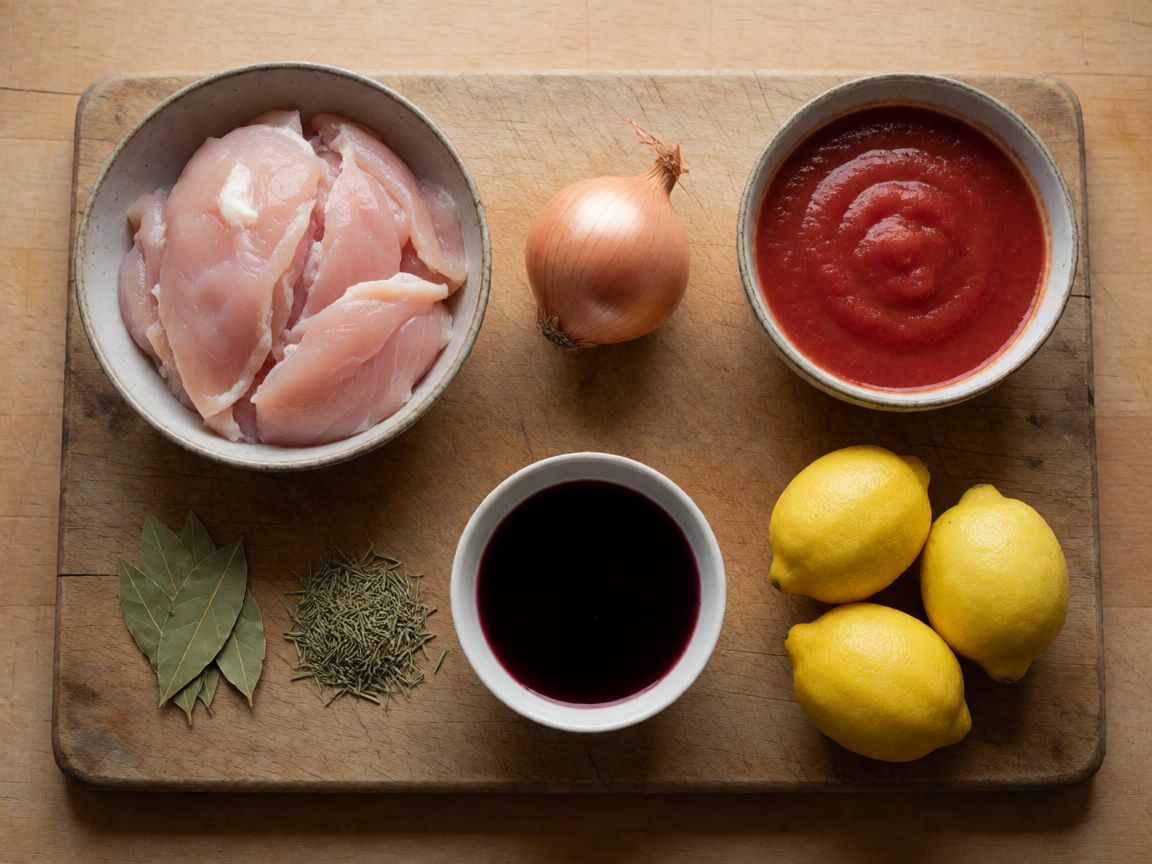
Ingredients










Steps
Remove the skin from the chicken, cut into pieces and marinate in the juice of 3 lemons.
Grease a baking dish with olive oil.
Lay down a layer of sliced onion.
Add the tomato passata, bay leaf, rosemary and a little salt.
Lay the chicken on top and start cooking on the hob.
Pour in the red wine and let it be absorbed.
Without taking it off the heat, add 475 ml of hot water.
Bake for 30 minutes at 180°C.
30 minDoneness: inside 74°C.
This is not a roast. A roast chicken sits alone in its own fat and browns in dry oven air. Here the bird is cut up, skinned, and lowered into a bath — onion, tomato, wine, water — that starts its life on the hob and only finishes in the oven. So what you're really making is a braise that gets a short spell of top-down heat at the end, enough to set the sauce and push the chicken past the finish line.
What decides whether it works is sequence, not seasoning. Skin off, into lemon, onto onion, under tomato, onto the heat, wine in, water in, oven. Swap that order and you get something else: skin on and the sauce can't get into the meat; water before wine and you've just made a thin soup instead of a sauce that's been forced to concentrate. The dish lives or dies on the hob stage doing its job before the oven ever opens.
Forget the clock for doneness. The recipe gives you the real number — 74°C in the thickest part of the meat — and that's the only honest answer to "is it done." Thirty minutes at 180°C is a lower bound, not a guarantee; a fridge-cold bird, a crowded dish, a lid that isn't really a lid, all push that number out.
Some say chicken needs its skin to taste of anything. Not here — because the skin on a bird this size is mostly insulation and rendered fat, and in a wet braise it never gets the chance to crisp. All it would do is float on top of your sauce and stop the lemon and tomato getting where they're needed: into the flesh.
Start with the lemon. Three lemons' juice over a 3kg bird, skin off, isn't there to make it taste lemony — it's there because citric acid denatures the surface proteins of the meat, firming the texture before heat ever touches it, and because without skin in the way, that acid can actually reach the flesh instead of sliding off a fatty barrier. If your lemons are tired and give little juice, bottled lemon juice will do the acid's job, it just won't bring the oil from the peel — so if you've only got that, grate a little zest into the marinade to get some of it back.
The onion goes down first for a reason that has nothing to do with flavour layering as ritual and everything to do with physics: it's a cushion. Without it the chicken sits straight on hot metal or ceramic and catches and sticks before the sauce has built up around it. The onion softens, sweetens, and gives the tomato something to sit on rather than scorch against.
Passata instead of fresh tomatoes is economics wearing a recipe's clothes. A tin or carton of passata is tomato that's already been cooked down, strained, and stabilised — so you get a consistent acidity and sweetness in January as in August, no waiting for a ripe tomato that a northern growing season mostly won't give you. If you haven't got passata, blitz a tin of plain tomatoes smooth and use that; it'll be a touch more watery, so let it sit on the heat a little longer before the chicken goes in.
The wine goes in while the dish is still over direct heat, and you let it "be absorbed" — meaning you watch the liquid disappear into the sauce and the fond, not that you count seconds. This is where a lot of the dish's depth comes from: wine added over heat throws off its alcohol and sharp edges and leaves behind body. Hot water follows, not cold, because dropping cold liquid into a simmering pan stalls the temperature and the chicken sits in a lukewarm bath instead of continuing to cook — that stop-start is exactly what leaves meat tasting stewed-then-reheated rather than cooked through in one go. No wine, no problem: water with a spoon of vinegar or extra lemon juice gets you the acid and some depth, just thinner.
One real domestic snag: this recipe wants a dish that goes from hob to oven without complaint. Most baking dishes in a British kitchen — glass, glazed ceramic — are not rated for direct flame or a ring. If yours isn't hob-safe, build the onion-tomato-wine stage in a wide frying pan or a flameproof casserole, then transfer everything into your baking dish only for the oven part. It's an extra pan to wash, but it's cheaper than a cracked dish.
Bay leaf and rosemary are fat-soluble aromatics — they need time sitting in the oil and juices to give anything up, which is exactly what the hob stage and then the oven time give them. Use them with a light hand; they're there to round the tomato's acidity, not to announce themselves. And give the whole thing the patience the method asks for — rushing the hob stage to get to the oven sooner just means an unreduced, raw-tasting sauce under a chicken that still needs to catch up.