
 AI photo
Chickpea Burger Patties
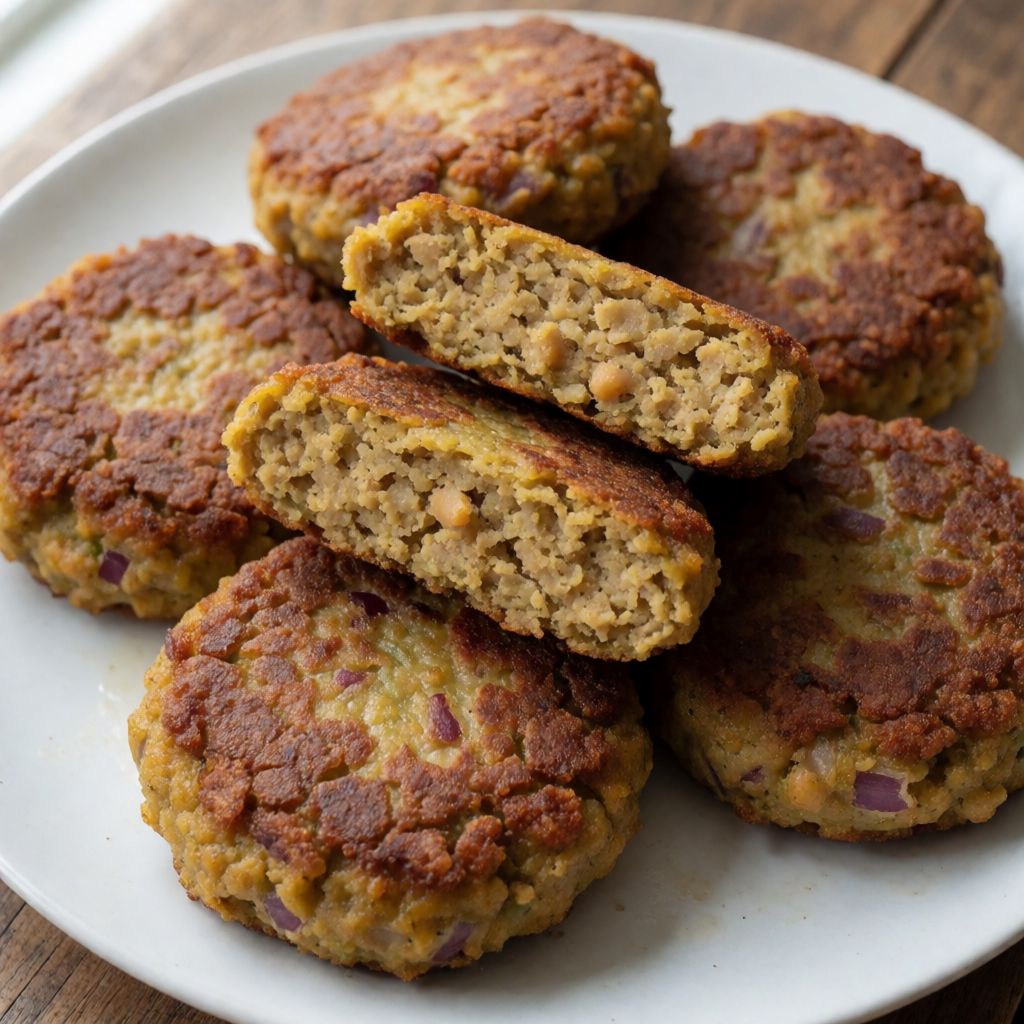
Crisp baked chickpea patties with warm spices, served in a bun with fresh salad and avocado.
Labels are worked out automatically from the ingredients and can be wrong. Check the packaging if it matters to you.
Ingredients
- 1 can Chickpeas drained and rinsed
- 1 pcs Egg
- 1 pcs Red onion finely chopped
- 3 clove Garlic crushed
- 1 tsp Cumin
- 1 tsp Ground coriander
- 0.5 tsp Chilli flakes
- 40 g Rye flour
- 50 g Breadcrumbs dried
- 1 tbsp Olive oil for greasing
- Salt
- Black pepper freshly ground












To serve
- 4 pcs Burger bun
- 2 pcs Tomato sliced
- 0.5 pcs Cucumber sliced
- 0.5 pcs Red onion sliced into rings
- 1 pcs Avocado sliced
- 4 tbsp Mayonnaise
- 1 bunch Parsley fresh, or coriander if preferred
- 75 g Lettuce






Steps
Blitz the chickpeas, egg, red onion, garlic, cumin, coriander and chilli flakes in a food processor until you have a smooth mixture
Let the mixture rest in the fridge for 30 minutes
30 minDivide the mixture into 4 portions, oil your hands and shape each into a ball, then coat on both sides in breadcrumbs, flattening into a round patty
Place the patties on a baking tray lined with baking paper, brush with oil and bake at 190°C for about 25-30 minutes, until crisp and golden at the edges
28 minWarm the burger buns and spread with mayonnaise. Mash the avocado and assemble the burgers with the vegetables and avocado mash
A chickpea patty is not a meat substitute pretending to be a burger — it's its own thing, and the whole trick is getting it to hold together without the fat and connective tissue that keep a beef patty from falling apart. Chickpeas have no fat, no myoglobin, nothing that binds under heat. So the egg does the binding, the rye flour thickens the paste, and the breadcrumb coat gives you a crust to hide behind while the inside sets. Skip any one of those and you get rubble on a tray.
What decides whether this works is moisture control, not flavour. A tin of chickpeas, blitzed, is wetter than it looks — drain and rinse properly, because residual aquafaba (that starchy brine) will loosen the mix past the point the egg can rescue it. The fridge rest isn't laziness written into the recipe for padding — the rye flour needs that half hour to actually absorb liquid and stiffen the paste, the same way a dough rests before it behaves. Shape them straight from the processor and they'll slump in the oven; some say resting is "just for flavour to develop" — no, it's structural, it's about starch taking on water before the heat ever gets involved.
The chickpeas themselves: tinned, not dried-and-boiled-yourself, and that's not corner-cutting — it's the entire economics of a weeknight burger. Dried chickpeas need an overnight soak and an hour-plus simmer; by the time you're done you've spent more on gas than the tin cost. Rinse them well — the canning liquid carries salt and starch you don't want doubling up with the salt you're adding by hand later.
The egg is the one non-negotiable binder here. No fat means no natural glue, so the egg's protein is doing the job that beef fat and collagen would do in a meat patty — coagulating under heat and holding the crumb structure together. If you need this egg-free, you're not swapping it for "nothing" — you need another binder with the same job: a flax egg (a tablespoon of ground flaxseed in three of water, left to gel) works because it mimics that same thickening, sticky behaviour. Chia does the same trick.
Rye flour over plain flour matters for one real reason: rye absorbs more liquid for its weight and brings a slightly sour, mineral note that suits cumin and coriander better than a neutral wheat flour would. If you haven't got rye, plain flour will bind the mixture fine — you'll just lose that background flavour, not the structure.
Cumin, ground coriander and chilli flakes are doing flavour work that chickpeas desperately need, because on their own chickpeas taste of very little — mild, chalky, slightly nutty. This isn't a "traditional falafel" recipe and doesn't pretend to be one; it borrows those spices because they're the known, reliable way to make a legume taste of something without drowning it. Garlic and red onion, both raw and blitzed in, bring moisture as well as bite — which is partly why the rest in the fridge matters twice over.
Breadcrumbs for the coating: use dried, not fresh — fresh breadcrumbs carry too much of their own moisture and will go soggy under the oil rather than crisping. Any dry, unseasoned crumb works, including a gluten-free version if that's the constraint — panko gives you a craggier, crunchier shell if you want more texture than the standard dried crumb gives.
The oil for greasing just needs to carry heat to the crumb and have no flavour of its own to compete with the cumin — a flavourless vegetable or light olive oil does it; don't reach for anything that smells strongly of itself, like an unrefined extra virgin, or you'll taste the oil before you taste the patty.
On assembly: mashed avocado instead of a thick sauce is doing double duty — moisture and fat, both things the patty itself lacks, so eating it isn't dry. Mayonnaise is just extra insurance on that front. None of the salad veg or buns are temperamental — buy them ripe, slice them thin enough that the burger still closes in your hand, and don't overthink it. This part of the dish isn't where the skill lives; the skill lives in the pan — well, the tray.