
 AI photo
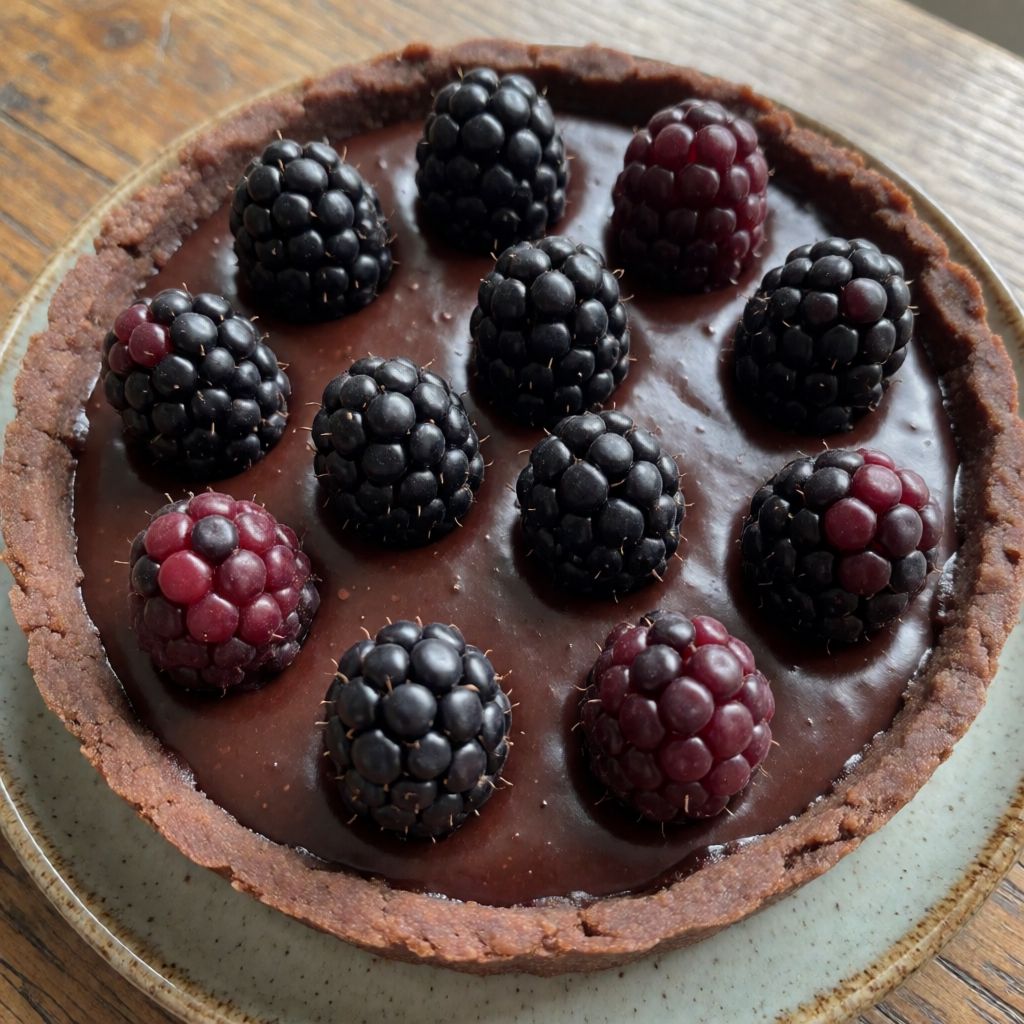
Chocolate Tart with Blackberries
A chocolate tart with a hazelnut-cocoa pastry case, silky chocolate ganache and fresh blackberries.
Labels are worked out automatically from the ingredients and can be wrong. Check the packaging if it matters to you.
Ingredients
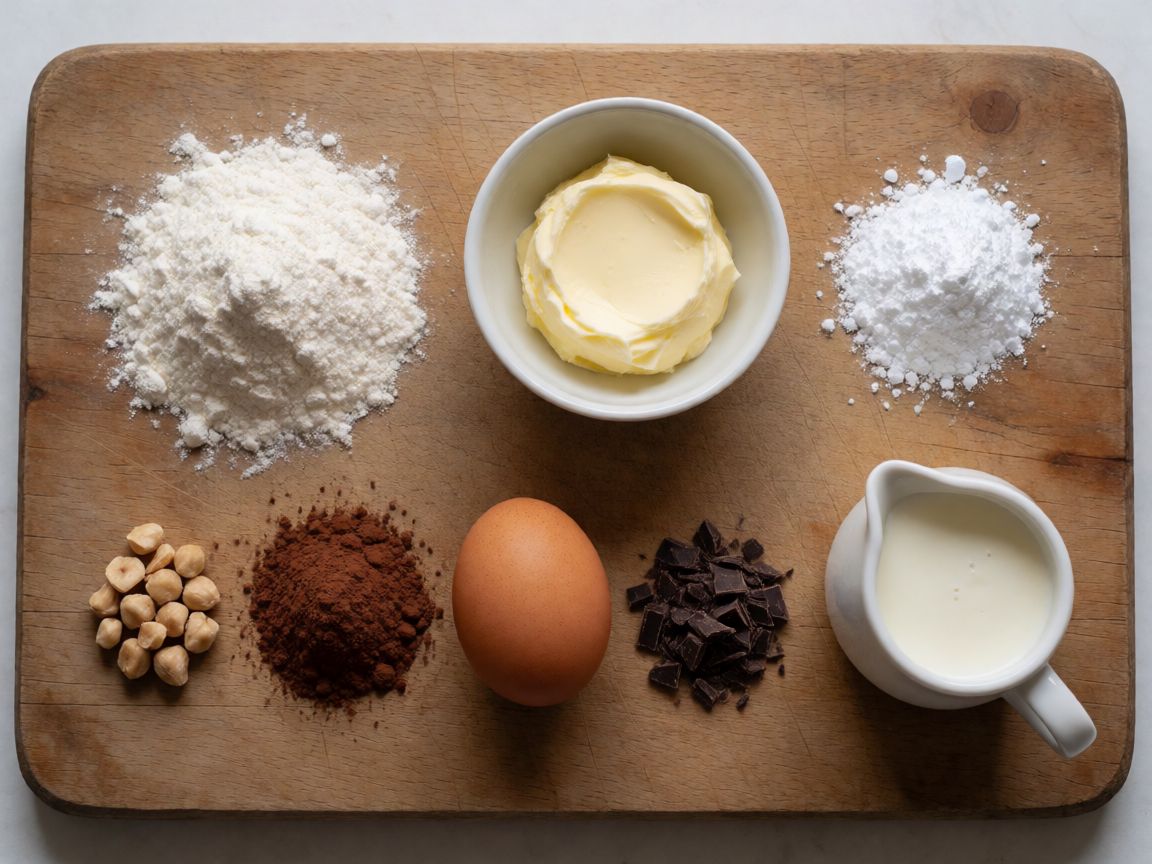
- 200 g plain flour
- 100 g butter softened
- 90 g icing sugar
- 30 g hazelnuts
- 15 g cocoa powder
- 1 pcs egg
- 1 pinch salt
- 260 g dark chocolate
- 110 g double cream
- chocolate chips to taste
- 200 g blackberries




Steps
Beat the softened butter, egg and icing sugar until smooth and creamy.
Toast the hazelnuts and grind them in a blender to fine crumbs.
Add the hazelnut crumbs and 50 g of flour to the creamed mixture and combine.
Sift 150 g of flour and mix with the cocoa powder and a pinch of salt. Add to the dough and mix until smooth.
Wrap the dough in cling film and chill in the fridge.
120 minRoll out the dough with a rolling pin to a thickness of 3-4 mm.
Line a 22 cm tart tin with the dough.
Heat the oven to 160°C and blind-bake the base.
Let the base cool before removing it from the tin.
Melt the double cream and chopped chocolate over a bain-marie, stirring constantly.
Pour the ganache over the base and leave to set in the fridge.
60 minDecorate the tart with chocolate chips and blackberries.
This is a chocolate tart in the French sense — a shortcrust-like base that's actually a pâte sucrée with hazelnuts and cocoa worked through it, carrying a set ganache on top, finished with fresh blackberries. What decides whether it works isn't the ganache — people panic about ganache and it's the easy part. It's the base: whether the dough stays cold enough, long enough, to be rolled rather than smeared, and whether the ganache is made at a temperature that lets it emulsify instead of split.
The dough is creamed butter and sugar first, egg next, then flour and ground hazelnuts — that order matters because it's building a structure that resists spreading in the oven, not just a biscuit base you bash flat with your fingers. Butter and sugar beaten together trap air and coat the flour's gluten-forming proteins in fat before any liquid arrives; that's what keeps this short rather than chewy. Do it in the wrong order — flour and butter first, egg stirred in after — and you get something closer to bread.
On ingredients, start with the flour split: 50 g goes in with the hazelnuts before the cocoa mixture joins, which just spreads the gluten development across two additions so the dough stays easier to bring together smoothly rather than turning tough from one long knead. Use plain flour — nothing self-raising here, you don't want lift, you want a flat, dense, snappable shell.
The hazelnuts want toasting before grinding, and that's not for show — raw hazelnuts taste faintly green and bitter under their skins; a few minutes in a dry pan or oven until they smell distinctly nutty and the skins loosen fixes that, and lets you rub most of the papery skin off if you want a cleaner crumb. Grind them fine but stop before they turn to paste — hazelnuts are oily enough that over-processing releases that oil early and you end up with a clump instead of crumbs, which then behaves like extra fat in your dough and softens it unpredictably.
Icing sugar rather than granulated is about texture, not sweetness — it dissolves into the creamed butter smoothly with no grit, important in a dough this short where there's no liquid later to dissolve stray sugar crystals. If you've only got caster sugar, it'll work, just cream it longer until you can't feel any crunch when you rub a little between your fingers.
Cocoa powder here is unsweetened, for colour and bitterness against the sweet ganache and sweet chocolate chips — don't reach for drinking chocolate or hot-chocolate mix, both carry their own sugar and powdered milk and will throw the balance and the texture off.
For the ganache, 260 g dark chocolate to 110 g cream is a ratio weighted toward chocolate, which is why it sets firm enough to cut cleanly rather than staying soft — if your chocolate is very high in cocoa solids (70%+) it'll set harder and faster; if it's closer to 50%, it'll stay softer, which isn't wrong, just a different tart. Any chocolate with a decent percentage of actual cocoa solids and minimal vegetable fat substitutes will behave itself here — cheap "cooking chocolate" bulked out with palm oil tends to split more readily on the bain-marie, so if that's what's in the cupboard, melt it slower and lower rather than trusting it to be forgiving.
Blackberries go on at the end, raw, mostly for the sharp acidity cutting through all that fat and sugar — a tart this rich needs something that isn't sweet sitting on top of it. British blackberries in late summer are an easy, often free, source if you've got a hedgerow nearby; out of season, raspberries do the same job of acid-against-ganache, just quieter.
A 22 cm tin feeds six reasonably, meaning modest slices — this is a rich dessert, not a cake, and nobody's asking for seconds the size of firsts. If you don't own a proper tart tin with a removable base, a regular 22 cm cake tin will do, but line the base with parchment first, because getting a set ganache tart out cleanly without that removable bottom is where kitchens go wrong and tarts go in bits.