
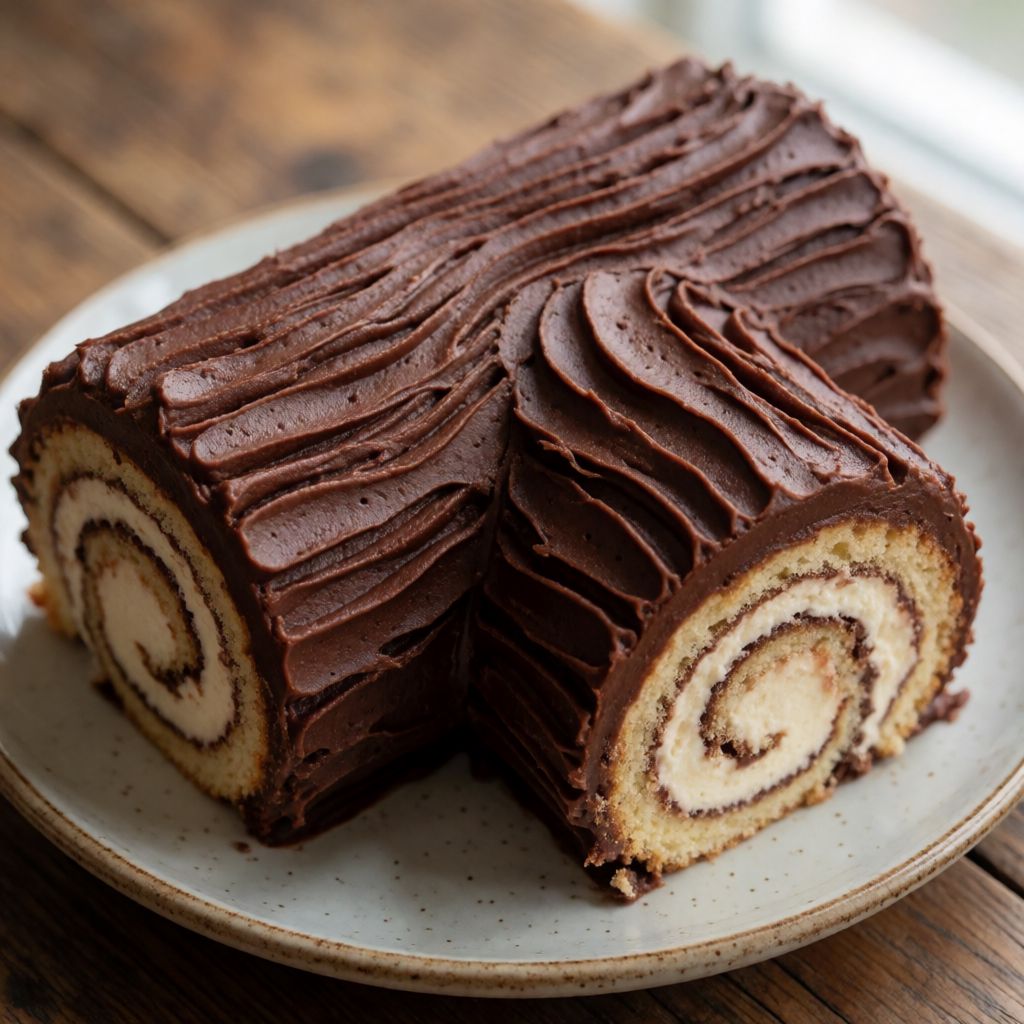
 AI photo
Christmas Chocolate Yule Log
A festive rolled chocolate sponge filled with a Nutella and ricotta cream, finished with a glossy chocolate glaze.
Labels are worked out automatically from the ingredients and can be wrong. Check the packaging if it matters to you.
Ingredients
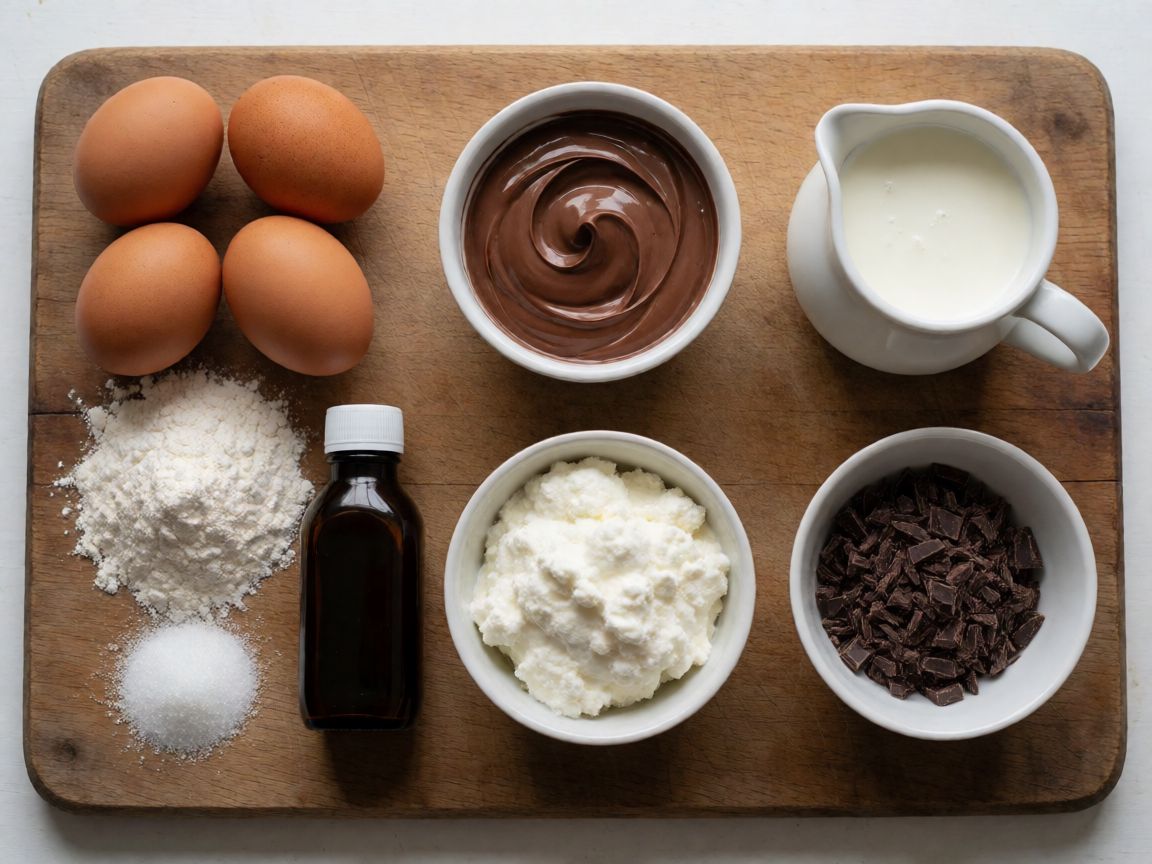
- 4 pcs Eggs
- 100 g Plain flour sifted
- 140 g Caster sugar
- 1 tsp Vanilla extract
- 350 g Nutella
- 200 g Ricotta
- 250 ml Double cream
- 200 g Dark chocolate
- Icing sugar to taste








Steps
Whisk the eggs and caster sugar with an electric mixer for at least 5 minutes until light, fluffy and creamy.
5 minAdd the vanilla extract and sifted plain flour, folding gently until smooth.
Spread the batter onto a baking tray lined with baking paper and smooth with a spatula.
Bake in a preheated oven at 180°C for 7-8 minutes, until golden.
8 minLet the sponge cool completely.
Cover the sponge with paper, flip it over and carefully peel off the top paper.
Mix the Nutella with the ricotta until you have a smooth, creamy filling.
Spread the filling evenly over the sponge and carefully roll it up into a log.
Wrap the log tightly in paper and chill in the fridge for at least 30 minutes.
30 minHeat the double cream, add the chopped dark chocolate and stir until fully melted.
Remove from the heat and let the glaze cool.
Pour the glaze into a bowl and whisk with an electric mixer until creamy.
Place the log on a plate, optionally arranging a few trimmed pieces at the sides as branches.
Cover the log with the chocolate glaze.
If you like, drag the tines of a fork along the surface to make bark-like lines while the glaze is still soft.
Dust with icing sugar to taste.
A yule log is a swiss roll wearing a tree costume, and the whole trick lives in two minutes you can't see on the ingredient list: the moment you roll the sponge. Get that right and everything after — filling, glaze, fork marks — is decoration. Get it wrong and you've got a flat cake with cracks in it, which no amount of icing sugar disguises.
The sponge itself is a genoise-style batter with no raising agent at all — no baking powder, nothing. It rises purely because you've beaten air into eggs and sugar for a full five minutes, long enough that the mixture turns pale and holds a ribbon shape when it falls off the whisk. That air is the only lift you get, and it's why folding the flour in gently matters: knock the air back out and the sponge bakes flat and dense instead of springy enough to bend round itself.
Some say a yule log has to be rolled while piping hot, straight from the oven, or it'll crack beyond rescue. Not true — what actually stops cracking is rolling it while it still has give, before the structure sets rigid, and then letting it cool *in that rolled shape*, wrapped in its paper. The paper isn't ceremony, it's a mould: it trains the sponge to remember the curve so that when you unroll it to fill it, it wants to curl back up rather than resist you.
The oven number — 180°C, 7 to 8 minutes — is less important than what you're watching for: the sponge should look golden and spring back when you press it lightly, not wet-looking in the centre. Over the time, under the eye. A domestic oven with an uneven back-left hot spot (most of them have one) can turn a thin sponge from done to dry in under a minute, so start checking at 6.
Four eggs plus 140g sugar is the structure, and it's worth knowing that this ratio — no flour acting as the main binder, only 100g — is why you beat so hard at the start. Eggs trap air mechanically; flour here is just there to give the air bubbles walls so they don't collapse the second you stop whisking. If your mixer is weak, give it longer rather than more speed — the volume matters more than the violence.
Ricotta: look for the firm, slightly grainy tub kind sold for cooking, not the smooth spreadable "light" ricotta — the looser version will turn your filling into something closer to mousse that slides when you roll. If you can't get ricotta, mascarpone works as a substitute on the same logic: anything thick, mild, and low in free water that won't thin the Nutella out.
Dark chocolate for the glaze: use something you'd actually eat off a spoon, because melted into cream that's exactly what you're doing — there's no baking left to burn off a bitter or waxy edge. 70% cocoa solids or thereabouts is the usual range; much higher and the glaze can seize and go grainy rather than glossy when it cools, much lower and it won't set firm enough to hold the fork-bark pattern.
Double cream, heated gently — not boiled, just until it's steaming and starting to move at the edges — is there to melt the chocolate without cooking it. Boiling cream can split the fat out, which is the thing that turns your glaze dull and oily-looking instead of smooth. Whisking it after it cools is what aerates it slightly and gives it that spreadable, slightly mousse-like body rather than a thin, runny coating that just slides off the sides of the log.
This makes enough for six modest Christmas-dinner-sized slices, not six greedy ones — it's rich, and it's meant to follow something heavier, in the way pudding always does here. Build in the 30 minutes' chill as a real ingredient, not a formality: it's what lets the filling firm up enough that your first slice holds together instead of oozing Nutella across the plate. Patience, in this one, is doing the same job as a fridge.