
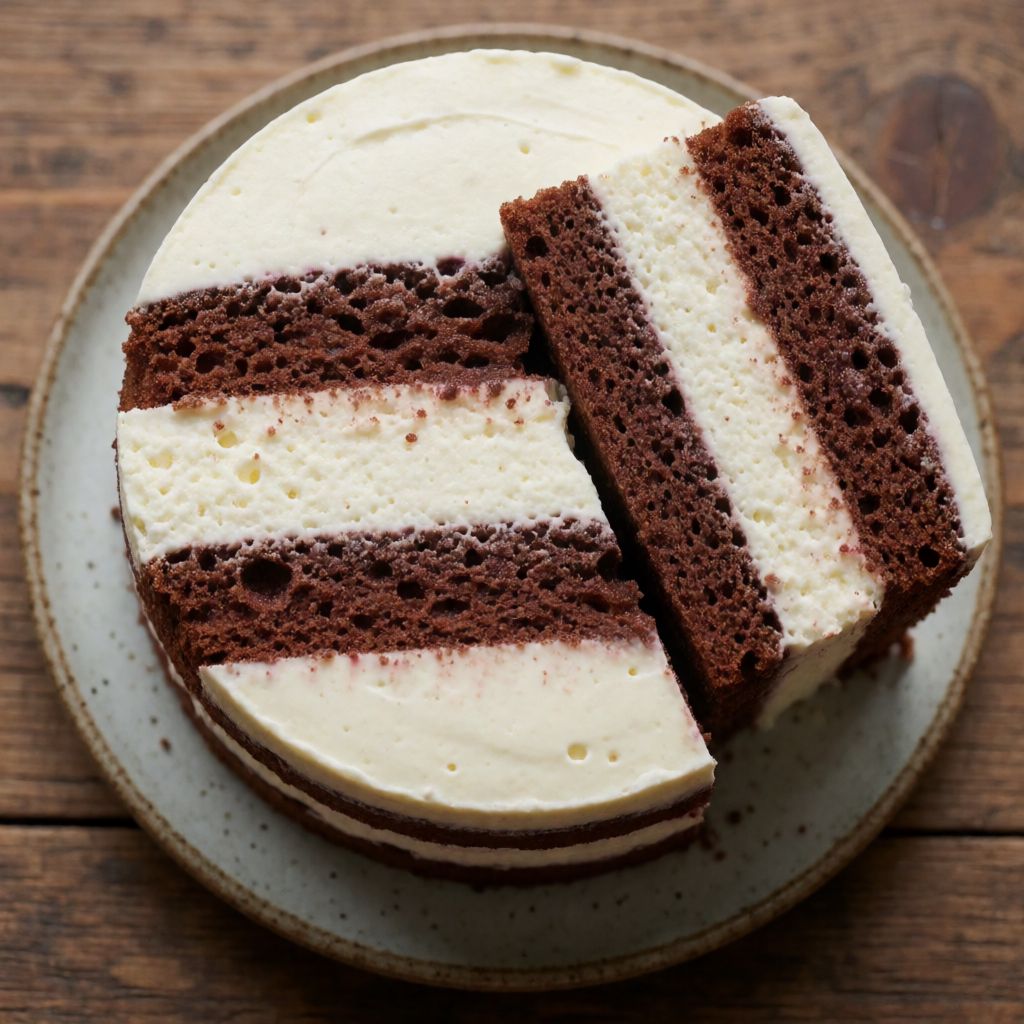
 AI photo
Cocoa Cake with Mousseline Cream and Raspberries
A cocoa sponge filled with silky mousseline cream and fresh raspberries.
Labels are worked out automatically from the ingredients and can be wrong. Check the packaging if it matters to you.
Ingredients
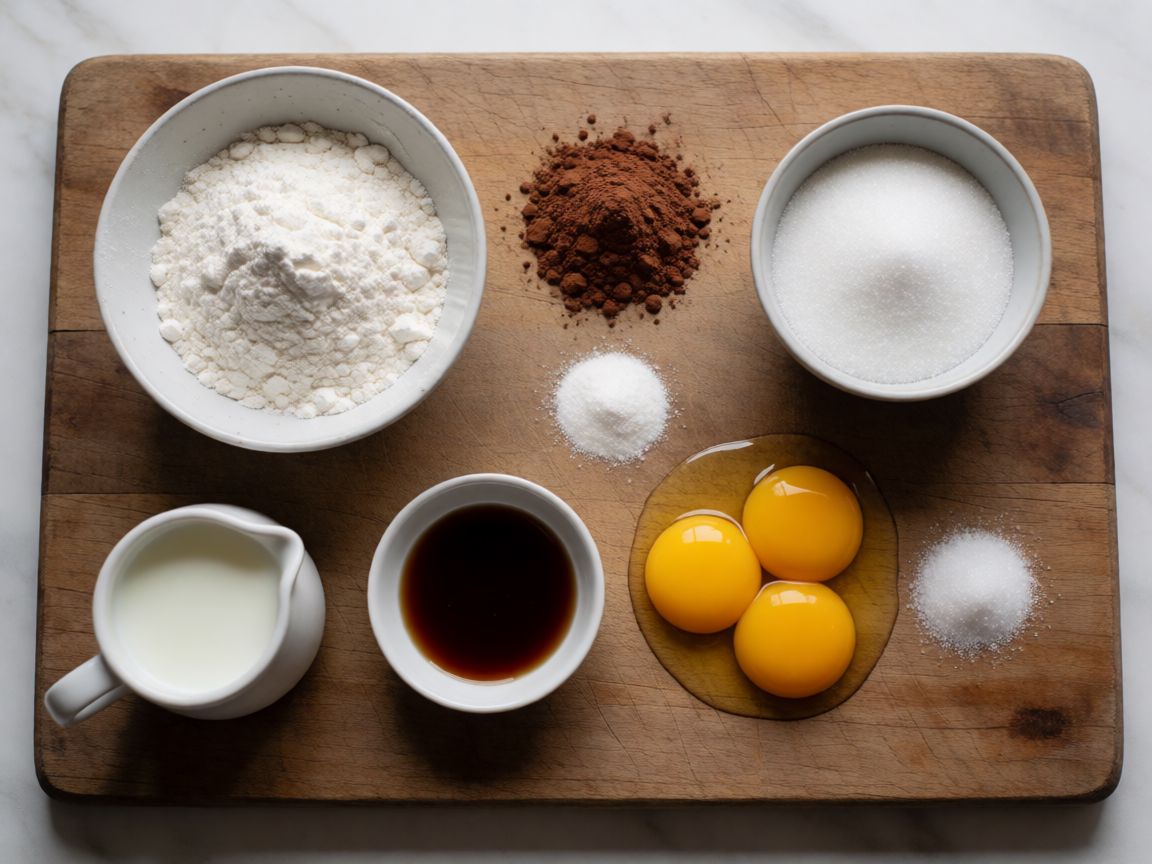
- 200 g Plain flour
- 20 g Cocoa powder
- 150 g Caster sugar
- 8 g Baking powder plain, plus a little vanilla extract
- 1 pinch Salt
- Vanilla extract to taste
- 250 ml Milk
- 80 ml Vegetable oil
- 3 pcs Egg yolk
- 80 g Sugar
- 15 g Plain flour
- 10 g Cornflour
- 1 pcs Vanilla pod
- 250 ml Milk
- 125 g Butter softened
- 350 g Raspberries
- 1 tbsp Icing sugar













Steps
Combine the egg yolks and sugar in a saucepan and whisk together, then add the flour and cornflour and whisk vigorously until smooth.
Heat the milk together with the vanilla pod, bring to the boil, then let it stand for 5 minutes.
5 minRemove the vanilla pod and pour the milk into the egg mixture in a thin stream, whisking constantly.
Cook the cream over medium heat, stirring with a whisk, until it comes to the boil, then for a further 2–3 minutes.
Remove the saucepan from the heat and let the cream cool for 10 minutes.
10 minAdd half of the softened butter and mix it into the cream, whisking.
Cover the cream with cling film directly on the surface and let it cool to room temperature.
Add the remaining butter and beat with a mixer for a few minutes until you get a smooth, silky consistency.
Cover the mousseline cream with cling film and let it rest in the fridge.
Preheat the oven to 180°C, conventional (top and bottom heat, no fan).
In a bowl, combine the flour, cocoa powder, sugar, salt and baking powder and mix with a whisk.
Make a well in the centre and pour in the vanilla, warm milk and oil.
Mix all the ingredients well, whisking, to get a smooth batter.
Butter a 22 cm tin, dust with flour, and pour in the batter.
Bake the cake for 30–35 minutes (check doneness with a wooden skewer).
33 minRemove from the oven and let it cool completely.
Turn the cake out onto a serving plate.
Pipe a generous layer of mousseline cream using a piping bag, then decorate with raspberries.
Dust with icing sugar and serve.
This is two French ideas stuck together: a cocoa sponge that leans on oil instead of butter, and crème mousseline — pastry cream softened then beaten with butter until it holds a shape. Neither half is complicated on its own. What decides whether the cake works is whether you treat the cream as two separate jobs, not one.
The crème pâtissière base and the butter-beating-in are not the same operation, and the recipe keeps them apart on purpose. Cook the custard, cool it, work in half the butter while it's still warm enough to merge — that's job one, making a stable, cooked custard that won't split. Job two is the whisking-in of the rest of the butter once everything's at room temperature, which is what actually aerates it into something pipeable. Do job two while the custard is still warm and the butter melts into liquid fat; you get a sauce, not a cream, and it slides off the cake instead of holding its ridges.
The sponge is almost foolproof by comparison — it's a "stir wet into dry, no creaming, no fuss" cake, the kind that exists because oil stays liquid at room temperature and butter doesn't, so an oil cake stays soft a day later without you doing anything clever. People say chocolate cakes need melted butter for flavour. No — cocoa carries the flavour; the fat's only job here is moisture, and oil does that more reliably over time.
Cocoa powder, not melted chocolate: the cake wants dry cocoa solids for colour and bitterness, without the extra fat and sugar that a bar of chocolate drags in. If you only have chocolate, you can melt some in with the oil and cut the sugar a touch, but you're now balancing a different fat ratio, so don't expect quite the same crumb.
The egg yolks plus flour-and-cornflour pairing in the cream is standard pâtissière logic — plain flour gives body, cornflour gives a cleaner set and a glossier finish, so you use both rather than doubling up on one. No cornflour in the cupboard, use custard powder or just more plain flour; the cream will be slightly starchier and less silky, but it'll hold.
The vanilla pod steeped in hot milk, not vanilla extract stirred in cold, is the one place in this recipe where a myth is worth naming: some say pods and extract are interchangeable, just "more or less vanilla." No — the pod needs heat and standing time to pull aromatic oils out of the seeds into the milk fat; extract is already-extracted alcohol-and-vanillin, so it goes into the batter cold, late, and does a completely different, smaller job there. If you've no pod, use vanilla paste in the custard milk instead of extract — extract alone, added cold to hot milk, mostly just evaporates off.
Butter in the cream must be properly softened — pliable, not melted, not fridge-hard — because you're asking it to disperse evenly into a custard twice, once warm and once cool, and cold lumps simply won't break down smoothly whichever stage you add them at. Any neutral vegetable oil works in the sponge — the brief is "an oil with no smell of its own," so sunflower or a light rapeseed, not something that'll fight the cocoa; extra virgin olive oil is the wrong tool here even though it's a perfectly good oil elsewhere.
A 22cm tin and a proper 180°C bake, no fan, matter more than the clock: fan ovens push air and dry the crust faster than the centre can set, so if that's all you've got, drop the temperature by about 20°C rather than trusting the written time. The skewer test is doing the real work regardless — it comes out clean or it doesn't, and 30–35 minutes is where to start checking, not where to stop.
Letting the cake cool completely before you turn it out, and letting the cream rest in the fridge before you pipe it, aren't optional pauses to skip when you're in a hurry. A warm cake collapses under cream and tears when you turn it; a cream that hasn't firmed in the cold won't hold a piped ridge — it'll slump flat the moment it meets room-temperature air. That resting time is as much an ingredient as the butter is.