
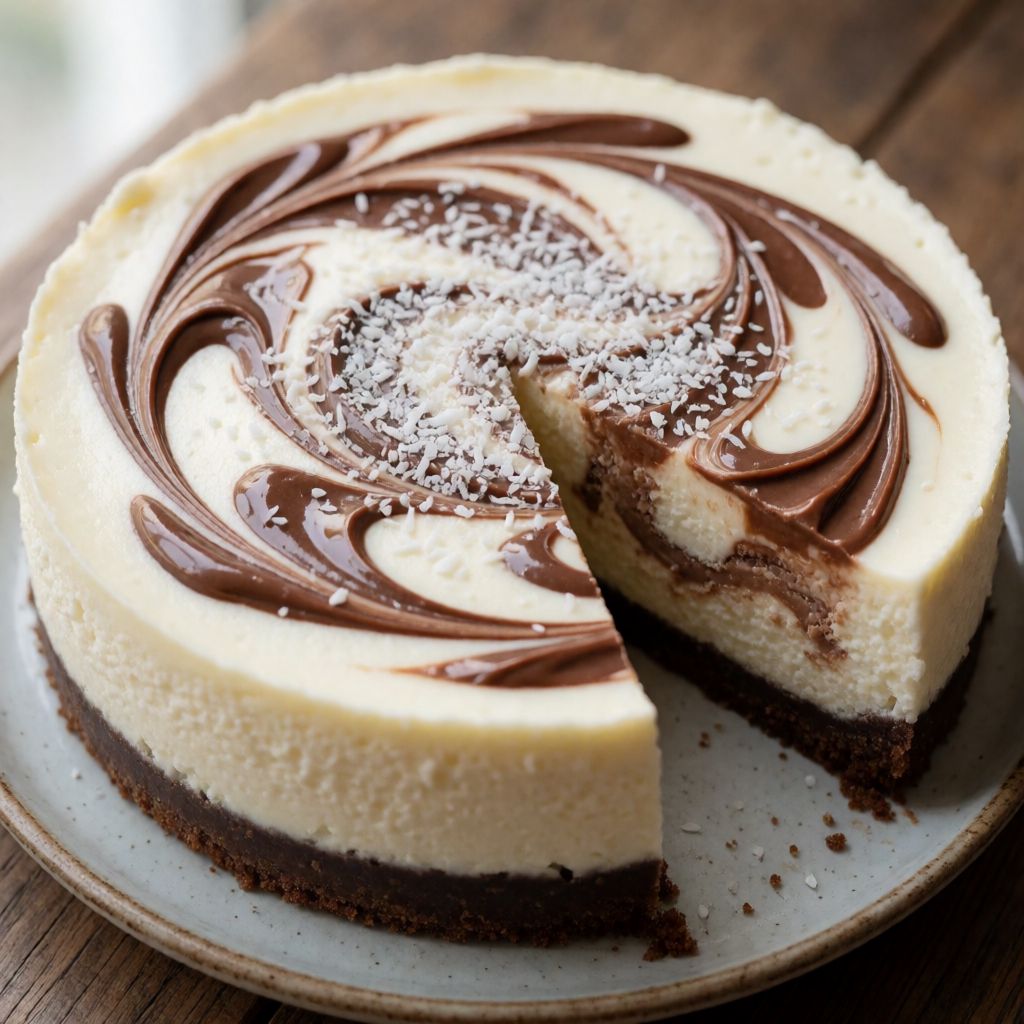
 AI photo
Coconut and Nutella Cheesecake
A no-bake cheesecake with a chocolate biscuit base, coconut-yogurt cream and a glossy Nutella topping.
Labels are worked out automatically from the ingredients and can be wrong. Check the packaging if it matters to you.
Ingredients
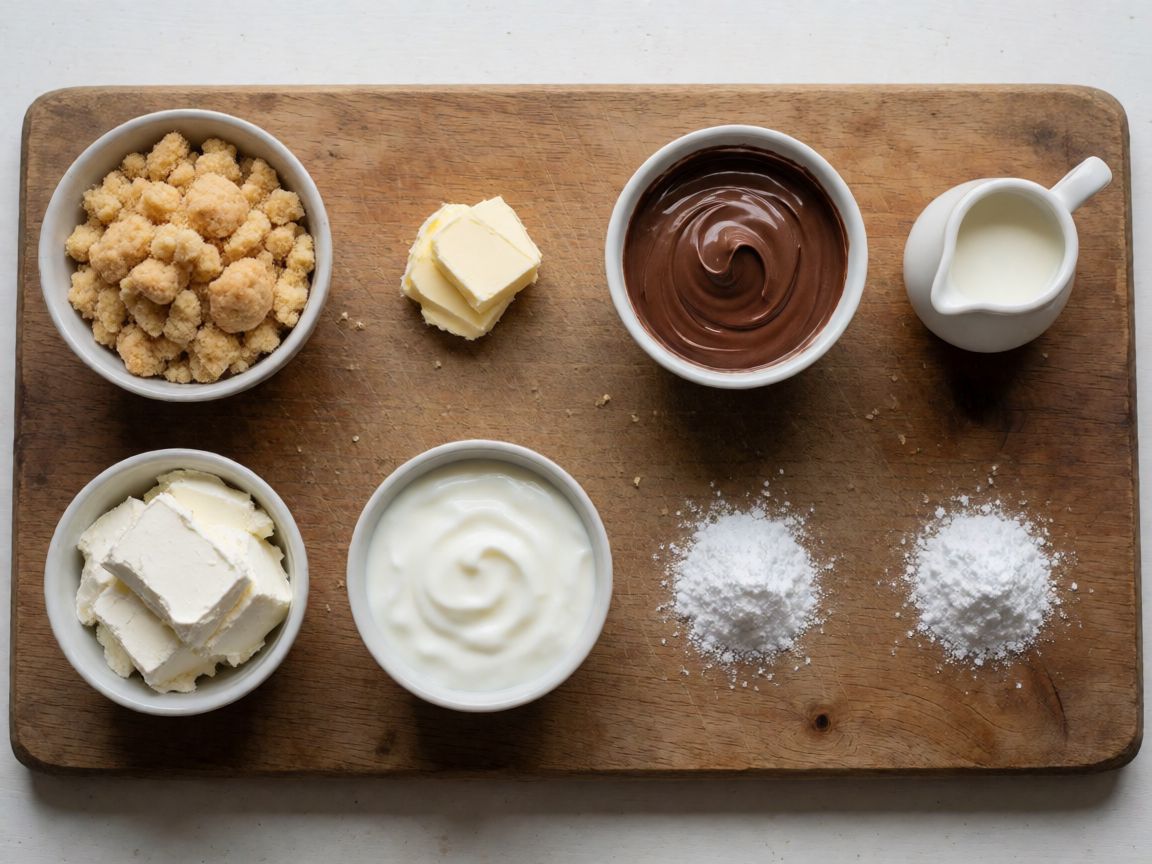
- 250 g chocolate biscuits
- 120 g butter
- 1 tbsp Nutella for the base
- 300 ml double cream 50 ml of it used to dissolve the gelatine
- 250 g cream cheese
- 125 g coconut yogurt
- 100 g icing sugar
- 10 g gelatine
- Nutella to taste, for decoration
- desiccated coconut to taste
- chocolate shavings to taste



Steps
Blitz the biscuits in a blender to fine crumbs.
Melt the butter in a bain-marie.
Mix the crushed biscuits with the melted butter until even, then add 1 tbsp of Nutella.
Line the base of a 22 cm tin with baking paper and press in the biscuit base firmly.
Chill the base in the fridge for 30 minutes.
30 minSoak the gelatine in cold water and warm 50 ml of the double cream in the microwave.
Dissolve the softened gelatine in the warm cream, stirring well.
Whip the remaining cold double cream with the icing sugar to a thick foam.
Beat the cream cheese, then add the coconut yogurt and desiccated coconut.
Gently fold the cream cheese mixture together with the dissolved gelatine and whipped cream.
Spread the filling over the base and smooth the surface.
Chill the cheesecake in the fridge for 3 hours.
180 minMelt the Nutella for decoration in a bain-marie and let it cool slightly.
Pour the melted Nutella over the cheesecake and spread evenly.
Sprinkle with desiccated coconut and chocolate shavings.
This is a no-bake cheesecake, and that word "no-bake" tells you everything about why it behaves the way it does. There's no egg, no oven, nothing to set the filling by heat. It sets by cold and by gelatine — a protein net that traps the cream and holds its shape once it's chilled below about 15°C. Take it out on a warm day and leave it on the counter too long, and you'll watch that structure slacken in front of you. So the whole dish is really an exercise in getting gelatine to do, slowly and patiently, what an oven does in twenty minutes with eggs.
The base is biscuit crumbs bound with butter — essentially a cold pastry that never sees heat except to melt the fat. Butter at room temperature won't soak into the crumbs evenly; melted, it flows into every gap and binds like mortar. Press it in loosely and it crumbles when you cut a slice later — some say a loose base is just "rustic," no, it's unset mortar, and the fix is pressing it down hard with the back of a spoon or a flat glass before it ever sees the fridge.
The filling is cream cheese and coconut yogurt lightened with whipped cream, sweetened, and held together with gelatine dissolved in warm cream. The order matters more than people think: gelatine goes into warm liquid, never hot, because gelatine above about 60°C starts losing its setting power — you're denaturing the very protein you need. And it goes in before you fold everything together, not after, because once it's cold and starts gripping, you can't comb lumps of set gelatine out of a finished mixture.
Biscuits: chocolate digestives or any dry, crumbly chocolate biscuit works — the test is whether it blitzes to sand rather than paste. Oat biscuits or anything with a high sugar glaze can go gummy in the blender; if that's all you've got, pulse in short bursts and stop before it clumps.
Butter: unsalted, melted gently — a bain-marie here isn't fussiness, it's just avoiding a scorched pan on a domestic hob where the heat under a small saucepan can spike faster than you'd expect. If you only have a microwave, 20-second bursts do the same job without you watching a flame.
Double cream, split two ways, each for a different job. The 50 ml for the gelatine just needs to be warm enough to dissolve it — a few seconds in the microwave, checked, not blasted, because cream that boils will split and you'll be dissolving gelatine into grease and water instead of cream. The 300 ml-minus-50 ml gets whipped cold with icing sugar; cream whips because the cold fat globules trap air as you beat, and it does this far better cold than at room temperature — some say you can skip chilling it first, no, because warm cream just collapses back down as fast as you beat air in.
Cream cheese: full-fat, the block kind rather than a spreadable light version — the light ones carry more water and can leave your filling looser than it should be. Coconut yogurt brings both the coconut flavour and a bit of acidity that keeps the whole thing from tasting flatly sweet; a thick Greek-style yogurt works if coconut isn't to hand, you'll just lose the coconut note and can make it up with extra desiccated coconut.
Gelatine: leaf or powder both work, but soak it in cold water first regardless — this is what "blooming" does, it lets the gelatine absorb water gently so it dissolves evenly in the warm cream rather than clumping. Skip this step and you get little rubbery threads through the finished cheesecake instead of a smooth set — that's the real cause, not "bad gelatine," just gelatine that went straight into heat without softening first.
Icing sugar rather than caster here because it dissolves into cold cream without any grittiness — caster sugar needs more mechanical work or warmth to disappear, and you don't want to overwhip the cream chasing it.
The long chill — three hours, stated as a minimum, not a clock to watch — is the one ingredient with no substitute. Gelatine sets as a slow chemical process, not an instant one; cut it short and you'll get a filling that holds a spoon shape in the fridge and slumps the moment it meets a warm kitchen. If you're not sure, press the surface lightly — it should resist, not dimple and stay dimpled. This recipe doesn't reward hurry, and there's no shortcut worth pretending exists.