
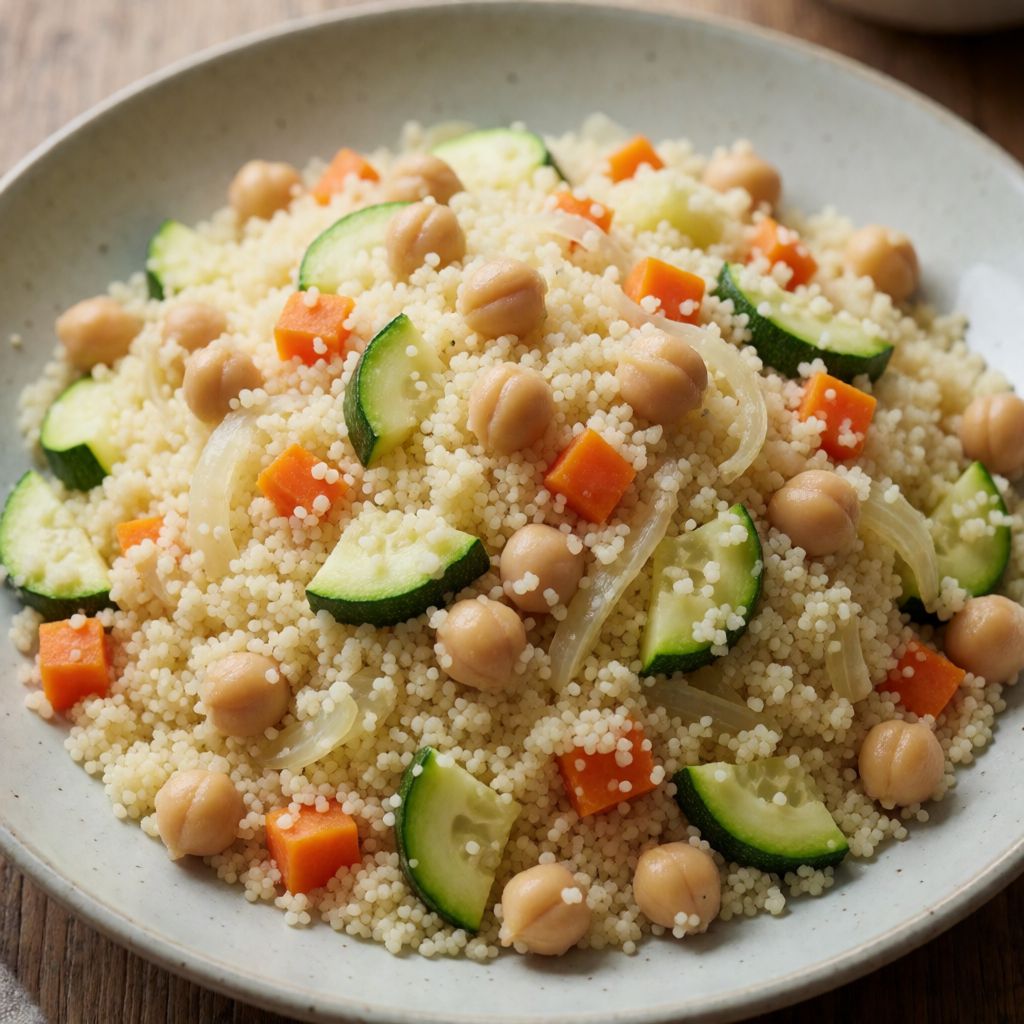
 AI photo
Couscous with Courgettes, Chickpeas and Carrots
A simple vegetable couscous side with chickpeas, carrots and courgettes.
Labels are worked out automatically from the ingredients and can be wrong. Check the packaging if it matters to you.
Ingredients
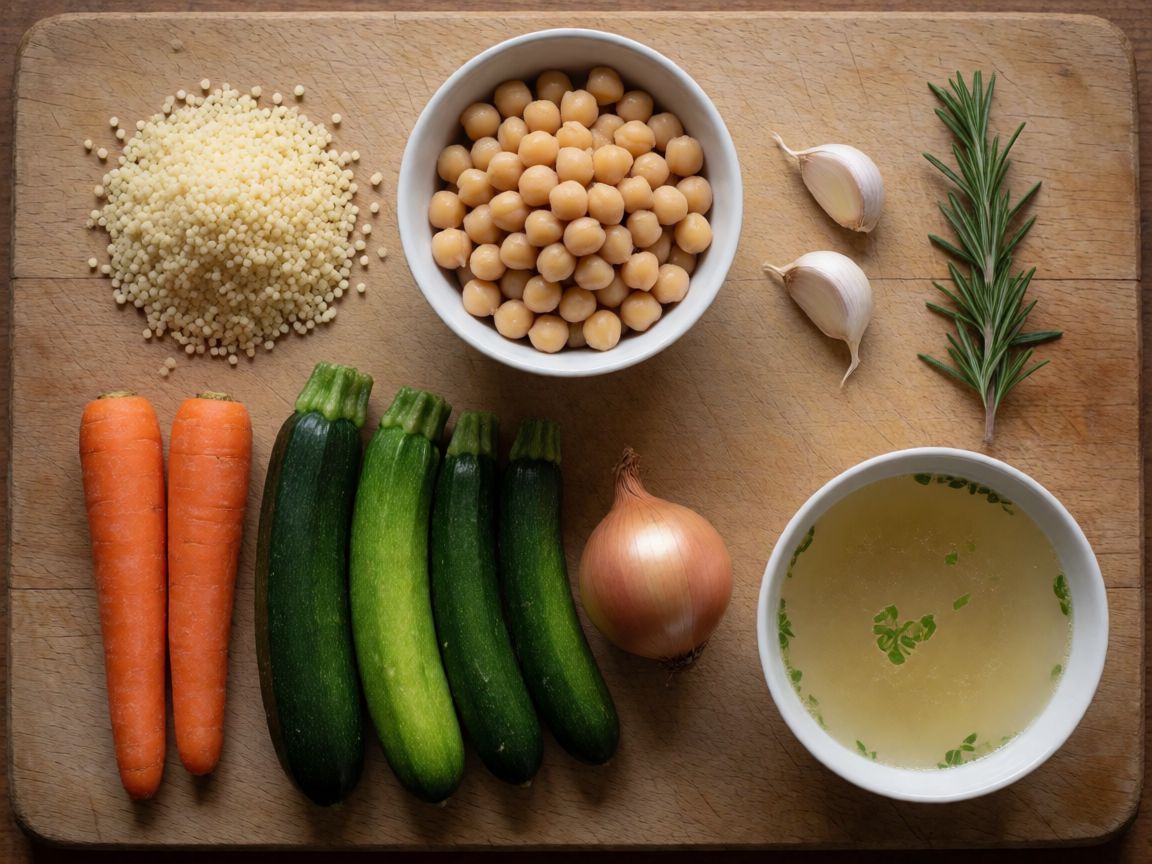
- 250 g Couscous
- 400 g Chickpeas cooked
- 2 pcs Carrots
- 4 pcs Courgettes
- 1 pcs Onion
- 250 ml Vegetable stock
- 2 clove Garlic
- 1 pcs Rosemary sprig
- 6 tbsp Olive oil
- Salt to taste
- Black pepper to taste





Steps
Prepare the vegetables: wash the courgettes and carrots well, peel them, then slice the courgettes into rounds and cut the carrots into small pieces.
Slice the garlic and onion roughly and fry gently in a non-stick pan with the olive oil.
4 minAdd the rosemary and carrots, cook adding a little water, then add the courgettes and continue cooking.
10 minIn a separate pot, bring the vegetable stock to the boil, warm the couscous in a large pan and pour the stock over it.
Cover with a lid and leave the grain to swell until it has absorbed all the liquid.
10 minDrain and rinse the chickpeas, add them to the carrots and courgettes and warm through together.
3 minSeason with salt and black pepper, mix everything together and turn off the heat.
Fluff the couscous with a fork, dress with olive oil and tip it into the pan with the vegetables.
Mix everything thoroughly, plate up and serve.
This is not a stew and not a salad — it's a grain finished by steam, married afterwards to vegetables that were cooked by a completely different method. Two separate jobs happen in parallel: couscous swells in its own pot off the heat, vegetables soften in a pan on it. The whole dish succeeds or fails at the join — if you combine them too early, or too late, you get either wet grain or dry vegetables, and no amount of olive oil at the end fixes that.
Couscous is not rice. It doesn't cook — it rehydrates. The grain is already pre-steamed and dried at the factory, which is the whole reason it exists: a durable, long-life convenience food born out of North African semolina work, repackaged for speed. So boiling it like pasta is not tradition done badly, it's just the wrong tool for a job that's already finished. Pour on boiling stock, cover, and leave it alone — the steam trapped under the lid does the work, not your attention. Lift the lid every thirty seconds to check and you let the heat escape, and the centre of each grain stays hard.
Courgette: buy it firm, with tight, shiny skin and no give when you press it. A soft courgette has already started turning to water inside, and no amount of frying brings back structure once it's lost. You peel it here mainly for texture — some people leave the skin on for colour, which is fine, but a domestic pan runs cooler than a kazan, and skin-on courgette takes a touch longer to go from "raw crunch" to "tender" without browning, since UK hobs rarely give you the fierce, instant high heat that lets you get colour and softness at once.
Carrot: look for firmness and a clean snap when you break it — a limp carrot is old and will cook unevenly, soft on the outside, chalky in the middle. The "small pieces" instruction isn't fussiness, it's about matching cooking speed to the courgette: cut too large, and your carrot is still crunchy when the courgette is already soft; cut it to match, and both finish together.
Onion and garlic: any onion works here, the mechanism is the same — sugars released slowly by gentle heat, not colour achieved fast by high heat. Garlic has no patience for high heat at all; it goes from fragrant to bitter in seconds once it browns too far, so keep the pan gentle rather than aggressive — you want shimmer in the oil, not smoke.
Rosemary: a whole sprig, not chopped leaves, because you want the oil to borrow its scent slowly over ten minutes, not dump all its resin at once into the vegetables. Pull it out before serving if you don't want to bite into a woody stem — nobody wants that at the table, myth or not.
Chickpeas: cooked and drained, tinned is entirely legitimate — the long soak-and-boil version only matters if you're also making the stock from the cooking liquid, which this recipe doesn't ask for. Rinsing them isn't optional vanity, it washes off the thick liquid tinned chickpeas sit in, which otherwise turns the dish faintly metallic and overly salty.
Couscous and stock: use a stock with actual flavour — vegetable, chicken, whatever you'd happily drink a spoonful of — because the couscous has no taste of its own and borrows all of it from the liquid it absorbs. Water works in a pinch, but then you're just eating warm semolina, and you'll know it.
Olive oil: any oil with no strong smell of its own will do the frying job — sunflower, rapeseed, whatever sits in a British cupboard. But the oil you drizzle over the fluffed couscous at the end is doing a different job: carrying aroma, not heat, so there the character of a good olive oil actually matters and a neutral oil would waste the step.
Patience, finally, is the one ingredient not listed with a gram weight. The couscous needs its ten minutes under cover, untouched, same as the carrot needs its ten minutes of being watched rather than rushed. Rush either half and you taste the rush.