
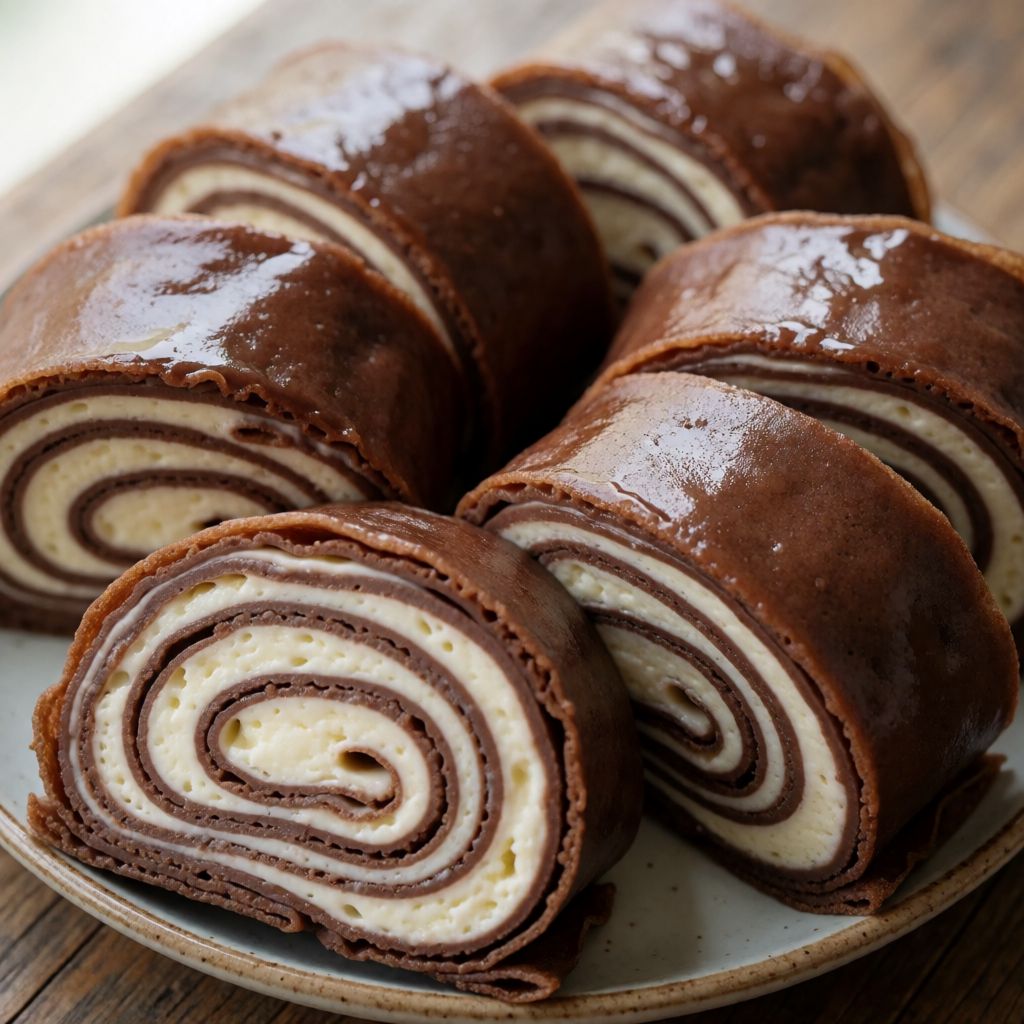
 AI photo
Crepe Roll Cake with Mascarpone Cream
A delicate rolled cake made of thin crepes layered with a light mascarpone and cream filling.
Labels are worked out automatically from the ingredients and can be wrong. Check the packaging if it matters to you.
Ingredients
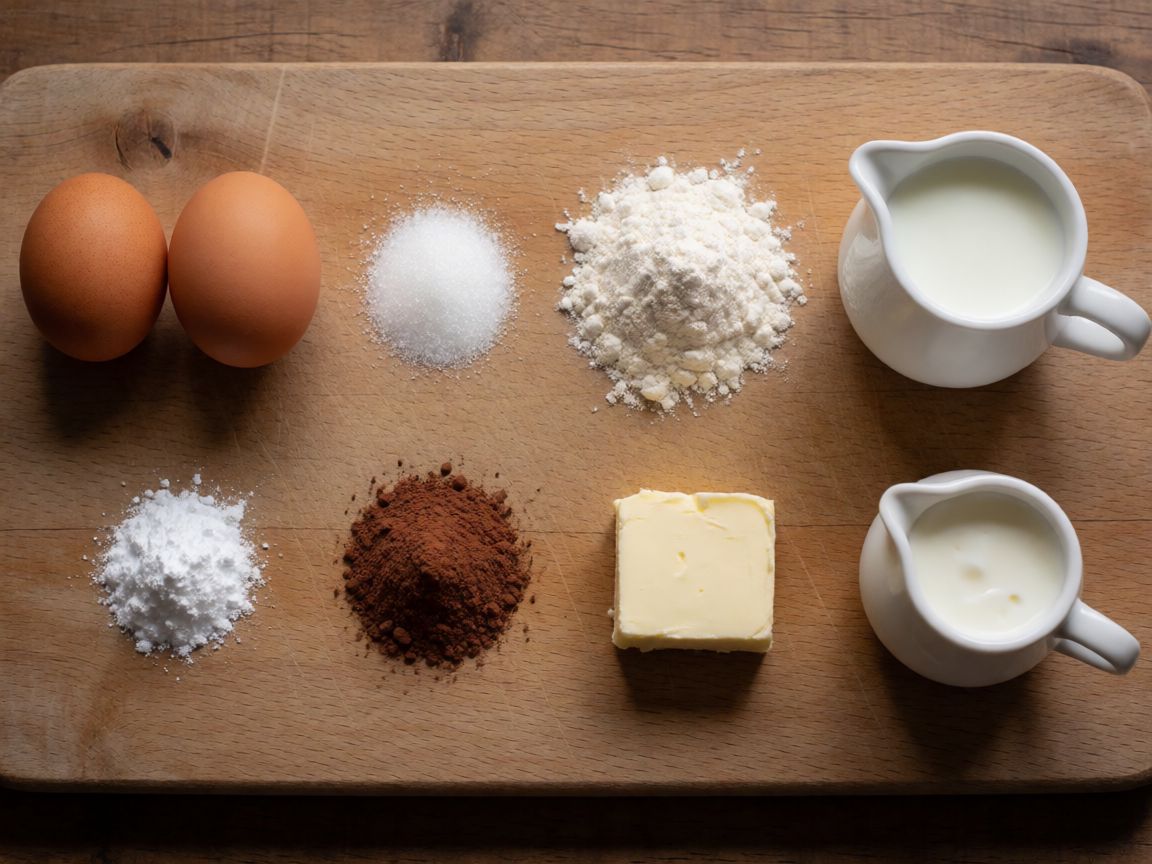
- 2 pcs Eggs
- 15 g Sugar
- 120 g Plain Flour
- 10 g Cocoa Powder
- 400 g Milk
- Butter to taste
- 400 ml Double Cream unsweetened, for whipping
- 80 g Icing Sugar
- 500 g Mascarpone
- 1 tsp Honey










Steps
Combine the eggs, sugar, flour and cocoa powder with the milk, sifting the flour and cocoa together, and blend until smooth.
Heat a non-stick pan, grease with butter and cook the crepes for a few minutes on each side.
Transfer the cooked crepes to a plate and leave to cool.
Whip the cream with the icing sugar until thick and fluffy.
Beat the mascarpone with the honey and gently fold in the whipped cream.
Spread cream over each crepe, fold it into a little parcel and spread a little more cream on top.
Roll one crepe up into a spiral, then arrange the rest of the crepes around it, pressing firmly.
Enclose the cake in a springform tin (22 cm diameter) and chill in the fridge.
480 minDust with icing sugar before serving.
This isn't really a cake, it's an argument against the idea that a cake needs an oven. You make a stack of chocolate crepes, you fold each one around a spoonful of mascarpone cream like a little parcel, and then you stand those parcels on their sides inside a ring and pack them against each other until they lock into a wheel. Cut into it and you get the spiral everyone expects from a roll cake, except here the spiral is built from dozens of small folds instead of one long one — which matters, because a single giant crepe rolled end to end would crack at the first bite and dump its filling on the plate.
What decides whether it works is restraint in three places: how thin the batter runs, how firm the cream sets, and how long you leave the thing alone in the fridge before you touch it. Thin batter gives you a crepe that bends rather than tears when folded — a thick, pancake-ish batter will crack exactly where you need it to fold, and no amount of careful filling saves it after that. Properly whipped cream folded into the mascarpone, not the other way round, holds its shape in the parcel instead of weeping out the sides when you stack things on top of it. And the eight hours in the fridge isn't decoration on the recipe card — it's the time the butterfat in the cream needs to firm back up and glue every crepe parcel to its neighbour, so that when you release the tin the wheel holds its shape instead of slumping into a puddle of cream and chocolate confetti.
Start with the batter, because it decides everything downstream. Two eggs, a little sugar, flour and cocoa sifted together into the milk — sifting matters here specifically because cocoa clumps stubbornly in liquid, and an unsifted lump of cocoa sitting in your crepe is a small bitter ambush, not a feature. You're after a batter closer to single cream than to a British pancake mix: pourable enough to run thin across the pan on its own weight. If it sits where it lands and needs coaxing with the back of a spoon, it's too thick, and the crepe will be the kind that tears on the fold rather than bends.
The pan does more work than the recipe lets on. A wide non-stick frying pan is your kazan substitute here, and it's a fair one — this is a job for even, direct contact, not for radiant heat circling a tagine. Grease it properly with butter rather than oil if you can: butter browns and tells you something about the pan's heat by how it smells and foams, oil gives you none of that feedback. Heat the pan until a drop of batter sets almost the moment it touches the surface — if it sits translucent and wet for several seconds before firming, the pan's not ready and the crepe will stick and shred when you try to flip it, which is the real cause of "my crepes keep breaking," not bad luck or a cheap pan. You're looking for the edges to go matte and start lifting themselves, not a clock.
Double cream, unsweetened, whipped with icing sugar until it holds a soft peak — not stiff, not grainy. Icing sugar dissolves into the cream rather than sitting as crystals the way caster sugar can, which matters in a filling nobody's going to cook afterwards to melt sugar in. Whip past soft peaks and you're one step from butter, and butter-flecked cream folded into mascarpone will taste fine but look curdled and feel heavy in the mouth rather than light.
Mascarpone is the backbone, not a flavour — it's there for body and a clean fat richness, with the honey doing the only real seasoning work, a soft sweetness without the one-note sharpness that white sugar alone would give it. If mascarpone isn't to hand, a full-fat cream cheese beaten smooth gets you closer than people expect, though it brings a tang mascarpone doesn't have, so cut the honey back slightly rather than fight the tang with more sugar. Fold the whipped cream into the mascarpone, not the reverse — mascarpone is the heavier, stiffer of the two, and folding the light cream into it keeps air in the mixture; doing it backwards just deflates the cream you worked to whip in the first place.
The eight hours is patience as an ingredient, not a formality. Nothing chemical is "cooking" in there — the fat in the cream is simply cooling back from the warmth of your hands and the kitchen into something solid enough to hold weight. Try to cut it at hour two and you'll see cream squeeze out from between the layers rather than sit still in them. A springform tin is doing the job a cloth-wrapped mould would do in a more old-fashioned version of a stacked dessert like this — not shaping the cake so much as holding its sides in while gravity and cold do the actual setting. Dust the icing sugar on at the very end, right before it goes to the table — any earlier and the moisture from the cream pulls it in and it disappears, which is a small defect but an avoidable one.