
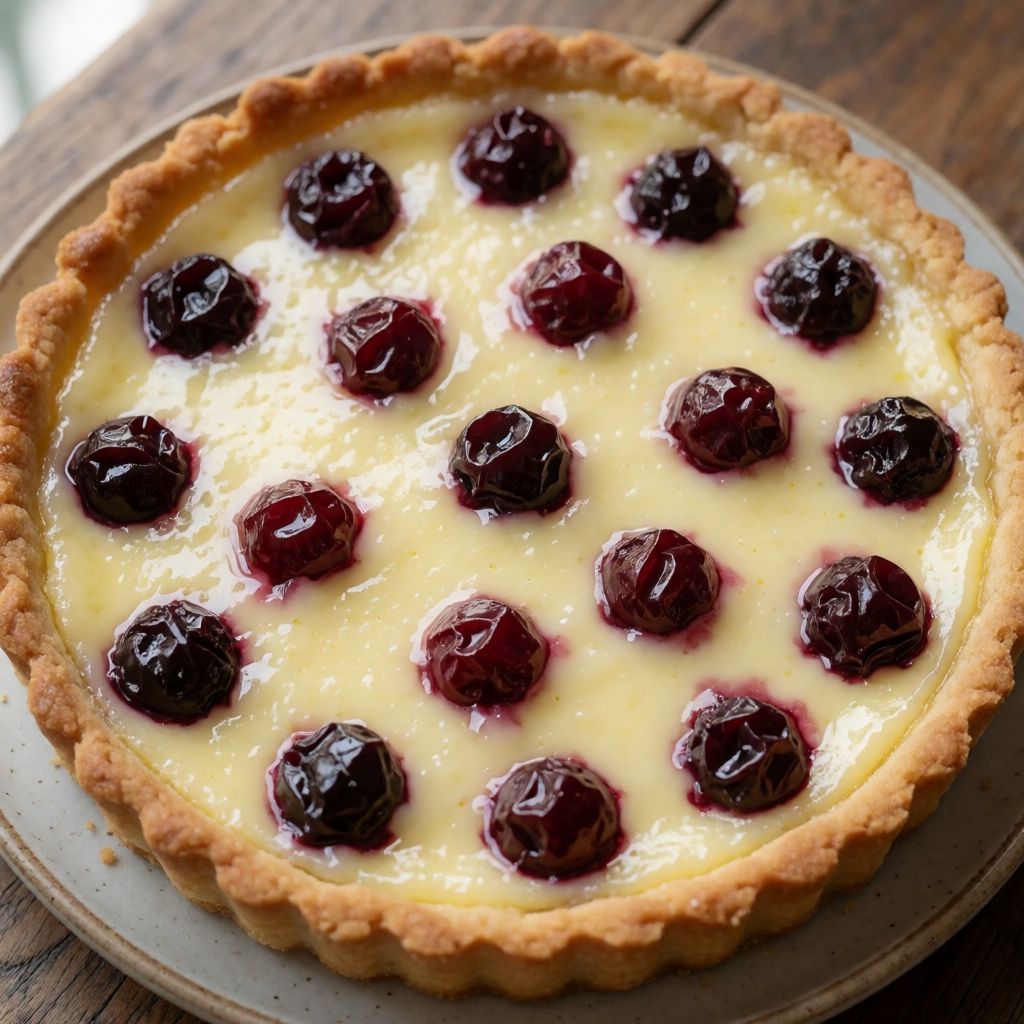
 AI photo
Amalfi Crostata with Lemon Cream and Amarena Cherries
An Amalfi-style crostata filled with silky lemon cream and amarena cherries, finished with a criss-cross lattice.
Labels are worked out automatically from the ingredients and can be wrong. Check the packaging if it matters to you.
Ingredients
- 300 g Plain flour
- 150 g Butter
- 2 pcs Eggs
- 150 g Caster sugar
- 1 pinch Salt
- 1 tsp Baking powder
- 1 pcs Lemon zest
- 100 g Amarena cherries in syrup
- Icing sugar to taste









Lemon cream
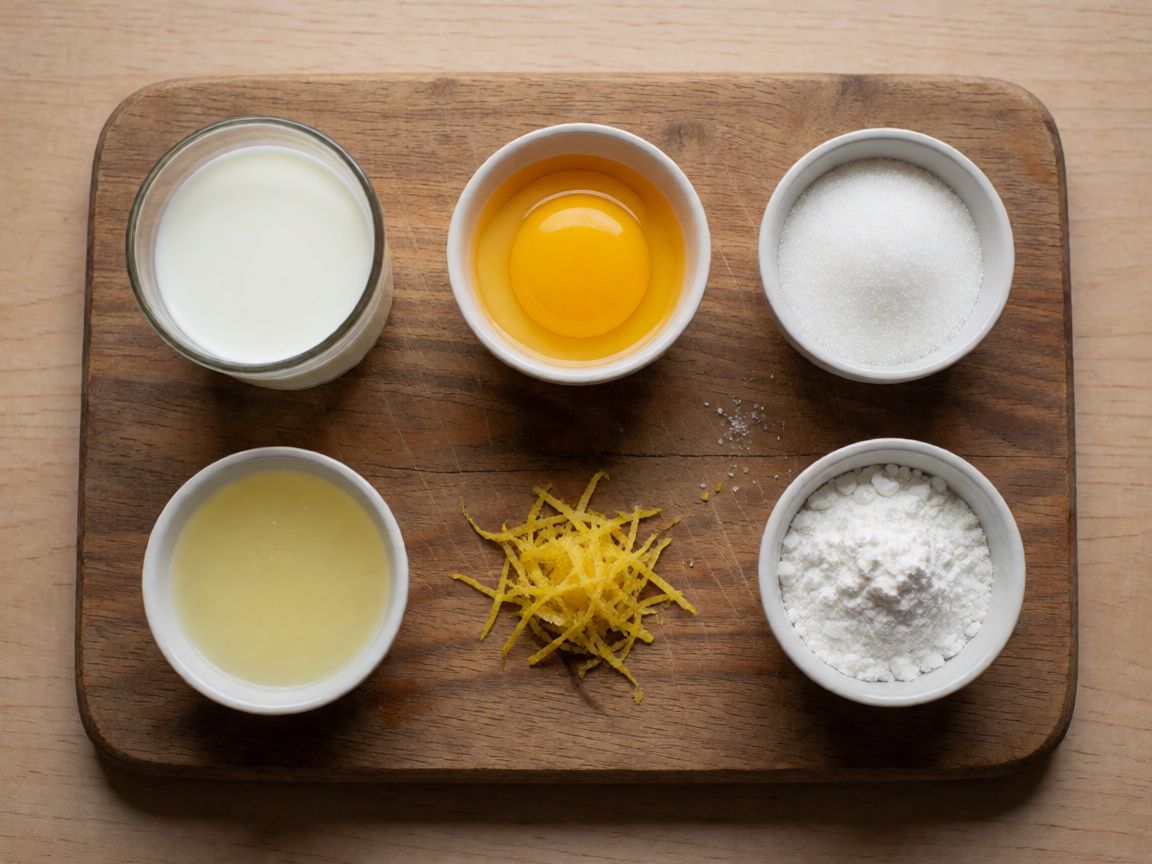
- 450 g Milk
- 3 pcs Egg yolk
- 150 g Caster sugar
- 30 ml Lemon juice
- 1 pcs Lemon zest
- 50 g Cornflour




Steps
Heat the milk together with the whole lemon zest in a small saucepan and bring to the boil.
In a bowl, whisk the egg yolks with the sugar, add the lemon juice, mix, then stir in the sifted cornflour.
Remove the milk from the heat, strain it through a sieve straight into the egg mixture, stir, then pour everything back into the saucepan.
Cook the cream for a few minutes, stirring constantly, until it thickens.
Pour the hot cream into a glass dish, cover with cling film pressed directly onto the surface and leave to cool completely.
Mix the pastry ingredients by hand or in a mixer bowl. Mound the flour, make a well and add the eggs, sugar, lemon zest and baking powder; mix briefly.
Add the diced butter and work the dough until it forms a firm, smooth block.
Wrap the dough in cling film and let it rest in the fridge for at least 30 minutes.
30 minTake the dough out and roll it on a lightly floured surface with a rolling pin.
Line a round 24 cm tin (buttered and floured beforehand) with the dough, trimming off any excess.
Prick the base with a fork in several places.
Spread the cooled lemon cream over the base.
Add the lightly drained amarena cherries, scattering them over the cream to taste.
Cut the remaining dough into strips and lay them crosswise over the crostata to form a lattice.
Bake the Amalfi crostata in an oven preheated to 180°C for about 40 minutes.
40 minRemove from the oven and let cool completely, then dust with icing sugar before serving.
What was changed
We used Amarena cherries in syrup, as amarena cherries in syrup are easy to find in British shops.
This is pasta frolla doing what it does best: holding a soft, sharp lemon cream inside a lattice that lets you see what you're getting into. The crostata is really two separate jobs that only meet at the end — a cooked custard that must be cold and set before it goes anywhere near pastry, and a dough that must stay cold until it's in the oven. Get the timing of those two things backwards and you have a soggy base or a cracked lattice, not a crostata.
What decides whether it works is restraint in two places: don't overcook the cream past "coats the back of a spoon and holds a line when you drag a finger through it" into rubber, and don't overwork the pastry past "holds together" into tough. Everything else — the amarena cherries scattered rather than arranged, the lattice laid rather than woven tight — is forgiving. Those two aren't.
Some say a crostata needs a tart tin with a loose base to turn out cleanly. No — it needs a tin at all, loose base or not; what actually stops it sticking is buttering and flouring the tin properly before the dough goes in, which the recipe tells you to do and which is the bit people skip because it feels fussy for something you're about to tip pastry into anyway.
Think of it as a lemon curd tart with a pastry roof instead of a lid — the lattice isn't decoration, it's ventilation. A closed lid traps steam from the fruit and softens the whole top; strips let it escape while still holding the cherries where you put them.
The milk and lemon zest at the start aren't there to flavour the milk much — a few minutes at a near-boil barely pulls oil out of zest. They're there so the hot liquid, strained straight into the egg-yolk-and-sugar mix, cooks the yolks gently and evenly rather than scrambling them against the hot pan. That's the whole reason for tempering: pour hot onto cold-ish and stir, don't do it the other way round. The lemon juice goes in before the cornflour because acid can make a raw flour slurry seize oddly if you add it after — order here isn't superstition, it's just keeping each addition smooth before the next lands.
Cornflour, not plain flour, because cornflour thickens with less raw starchy taste and sets to a cleaner, almost gel-like cream once cold — which matters because this cream has to hold its shape as a layer under pastry, not ooze. If you only have plain flour, use roughly double the weight and cook it a little longer; it works, it's just a heavier, less glassy set. The cling film pressed onto the surface while it cools stops a skin forming — that skin is just evaporation at the surface, and a skin means lumps you'll be mixing back in later instead of a smooth spread.
For the pastry: butter cold and diced, not melted or soft, because cold butter stays in separate pieces that coat the flour rather than drowning it, and that's what keeps the baked crust from going dense. Eggs and sugar mixed into the well first, flour folded in last and briefly — overworking this dough develops gluten you don't want, which is why "it forms a firm, smooth block" is the finish line, not "keep kneading until it's elastic." Elastic is bread language, not crostata language. The fridge rest isn't optional thinking time for you; it's the butter re-firming and the gluten relaxing, so the dough rolls without tearing and doesn't shrink back on itself in the tin.
Lemon zest twice — once in the milk, once in the dough — is two different jobs, not one forgotten and repeated. The milk zest flavours the cream subtly through infusion; the dough zest is grated straight in and stays put, giving you little bursts in the pastry itself. Use unwaxed lemons if you can find them, since you're using the zest raw in the dough; if all you've got is waxed, a scrub under hot water with a bit of washing-up liquid gets you close enough.
Amarena cherries in syrup are sour-cherry preserved in a thick syrup — Italian delis and most larger UK supermarkets stock them near the ice cream toppings. Drain them lightly, not thoroughly: a little syrup left clinging is what stops the fruit tasting flat against the sharp cream, but a puddle of it will thin your cream layer and soak the base. If you can't get amarena, morello cherries in syrup or even good cherry jam thinned with a spoon of water gets you the same sour-sweet counterpoint; don't reach for fresh sweet cherries, they're the wrong kind of sweetness for this.
On a UK domestic oven: 180°C fan or thereabouts is the temperature at which the pastry colours gold rather than pales or scorches before the centre sets — but ovens run hot or cool by 10-15 degrees depending on age and position of the shelf, so the 40 minutes is a floor, not a verdict. What you're actually watching for is the lattice going an even light gold and the edges pulling very slightly from the tin; if the top's colouring fast but the middle still feels soft through the bars when you nudge it, that's an oven running hot — drop it ten degrees next time, don't just pull it early and hope. Let it cool fully before dusting with icing sugar: do it hot and the sugar just melts into the cream and disappears, and you'll wonder where it went.