
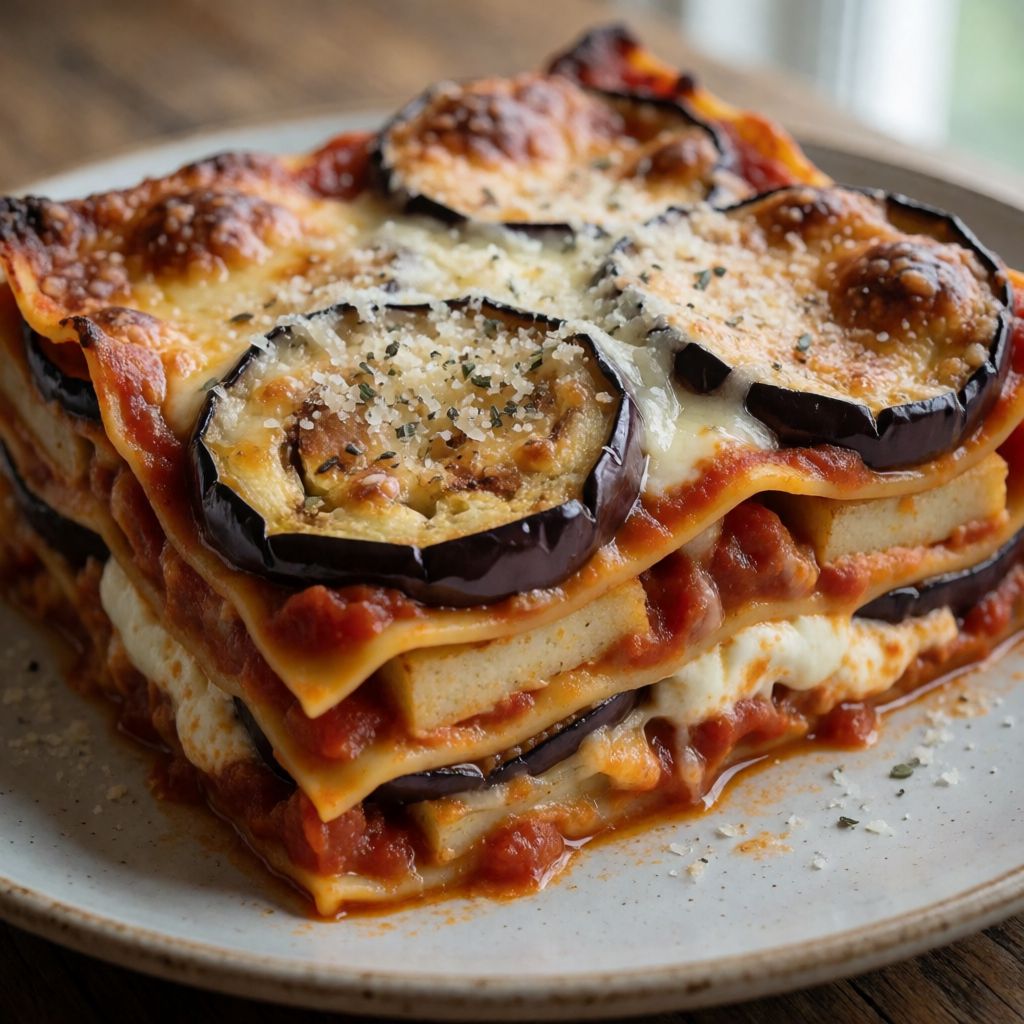
 AI photo
Aubergine, Mozzarella and Provolone Lasagne
A hearty baked lasagne layering roasted aubergine with mozzarella, provolone and tomato sauce.
Labels are worked out automatically from the ingredients and can be wrong. Check the packaging if it matters to you.
Ingredients
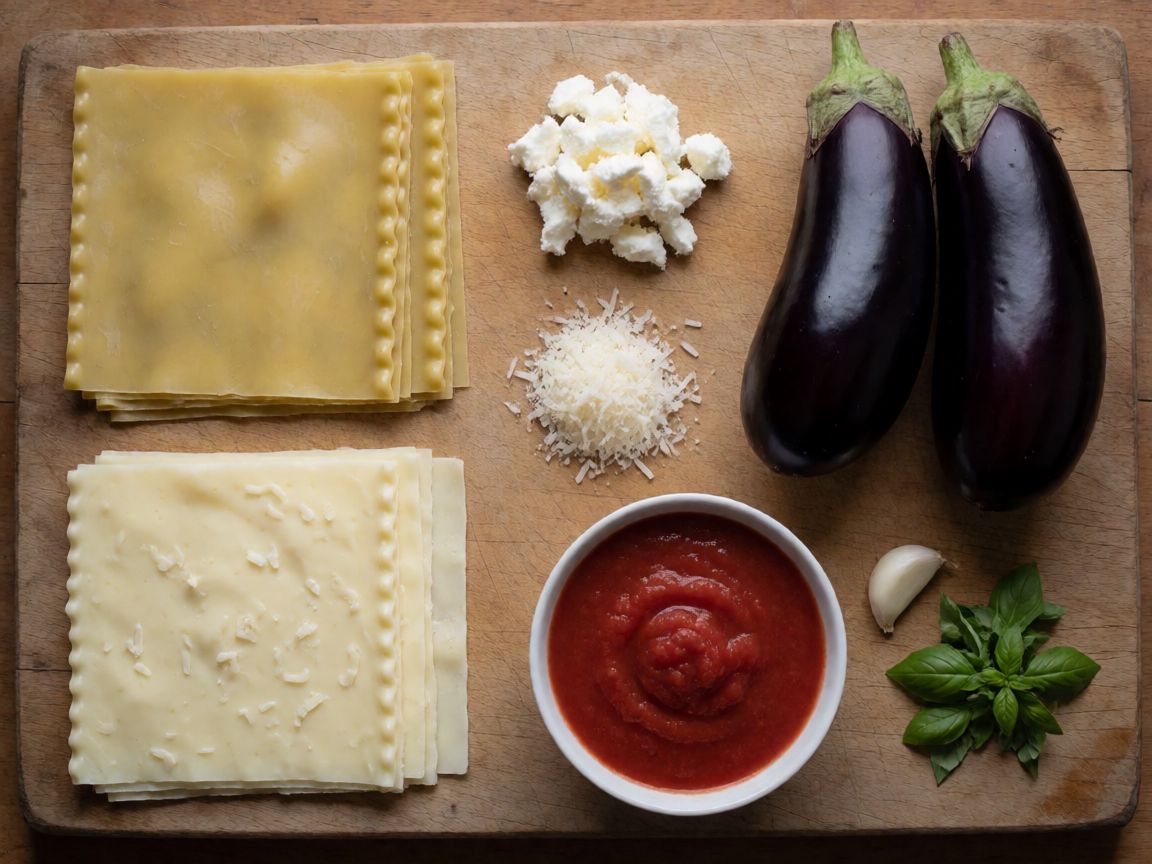
- 8 pcs Lasagne sheets
- 2 pcs Aubergine
- 300 g Mozzarella
- 150 g Provolone
- 1.5 l Tomato passata
- 80 g Parmesan
- Olive oil to taste
- 1 clove Garlic
- Basil to taste
- Salt to taste








Steps
Wash and dry the aubergines. Slice them into even 3-4 mm thick rounds.
Fry the aubergine slices in well-heated oil, a few at a time, until golden.
Place on paper towel and sprinkle with a pinch of salt.
In a large pan, fry the garlic in oil, then add the tomato passata.
Cook the sauce.
20 minSeason with salt to taste, add basil, and set aside.
Slice the mozzarella and grate the provolone.
Spread a thin layer of sauce on the bottom of a rectangular baking dish, 25x35 cm.
Lay down the first layer of lasagne sheets.
Continue with the fried aubergine slices and finish the layer with mozzarella slices, grated provolone and parmesan.
Repeat the same for the remaining layers.
Cover the last layer generously with tomato sauce and sprinkle generously with grated parmesan.
Bake the lasagne at 200°C.
30 minRemove from the oven and let it rest before serving.
5 min
This isn't really a pasta dish with aubergine thrown in — it's an aubergine dish that borrows the architecture of lasagne because sheets and layers are a sane way to organise a lot of vegetable, a lot of cheese, and a lot of sauce so that it eats like one thing instead of a stack of three. Take away the aubergine and you just have a cheesy tomato bake with pasta in it; the whole point is what the aubergine is doing to the texture.
What decides whether it works is the aubergine's water. A raw slice is mostly sponge. Fry it without that understood and you get a wet grey layer that turns the whole dish watery and slack when it bakes — the famous "soggy lasagne" complaint almost always starts here, not in the pasta. Frying hot and fast, a few slices at a time, drives off water as steam and lets the surface actually brown rather than stew in its own juice. Crowd the pan and the oil temperature collapses, the aubergine releases water faster than it evaporates, and you've boiled it in oil instead of frying it — pale, flabby, greasy. Salting the slices after frying, on paper, pulls out a last bit of moisture and seasons the surface, which is the only place seasoning sticks before everything else gets drenched in sauce.
The second fork in the road is the sauce: cook it, don't just warm it. Fifteen to twenty minutes isn't a clock-watching exercise, it's watching the passata go from thin and sharp to glossy and reduced — a raw-tasting sauce baked into a lasagne stays raw-tasting, because the oven's heat is busy cooking starch and cheese, not driving off acidity.
On the aubergine itself: buy ones that feel heavy for their size and have tight, glossy skin — a light, wrinkled aubergine has already lost water and bitterness-fighting turgor, and will fry limp no matter what you do. Slice to an even 3-4 mm; thinner burns before the inside softens, thicker stays raw in the middle under a browned crust. You don't need to salt and weight the raw slices first the way older recipes insist — "always degorge aubergine or it's bitter" was true of varieties grown decades ago, bred to be more bitter than the ones on a British supermarket shelf now; modern aubergine rarely needs it, and frying hot does the moisture-management job anyway.
Oil: use something with no smell of its own, so it carries heat and crisps without arguing with the tomato and basil underneath — a plain light olive oil or any neutral vegetable oil works; keep the good extra virgin for finishing or dressing, because its flavour just burns off at frying heat and you've wasted the expensive bottle.
Tomato passata is the backbone, and it matters that it's smooth and uncomplicated — it's going to carry garlic and basil and reduce, so a strained, pure tomato base behaves more predictably than a chunky "sauce" already loaded with onion, sugar and herbs you can't control for. If you can't get passata, blitz good tinned plum tomatoes smooth; fresh tomatoes out of season are watery and underflavoured and will only extend your reducing time for a worse result.
Mozzarella: the point here is stretch and moisture, not the delicate fresh-mozzarella-in-salad kind swimming in brine — a firmer block mozzarella, the kind sold for pizza, holds its slice and melts without flooding the dish. Provolone brings the savoury backbone mozzarella lacks; if you can't find it, a mild cheddar or a young pecorino grated in will do the job of "cheese with actual flavour that holds shape," though you lose provolone's particular tang.
Parmesan belongs on top and nowhere it can't brown — it's doing a different job from the other two, finishing not melting, so don't bury it in the middle layers where it'll just dissolve into the sauce unseen.
On your hob: a UK domestic ring rarely gives you the fierce, even heat of a professional burner, so "well-heated oil" for frying aubergine means testing with one slice first — it should bubble and colour at the edges within a few seconds, not sit there sweating. If it sweats, your pan isn't hot enough yet, and no amount of frying time will fix that; take the slice out, let the oil recover, try again. A 25x35 cm dish is a specific size for a reason — too small and your layers are thick and the middle undercooks relative to the top; too shallow a dish and the sauce boils over the sides in the oven. Letting it rest those five minutes after baking isn't optional politeness — cut it straight from the oven and the layers slide apart because the cheese is still liquid; resting lets it set just enough to hold a slice together. Patience here is simply the last ingredient on the list that nobody writes down.