
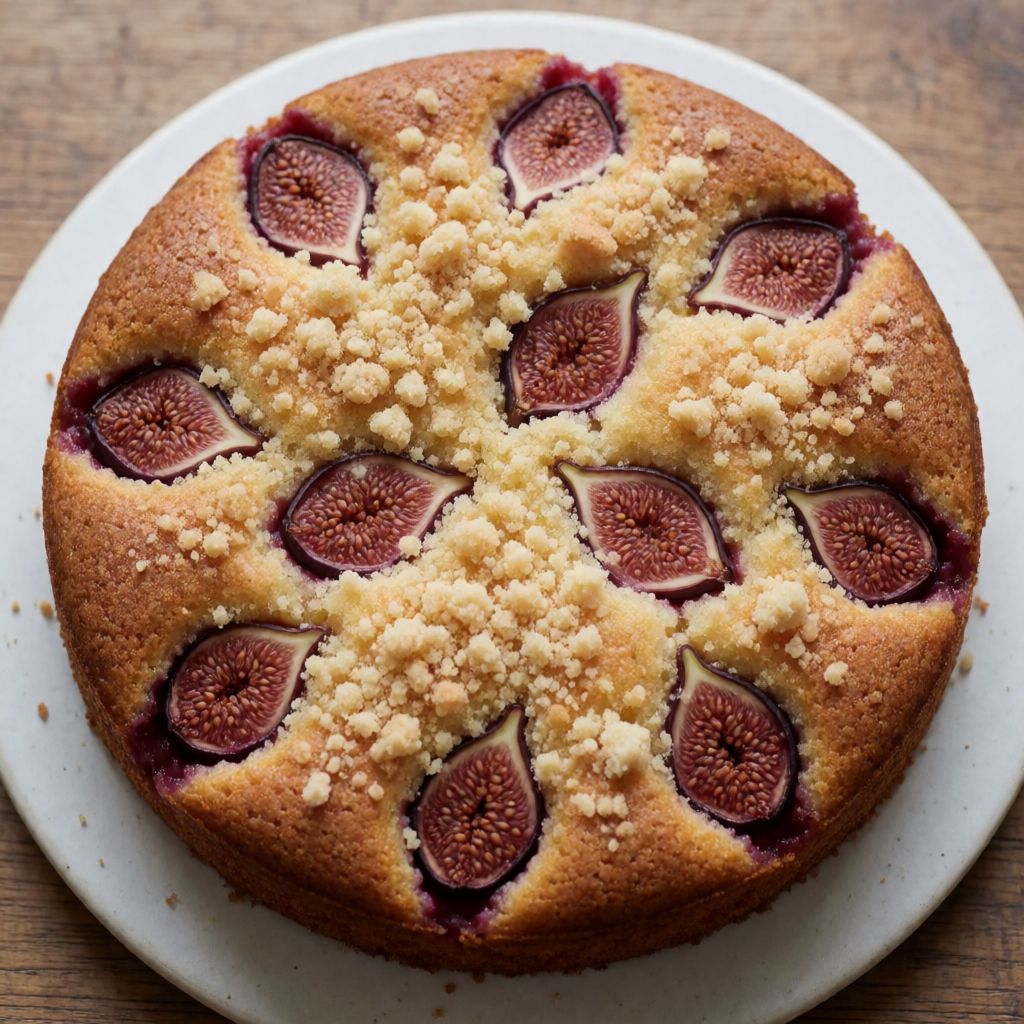
 AI photo
Fig and Amaretti Cake
A soft sponge cake with fresh figs, crunchy amaretti biscuits and dark chocolate.
Labels are worked out automatically from the ingredients and can be wrong. Check the packaging if it matters to you.
Ingredients
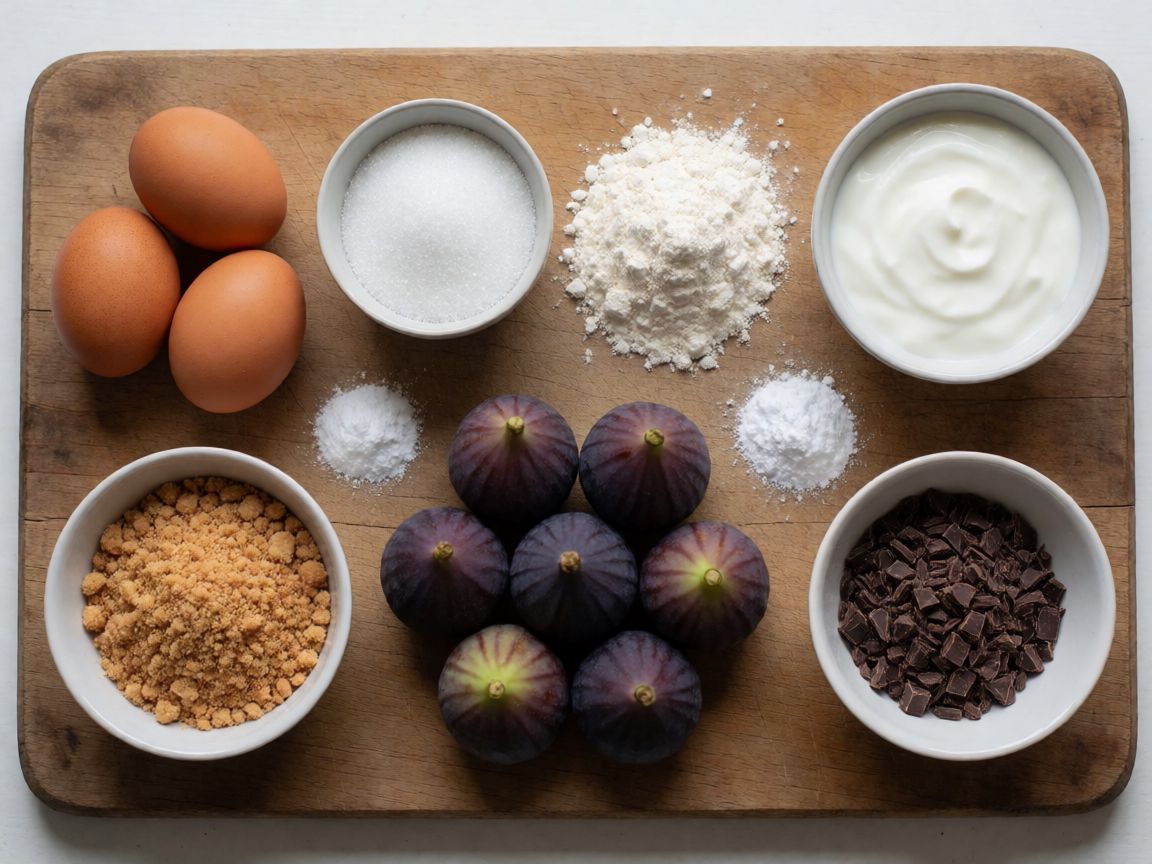
- 3 pcs Eggs
- 170 g Sugar
- 220 g Flour
- 125 g Yogurt
- 120 g Vegetable oil
- 16 g Baking powder
- 100 g Amaretti biscuits
- 6-8 pcs Figs
- 70 g Dark chocolate
- 0.5 pcs Lemon zest
- 0.5 pcs Lemon juice
- Icing sugar to taste
- pinch Salt a pinch













Steps
Beat the eggs with the sugar using an electric mixer until the mixture is light and fluffy.
Add the lemon zest, then gradually mix in the vegetable oil, yogurt and sifted flour.
Add the baking powder and a pinch of salt, and mix until smooth.
Wash the figs under running water, peel them and cut into pieces.
Fold the figs into the batter along with the amaretti biscuits, roughly crushed in a blender, and the dark chocolate, broken into pieces.
Pour the batter into a baking tin greased with butter and dusted with flour.
Bake in a preheated oven at 180°C for 30-35 minutes.
33 minRemove the cake from the oven, let it cool completely, dust with icing sugar and serve.
This is a sponge that's been told to behave itself — eggs beaten with sugar for lift, oil and yogurt for a crumb that stays soft instead of drying out the way a plain butter sponge does by day two. Figs melt into jammy pockets as they bake, amaretti biscuits give you crunch and that bitter-almond undertone, and chocolate turns up as small dark surprises rather than frosting. Nobody's icing this cake; the only sweetness on top is a dusting of icing sugar, because the fruit is already doing the sweet work.
What decides whether it works is the egg-sugar whisk at the start. You're not just dissolving sugar — you're beating air into the mixture until it goes pale and holds its shape for a few seconds when you lift the whisk. That trapped air is most of your rise, since 16g baking powder on 220g flour is generous but not magic. Skip the whisking, rush it, and you get a flat, dense cake no amount of baking powder will rescue — some say baking powder does all the lifting in a cake like this; it doesn't, it just helps hold what the eggs already built.
The other thing that decides success is how wet your figs are. British figs in supermarkets are often imported and a little firmer than the ones that ripen on a Mediterranean tree in late summer — that's fine, even useful, because a softer, oozier fig will dump extra moisture into the batter and leave you with a soggy middle. Pat them dry after rinsing. Don't skip that step to save thirty seconds; it's the difference between a cake that sets and one that sinks.
The eggs are the scaffolding. Three of them, beaten with sugar, give you both structure (the proteins setting as they bake) and the air pockets that make the crumb tender rather than rubbery. Room-temperature eggs whip faster and hold more air than cold ones straight from the fridge — if you remember, pull them out twenty minutes before you start. If you forget, don't panic; it just means a slightly longer beating time.
Oil instead of butter is not a modern shortcut dressed up as healthy — it's a textural choice. Butter solidifies as it cools, which is why butter cakes go firm and sometimes dry the next day. Oil stays liquid at room temperature, so the crumb stays moist for longer. Use anything with no smell of its own — sunflower oil, light olive oil, rapeseed oil (common enough on a British shelf) all work. Extra virgin olive oil will fight the figs for attention; save it for savoury things.
Yogurt does two jobs: its acidity reacts with the baking powder to help the rise, and its fat keeps the crumb soft without the heaviness of extra butter. Plain yogurt is right here — Greek-style is fine too, just slightly thicker, which won't hurt anything.
Amaretti biscuits bring a bitter-almond note that cuts through the sweetness of the figs and sugar, plus texture — crush them roughly in a blender or just bash them in a bag with a rolling pin, you want rubble, not dust, so they don't dissolve completely into the batter. If you can't find amaretti (not every corner shop stocks them), any crisp almond biscuit will do the job, though you lose a little of that bitter edge. Dark chocolate, broken by hand rather than finely chopped, gives you pockets of melt rather than a chocolate-flavoured cake throughout — 70% or higher keeps it from turning the whole thing too sweet.
On figs out of season or hard to find good ones: dried figs, soaked in warm water for twenty minutes and then drained well, are a reasonable stand-in — they won't collapse into jam the way fresh ones do, but they'll still give you sweetness and chew. Just don't use tinned fruit; the syrup will drown your batter.
Grease and flour the tin properly — this isn't fussiness, it's insurance. A cake this moist, full of fruit sugars that can catch, will stick to a bare tin and tear apart when you try to turn it out. Butter first, a dusting of flour after, and the cake releases clean.
Let it cool completely before you dust it with icing sugar. Dust it warm and the sugar just melts into a wet patch — patience here isn't optional, it's the only way the sugar sits as sugar rather than syrup.