
 AI photo
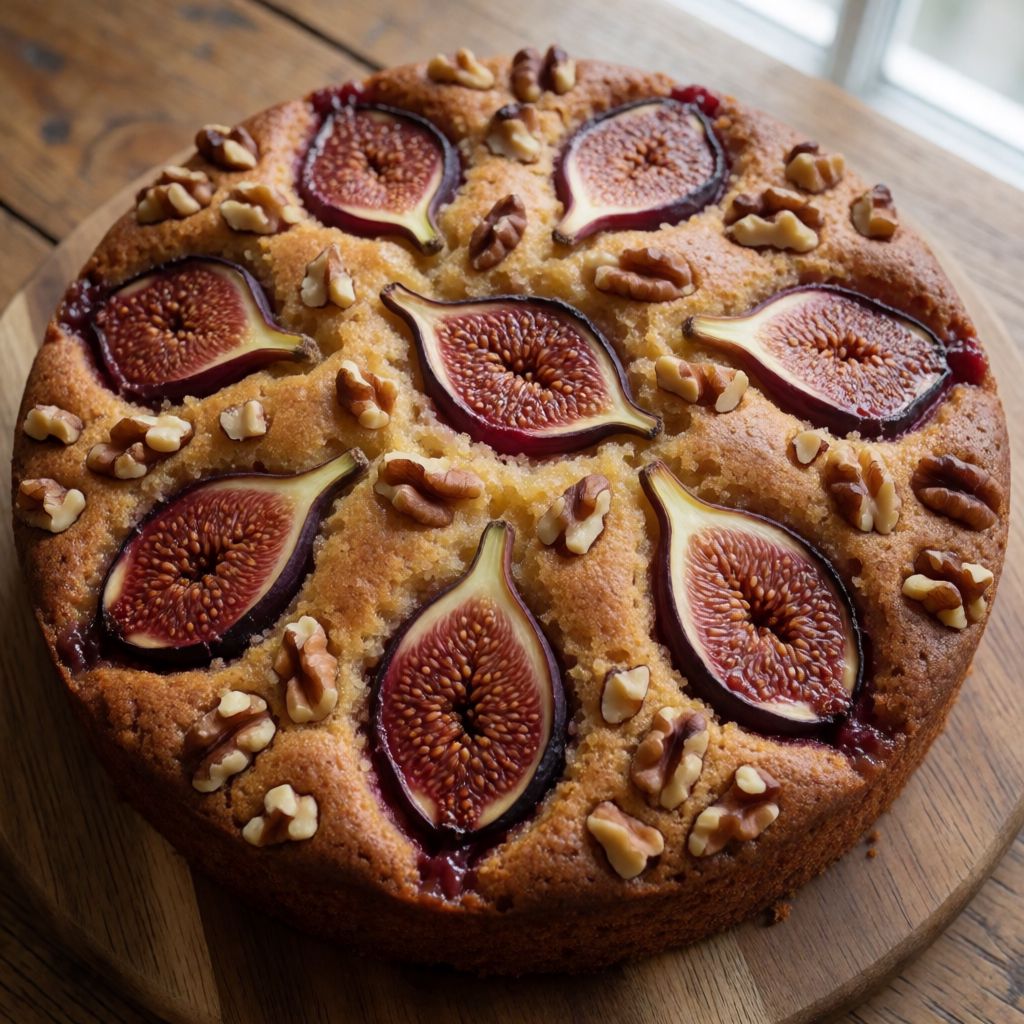
Fig and Walnut Cake
A soft almond-flour cake studded with chopped walnuts and sliced figs, finished with a scattering of sugar.
Labels are worked out automatically from the ingredients and can be wrong. Check the packaging if it matters to you.
Ingredients
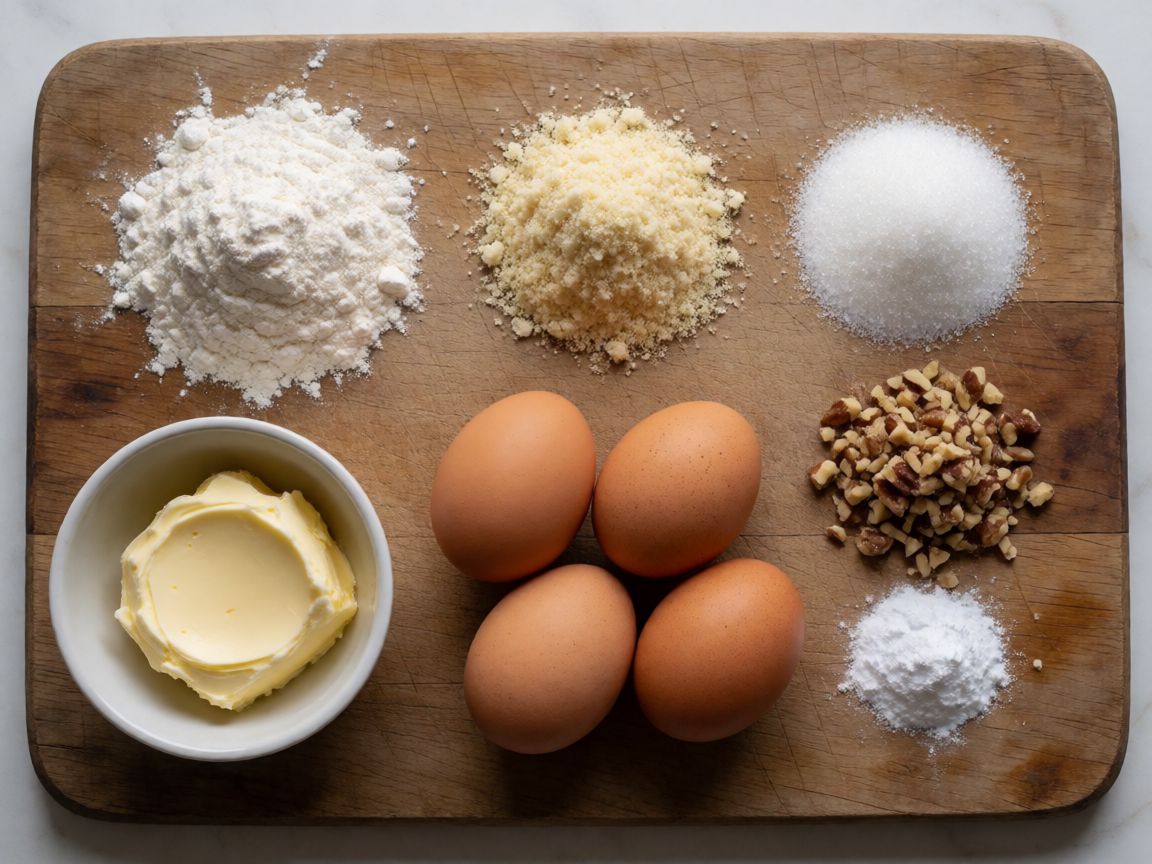
- 220 g Plain flour
- 80 g Almond flour
- 150 g Caster sugar
- Caster sugar to taste
- 110 g Butter softened
- 3 pcs Eggs
- 50 g Walnuts roughly chopped
- 16 g Baking powder
- 500 g Figs sliced
- 1 pcs Lemon zest









Steps
Wash and slice the figs.
In a separate bowl, whisk the eggs with the sugar, then add the softened butter.
Gradually fold in the plain flour and almond flour with a spatula until smooth.
Add the lemon zest and baking powder.
Fold in the roughly chopped walnuts and sliced figs, saving a few slices for decoration.
Transfer the batter to a buttered and floured 22 cm tin.
Arrange the remaining fig slices on top and sprinkle with sugar.
Bake in a preheated fan oven at 170°C for 48 minutes.
48 min
This is a fruit cake built on a compromise — half plain flour for structure, half almond flour for moisture, because fresh figs are wet and a cake that's all wheat flour around them turns gummy at the centre while the edges are fine. The almond flour doesn't rise, it absorbs. That's its whole job here.
What decides whether this works is not the oven but the eggs-and-sugar stage. Whisk them properly and you're beating air into the mix before the fat goes in — that air is most of your rise, since 16 g of baking powder alone won't lift a batter this dense with fruit sitting in it. Skip that whisking and call it "medium heat later will sort it out" — no, it won't. An oven can't put back air you never built in.
Some say figs make a cake soggy, so you should salt them or pat them dry first. No — the problem isn't the fig, it's a batter too thin to hold its own structure around something that releases juice as it bakes. Get the flour-to-almond ratio and the fold right, and the figs cook into the crumb instead of drowning it. Think of it the way a Victoria sponge handles jam: not by fighting moisture, but by being firm enough to sit around it.
170°C in a fan oven means real circulating heat, not a number borrowed from a non-fan recipe — that's the temperature at which the top sugar crust can catch and caramelise slightly while the centre, thick with fruit, still has time to set before the edges dry out. Forty-eight minutes is where to start checking, not where to stop: a skewer should come out of the centre clean, not merely "probably done by the clock."
Plain flour here is your 220 g scaffolding — gluten, structure, the thing that stops the cake collapsing under fig weight once it's out of the oven. Almond flour at 80 g isn't a luxury ingredient for show; it's there because ground almonds take on moisture without turning gluey the way extra plain flour would. If you've got no almond flour, use fine semolina or more ground nuts of any kind before you reach for plain flour again — swapping it back in just reintroduces the soggy-middle problem the almond flour was solving.
Butter softened, not melted — melted butter runs instead of creaming into the eggs, and you lose the little pockets of air the whisking stage built. Softened means you press a finger into it and it gives without resisting, not that it's gone liquid at the edges. Any butter with a fat content you trust works; margarine will get you a cake but not the same crumb, because butter sets firmer as it cools and that's what holds the structure around the fruit once it's out the tin.
The eggs do two jobs — moisture and lift — so beat them with the sugar until the mixture pales and thickens slightly, not just until combined. That's the air bank for the baking powder to work with later. Baking powder itself, 16 g, is a lot for this size of cake, which tells you the batter is heavy — dense with fruit and nuts — and needs real chemical lift, not just whisked-in air, to get there.
Figs: ripe ones give slightly when pressed, same test as a good avocado. Underripe figs are mostly skin and water locked tight, they won't release their sugars into the crumb the way the recipe wants. If figs aren't in season or affordable — they're a short, expensive window in the UK, usually imported — ripe plums or pears sliced thin are the honest substitute; both have the same job of releasing a little moisture as they bake without turning the whole cake to mush.
Lemon zest isn't flavour decoration, it's cutting through the sweetness of 150 g sugar plus the extra "to taste" on top — figs are sweet on their own, and without the zest's acidity the cake tips into one-note. Walnuts, roughly chopped not ground, give you texture against the soft fig and the fine crumb — a contrast, not a flavour addition, which is why pecans work as a substitute but flaked almonds, already soft, don't.
On the tin: butter and flour it properly, because a cake this dense with fruit sugar will stick stubbornly to bare metal as the sugars caramelise against it during baking — that's not a flaw in the cake, it's just what sugar does against hot metal with nothing between them. A 22 cm tin in a normal UK kitchen is standard-size, nothing special needed; if yours is a bit bigger, the cake will sit lower and likely need slightly less time, so treat the 48 minutes as the starting point and the skewer test as the actual answer. And give it a few minutes in the tin once it's out — patience here isn't optional, it's what stops the crumb tearing when you try to lift a cake that's still finishing its set.