
 AI photo
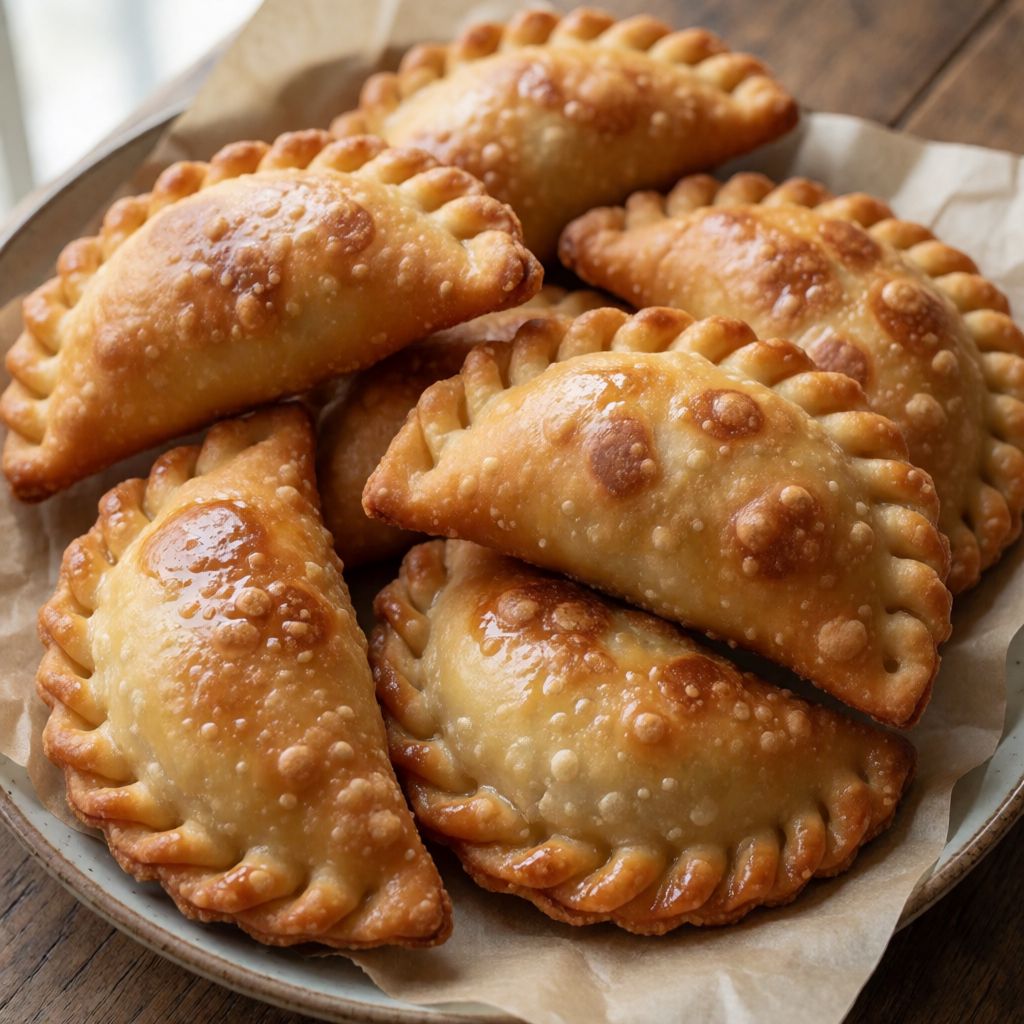
Fried Panzerotti
Crisp fried pockets of dough filled with tomato, mozzarella and cheese — a popular street snack from southern Italy.
Labels are worked out automatically from the ingredients and can be wrong. Check the packaging if it matters to you.
Ingredients
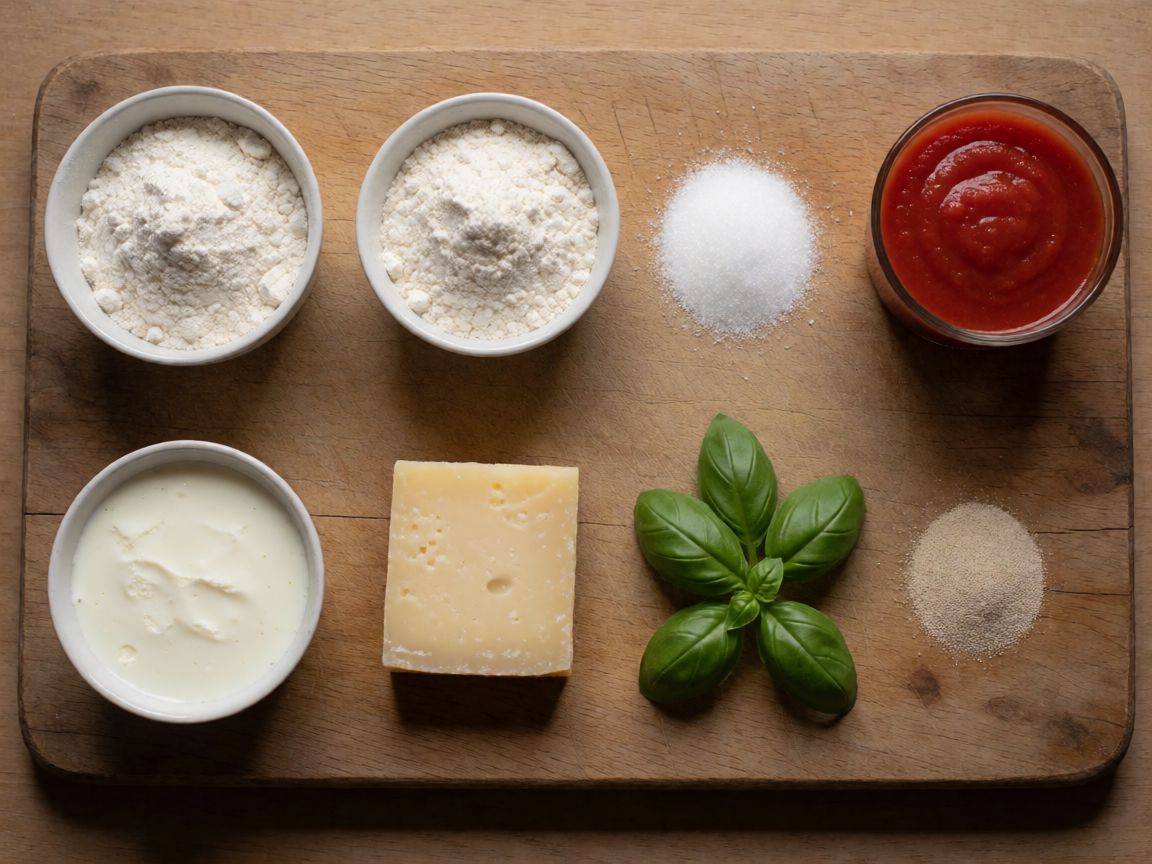
- 250 g Plain flour
- 250 g Durum flour
- 270-280 ml Water
- 10 g Salt
- 1 tsp Caster sugar
- 20 g Olive oil
- 10 g Yeast
- 150 g Tomato passata
- 200 g Fior di latte mozzarella
- Hard cheese caciocavallo or canestrato
- 1 bunch Basil
- Olive oil for dressing
- Peanut oil for frying











Steps
Tip the plain flour and durum flour into a bowl. Add the sugar, olive oil and yeast dissolved in warm water. Mix, add the salt and knead until smooth.
Shape the dough into a ball and leave to rise until doubled in size.
120 minDivide the dough into pieces of 70-80 g each and shape into smooth balls.
Leave the balls to rise for a further 1 hour.
60 minCut the fior di latte into cubes. Season the tomato passata with salt and olive oil. Wash and dry the basil.
Roll out a risen ball of dough with a rolling pin to a 15 cm disc.
Place the tomato passata, hard cheese, fior di latte and basil in the centre of the disc.
Fold the disc in half and seal the edges tightly.
Heat the peanut oil in a frying pan and fry the panzerotti on both sides.
Place on paper towel to drain excess oil and serve hot.
A panzerotto is a pizza that got folded in half and dropped in oil instead of an oven — that's the whole trick. Bari and the Puglia coast invented it for a simple reason: not every house had a wood oven, but every house had a pan and some oil. Frying does in ninety seconds what a domestic oven, which doesn't go above about 250°C and has no stone floor radiating heat upward, would take four or five minutes to do badly. The dough blisters, the cheese goes molten, the crust seals shut, and you've got a crisp shell with a wet, stretchy inside — a contrast an oven-baked pizza can't give you because it cooks top and bottom the same slow way.
What decides whether it works is the seal. Not the frying, not the filling — the seal. If the edge isn't pressed tight, the first bubble of steam inside finds the gap and your mozzarella is now in the oil, not in your panzerotto, and you've made yourself a very expensive fritter. Press it with your fingers, then go over it again with the tines of a fork or the edge of a glass. Some people brush the rim with a little water first, like gluing paper — it helps the raw dough stick to raw dough rather than just resting against it.
The two flours do different jobs. Plain flour gives you softness and a dough that's forgiving to roll thin. Durum — the hard, yellow semolina-type flour — gives structure and a slight chew, and it's also why the crust fries to that tight, slightly glassy finish rather than going soft and bready. If you only have plain flour, use all of it; the panzerotto will be a bit softer and less golden, which is a fair trade, not a disaster. Don't reach for strong bread flour as a full substitute for the durum — it's high in gluten but doesn't bring the same colour or bite, it just makes the dough tougher to roll.
Yeast here is fresh yeast — 10 g of fresh is roughly 3-4 g of the dried instant kind that comes in sachets, which is what you'll find in most UK supermarkets. Dissolve it in water that's warm to the back of your hand, not hot — above about 40°C you start killing the yeast before it's done any work, and then your dough just sits there looking offended for two hours.
The olive oil in the dough isn't for flavour, it's for texture: fat coats some of the gluten strands and stops the dough from turning rubbery, and it helps the crust crisp rather than stay leathery once fried. Any neutral or mild oil in the dough will do a version of this job; you don't need your good extra virgin in there, save that for dressing the passata and finishing the plate, where you'll actually taste it.
For frying, peanut oil is specified because it has a high smoke point and almost no flavour of its own — the two things you want from any frying oil: any oil with a high smoke point and no smell of its own will work, which means sunflower or a plain vegetable oil are fine stand-ins. Olive oil is the wrong choice for deep frying — not because of "tradition," but because it smokes at a lower temperature and its flavour, which is lovely on a salad, turns bitter and overpowering once it's been hot for a few minutes and starts breaking down.
Fior di latte is cow's milk mozzarella — not buffalo, which is wetter and would flood your filling with liquid that steams the dough apart from the inside before the outside's had a chance to seal and crisp. Drain it well and pat it dry; any mozzarella that isn't swimming in brine will do, and a basic block mozzarella from the chiller counts. The hard cheese — caciocavallo or canestrato, both firm, salty southern Italian cheeses — is there to add a savoury backbone the fresh mozzarella doesn't have on its own. Parmesan or a mature pecorino does the same job; you want something hard and salty, grated or in small pieces, not another soft melter.
A frying pan with 3-4 cm of oil and a thermometer, or just a cube of bread dropped in to test, is your kazan here — you don't need a deep-fat fryer, and you shouldn't crowd more than two or three panzerotti in at once, because a domestic hob loses heat fast when you dump cold dough into the oil, and an overcrowded pan means the oil temperature drops, the crust doesn't seal fast enough, and you get a greasy shell instead of a crisp one. Keep a plate of paper towel by the pan, not as decoration but because panzerotti carry oil on the surface the way a sponge carries water, and the paper is doing real work pulling it back out.
And the patience is not optional, it's an ingredient the same as the yeast is. Two hours, then one more — that's not a suggestion to speed past because you're hungry now. Rush the rise and you'll fry something that looks like a panzerotto and chews like a flatbread.