
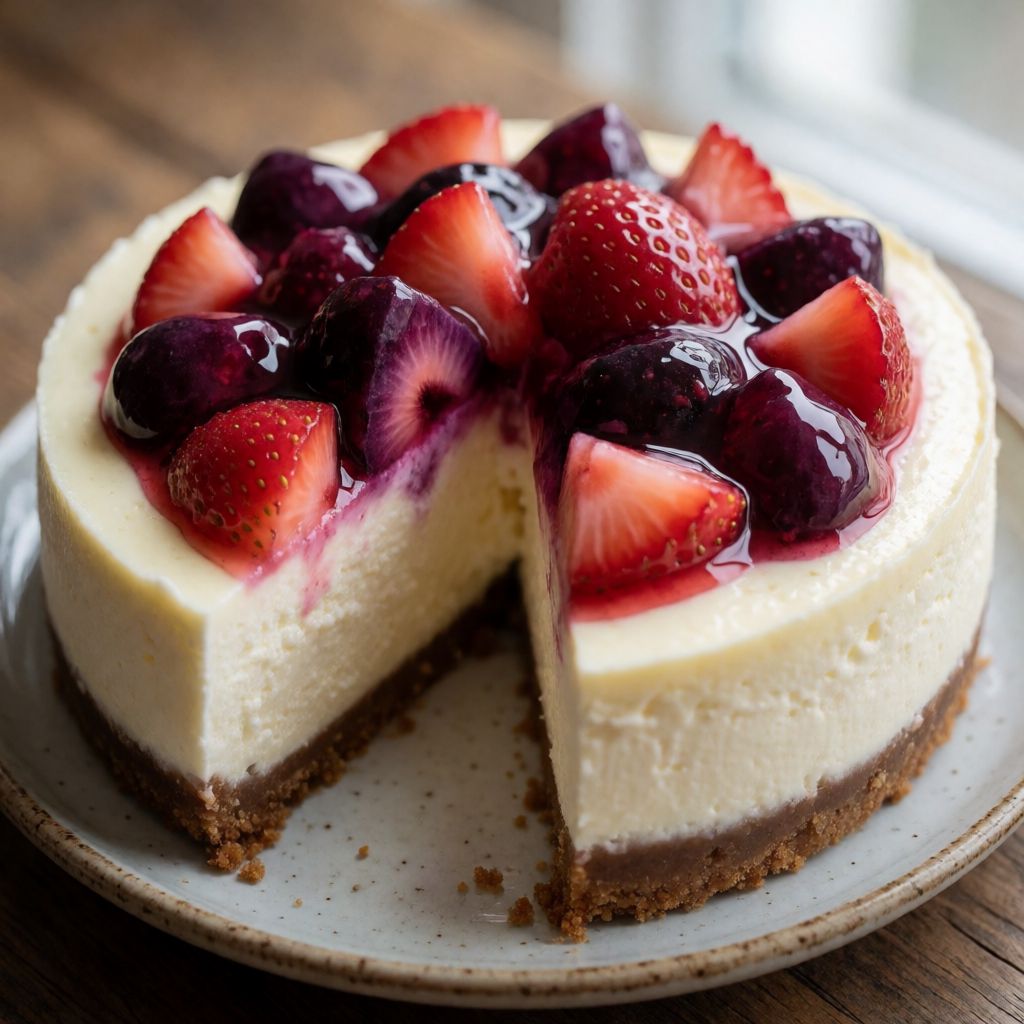
 AI photo
Cheesecake with Fruit
A no-bake cheesecake with cream cheese, mascarpone and fresh fruit on a buttery biscuit base.
Labels are worked out automatically from the ingredients and can be wrong. Check the packaging if it matters to you.
Ingredients
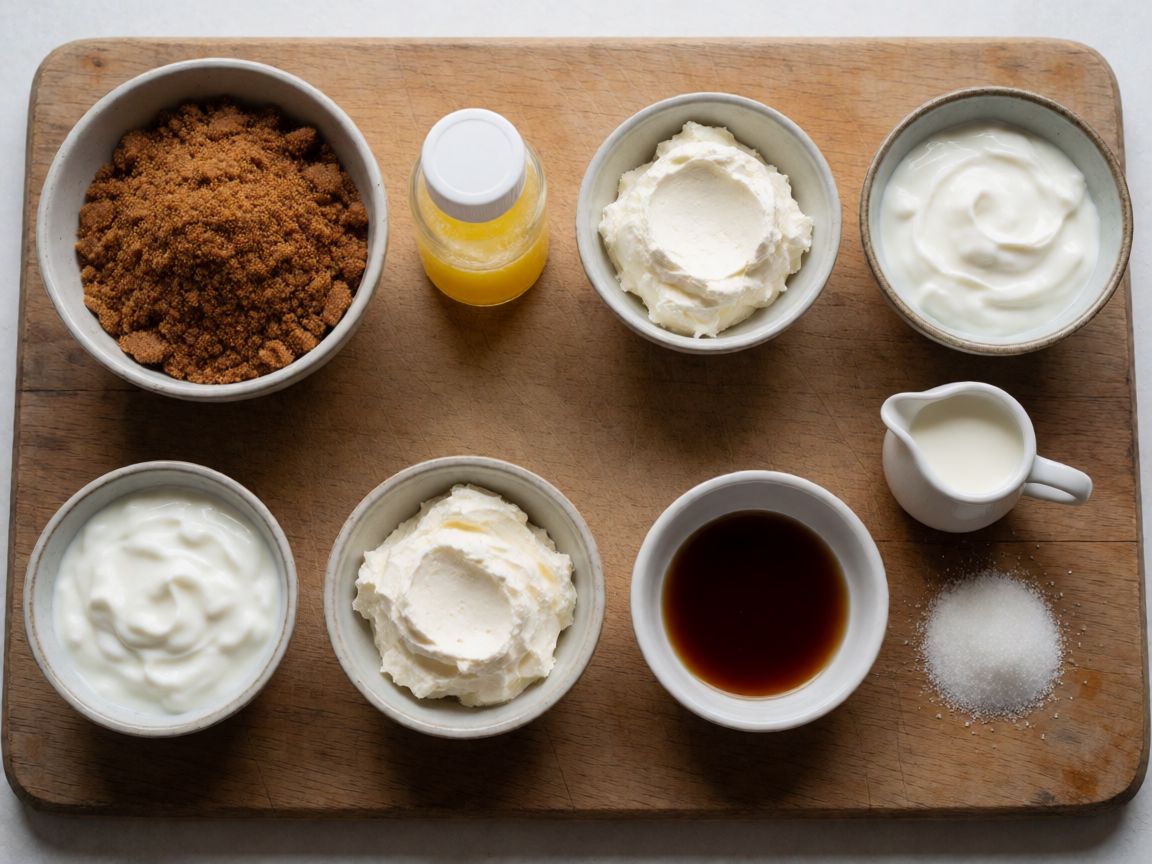
- 250 g Digestive biscuits
- 120 g Butter melted
- 250 g Cream cheese
- 200 g Greek yogurt
- 250 g Mascarpone
- 200 ml Double cream
- 1 tsp Vanilla extract
- 100 g Caster sugar
- 8 g Gelatine
- 2 pcs Pineapple slices, fresh or tinned
- 1 pcs Peach
- 1 pcs Mango
- 60 g Blueberries
- 1 bunch Mint a few leaves
- Desiccated coconut to taste, optional
- Icing sugar to taste
















Steps
Blitz the biscuits in a blender to fine crumbs, tip into a bowl, add the melted butter and mix well.
Press the mixture into a 22 cm springform tin lined with baking paper, smoothing the base with the back of a spoon.
Chill the base in the fridge for at least 30 minutes.
30 minSoak the gelatine in cold water for 10 minutes.
10 minIn a large bowl combine the cream cheese, mascarpone, 150 ml of the double cream, sugar, vanilla extract and Greek yogurt. Whisk with an electric mixer until smooth and creamy.
Squeeze out the gelatine and dissolve it in the remaining 50 ml of slightly warmed double cream. Add to the cream mixture and mix well.
Spoon the cream over the biscuit base, smooth the surface and chill in the fridge for at least 3 hours.
180 minWash and thoroughly dry the mango, peach and blueberries. Cut the pineapple and mango into cubes and the peach into slices.
Decorate the top of the cake with the fruit as you like, dust with icing sugar, add a few mint leaves and, if you wish, desiccated coconut.
Keep refrigerated until serving.
This is not a cheesecake in the oven sense — nothing here sees heat except the butter you melt for the base. What holds it together is gelatine, not egg, and that single fact decides almost everything about how you handle it. Call it a fridge cake with a biscuit crumb floor and a softly set cream roof, built for a flat with no kazan and, frankly, no need of one — your fridge does the cooking.
What makes it work or fall apart is two separate questions, and people conflate them. First: is the base compact enough to hold a slice together when you cut it? That depends on how fine you've crushed the biscuits and how firmly you pressed them — crumbs too coarse, or pressed too lightly, and the base crumbles under the first wedge, however long you chilled it. Second: did the cream actually set, or did you just chill something thick and call it done? Thick is not set. Set means the whole tin resists a gentle shake, means a knife cut shows a clean edge, not a slow collapse. Three hours is the floor stated in the recipe — treat it as the earliest you're allowed to check, not a deadline. Gelatine keeps tightening its net for hours after it first looks firm; overnight is safer than three hours if you're not in a rush, and you're rarely in a rush with a dessert that waits for you.
On the biscuits: Digestive biscuits are a British staple precisely because they're cheap, dry, and hold fat well — that's the whole criterion for a biscuit base, not flavour nostalgia. Any plain, not-too-sweet biscuit that crumbles into dry sand rather than clumping damp will do the same job — ginger nuts if you want a spiced edge, a plain shortbread if you want it sweeter and crumblier. What you're actually after is a crumb fine enough that melted butter can coat every piece and glue it to its neighbours; coarse crumbs leave air pockets, air pockets mean the base cracks apart rather than slicing.
Butter here is glue, nothing more. It needs to be fully melted and still liquid when you mix it in, so it reaches every crumb; if it's half-solid, parts of your base will bind and parts won't, and that's the crumbling you'll meet at the fridge, not a gelatine problem at all.
On the three dairy bases — cream cheese, mascarpone, Greek yogurt — this isn't excess, it's three different jobs split three ways because no single one of them does all three well. Cream cheese brings the characteristic tang and enough body to carry structure; it's a young, acid-set cheese, cheap because it's barely aged, and that acidity is doing real flavour work against the sugar. Mascarpone is pure cream curdled with acid and nothing else drained off — it's there purely for richness and a silky melt, no tang of its own. Yogurt is the loosener: it brings moisture and a cleaner sourness without the heaviness of more cream. Drop the yogurt and use only cream cheese and mascarpone and the result sets fine but eats denser and flatter — you'll miss the lift the yogurt gives.
Double cream is split for a reason, not a typo: 150 ml goes in unwhipped, simply to loosen the body of the mix, and the other 50 ml is warmed gently — not boiled — purely as the vehicle to dissolve the squeezed gelatine evenly before it meets the cold bowl. If you have no double cream, any cream with enough fat to carry gelatine without curdling under gentle warmth works; thinner creams (single, UHT pouring cream) will dissolve the gelatine just as well but leave the finished set softer, since there's less fat structure backing it up.
On the gelatine itself: 8 g in leaf or powder form, bloomed in cold water, is doing the entire structural job a baked cheesecake gets from eggs — which is why there are no eggs anywhere in this list. That's the real difference between this cake and the American-diner original the name borrows from: Philadelphia-style cream cheese made baked cheesecake commercially viable in the early twentieth century because cream cheese was cheap and stable, and bakers kept the name even once home cooks worked out a no-bake, no-oven version using gelatine instead of eggs. The tin stays a springform for the same reason throughout — you're never going to get a gelatine-set cake out of a solid tin without tearing it; releasing the ring is the only unmoulding this structure tolerates.
On the fruit: fresh versus tinned pineapple is a real question here, not folklore. Fresh pineapple carries bromelain, an enzyme that breaks down protein — which is exactly what it would do to a gelatine network if you folded raw pineapple into the cream itself. Here it's only sitting on top as decoration, so it's harmless either way; tinned pineapple has already been heat-processed, which kills the enzyme outright, so if you ever did want pineapple folded in rather than just laid on top, tinned would be the safer choice, patted dry of syrup first. Mango, peach and blueberries carry no such hazard — wash, dry properly, and cut close to serving so the cut faces don't weep onto the cream before the cake reaches the table.