
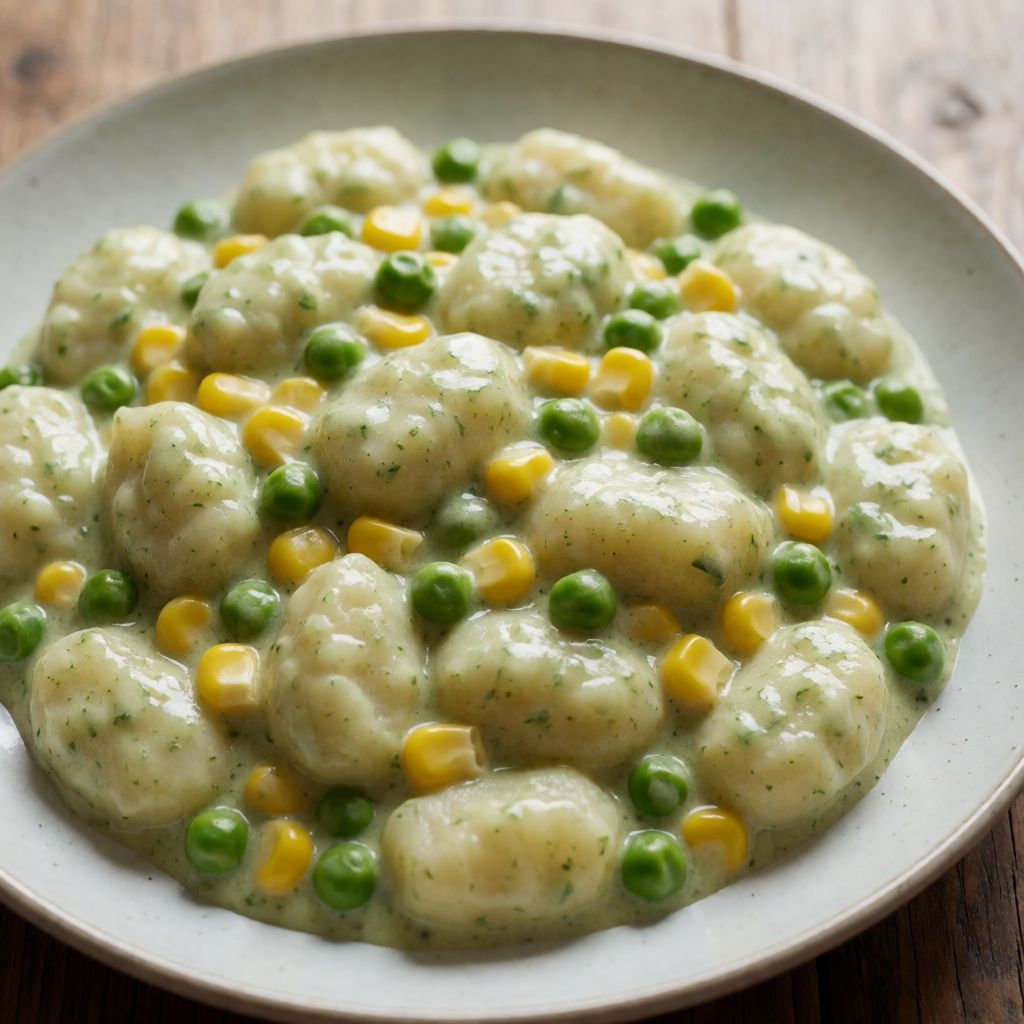
 AI photo
Gnocchi with Peas, Corn and Spinach Cream
A quick pan-fried gnocchi dish tossed with sweetcorn, peas and a creamy spinach and garlic sauce, finished with lemon and cheese.
Labels are worked out automatically from the ingredients and can be wrong. Check the packaging if it matters to you.
Ingredients
- 500 g Gnocchi
- 100 g Sweetcorn frozen or canned
- 250 g Peas frozen
- 100 ml Stock
- 200 g Spinach
- 150 g Cream cheese
- 75 g Parmesan freshly grated
- 2 clove Garlic finely grated
- 1 pcs Lemon finely grated zest and a little juice
- Salt
- Black pepper freshly ground
- 50 g Butter for frying
- 50 g Parmesan freshly grated











Steps
Heat a large frying pan, add the butter and let it foam quickly.
2 minFry the gnocchi and sweetcorn until golden and crisp, stirring often.
5 minBlend the stock with the spinach until finely chopped and tip into the pan with the cream cheese and garlic.
3 minHeat and stir until the cheese has melted.
2 minAdd the peas and heat through well.
2 minSeason the sauce with salt, pepper, lemon zest and lemon juice.
1 minMix the gnocchi with the spinach cream and serve, sprinkled with parmesan.
1 min
What was changed
Parmesan replaces the hard cheese with parmesan, which is easy to find in local shops.
This is a pan dish pretending to be lazy pasta — soft potato gnocchi fried hard instead of boiled, sitting in a green sauce that's basically a soup blitzed into submission. The whole thing works or fails on one thing: whether you let the butter and pan do the browning before the gnocchi goes soggy from its own steam.
Gnocchi are already cooked — they're potato and flour, pre-steamed in the packet. So frying them isn't about cooking them through, it's about building a crust on the outside while the inside stays that slightly gluey, giving texture gnocchi are known for. If you crowd the pan, the gnocchi weep moisture, that moisture pools, and they stew instead of fry — you get the pale rubbery version instead of the golden one with crisp edges. Spread them out, let the butter foam first (that's the water in the butter cooking off, telling you it's hot enough), and don't stir constantly — stir often, not nonstop, so each piece gets contact time with hot metal.
The sauce is a trick: there's no cream in it, cream cheese does that job, melted into hot stock with raw spinach blended straight in. Blending raw spinach into hot liquid cooks it through contact heat, not through a pan — which is why you don't need to wilt it separately first. Some recipes have you sauté spinach down in a pan, losing half its volume to the pan and half its colour to overcooking — here the blender does the wilting invisibly, so the sauce stays a bright, almost shocking green instead of the khaki you get from spinach cooked too long.
On the ingredients, start with the gnocchi themselves. Shop gnocchi are potato, flour, sometimes egg, pre-steamed and vacuum packed — that's why they go straight into a hot pan with no boiling first. If you've only got fresh or homemade gnocchi that haven't been pre-steamed, you'll need to boil them until they float before this frying step, because raw dough centres won't cook through from a few minutes in butter alone.
Butter is for flavour and browning, not neutrality — it's got milk solids in it that brown and smell nutty as they heat, which is exactly what you want clinging to fried gnocchi. If you're out of butter, any fat that can get genuinely hot without burning will fry the gnocchi fine, but you lose that specific toasted-milk smell; a knob of butter stirred in at the end is the compromise if you're frying in oil but want the flavour back.
Cream cheese stands in for a proper béchamel or double cream reduction — it's already thick, already slightly tangy, and melts into hot stock without the risk of splitting the way single cream can over high heat. It's doing the job cream does in a classic cream sauce but it's more forgiving on a domestic hob where your "medium" and my "medium" are two different numbers on two different stoves. Any full-fat soft cheese with a mild tang works here — mascarpone will make it richer and less tangy, a soft goat's cheese will swing it the other way.
Parmesan appears twice because it's doing two different jobs. Melted into the sauce, it adds salt and that long-fermented savoury depth — the stuff people call umami without always knowing why. Grated over at the end, it's texture and a last hit of saltiness that hasn't had a chance to dissolve and vanish into the sauce. Freshly grated matters more than people think: the pre-grated stuff in tubs is often cut with anti-caking starch, which stops it melting smoothly and can make a sauce grainy. If parmesan's not in the fridge, a hard, salty, aged cheese — grana padano, an aged pecorino — will do the same job; a young mild cheese won't, because it hasn't got the savoury concentration.
Garlic finely grated rather than crushed or sliced is a deliberate choice — grated garlic distributes through the sauce evenly and cooks through gently in the hot stock rather than sitting as sharp raw chunks. If you only have whole cloves and a knife, mince it as fine as you can and give it slightly longer in the hot liquid before you call it done.
Lemon zest and juice are there to cut the richness — cream cheese, butter and parmesan together are heavy, and without acid the dish sits flat on the tongue. Zest first, because the oils in the skin carry most of the aroma and a little goes a long way; juice second, added at the end, because acid added too early to a dairy sauce risks a slight curdling or separation, and you want it bright, not cooked out. Stock, finally, just needs to be flavourful enough to carry the spinach — a light vegetable or chicken stock cube dissolved in hot water is entirely honest here; nobody's judging you for not simmering bones on a Tuesday.