
 AI photo
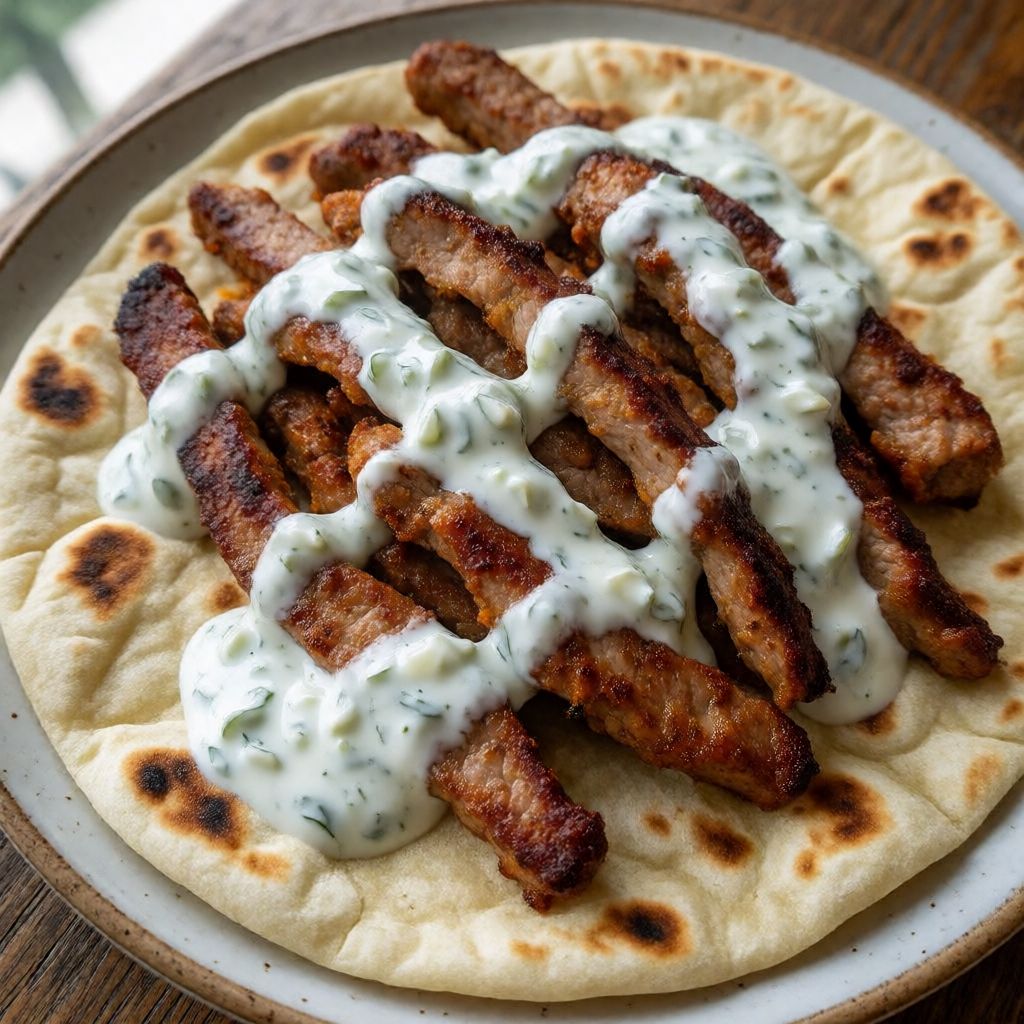
Pork Gyros in Flatbread with Tzatziki
Marinated pork gyros wrapped in warm flatbread with cooling tzatziki, fresh salad and herbs.
Labels are worked out automatically from the ingredients and can be wrong. Check the packaging if it matters to you.
Ingredients
- 2 clove Garlic finely grated
- 2 tsp Cumin ground
- 1 tsp Ground coriander ground
- 0.5 tsp Chilli flakes
- 1 tsp Paprika sweet
- 1 tsp Dried thyme dried
- 1 tsp Oregano dried
- 0.5 tsp Dried rosemary dried
- 400 g Pork neck sliced very thinly
- 2 tbsp Olive oil for frying
- Salt
- Black pepper freshly ground
- 200 ml Greek yoghurt
- 1 pcs Cucumber
- 1 clove Garlic
- 1 tbsp Olive oil
- 4 pcs Flatbread warm
- 150 g Lettuce
- 2 pcs Tomato diced
- 0.5 pcs Cucumber halved and sliced
- 1 pcs Red onion thinly sliced
- 1 bunch Parsley finely chopped













Steps
Mix the garlic and spices in a bowl, add the strips of pork neck and stir well to coat.
Marinate the meat for at least 2 hours, or up to 24 hours if you like.
Heat the olive oil in a frying pan until very hot and quickly fry the meat, stirring constantly, until fully cooked through.
Season the meat with salt and freshly ground black pepper to taste.
Cut the cucumber in half lengthways and scoop out the seeds with a spoon.
Grate the cucumber coarsely, salt it and leave for 5–10 minutes.
Tip the cucumber into a sieve and squeeze out all the liquid thoroughly.
Mix the cucumber with the yoghurt and season to taste with garlic, salt, pepper and olive oil.
Spread the flatbread with tzatziki and fill with the gyros, lettuce, tomatoes, cucumber, red onion and parsley.
Gyros is street food, and street food is built around one problem: how do you cook meat fast enough for a queue, keep it juicy, and still get it charred. The answer the Greeks and Turks both landed on is the same answer kebab shops in Britain landed on - slice the meat paper-thin before it ever sees heat. That's the whole mechanism of this dish. Pork neck has enough fat running through it to survive fast, hot cooking, but only if you give the heat the smallest possible target. A thick cutlet in a hot pan goes grey on the outside long before the middle is done. A strip two or three millimetres thick is cooked through in the time it takes to brown.
So the fry is not really "frying" - it's closer to what happens on a vertical spit, compressed into two minutes in a flat pan. The oil has to be properly hot, hot enough that the meat hisses the instant it touches down and starts catching colour at the edges almost immediately. If it doesn't, the meat sits, water leaks out, and you get grey simmered pork instead of gyros. You want that threshold, not a number - a splash of water flicked into the pan should skitter and vanish, not sit there boiling.
What decides whether this works isn't the spice mix, though that matters - it's patience in two places you wouldn't expect. The marinating, and the cucumber. Skip either and you get a flat, watery version of the same dish wearing the right clothes.
Start with the marinade. Garlic, cumin, coriander, paprika, chilli, and the dried trio of thyme, oregano, rosemary - this is a Mediterranean spice logic, not a Middle Eastern one: earthy and warm rather than hot. Two hours is the lower bound because that's roughly how long it takes salt and acid-free spice paste to move a few millimetres into thin-sliced meat by diffusion alone - there's no vinegar or lemon here doing fast chemical work, so don't expect a 20-minute marinade to do anything. Twenty-four hours and the garlic starts to dominate and the texture softens further, which some people like and some find a bit much. Either end works; there's no magic cutoff at exactly two hours, it's just where the flavour starts registering on the tongue rather than sitting on the surface.
Pork neck (shoulder, if your butcher calls it that) is the right cut because it's seamed with fat and connective tissue that renders during a fast cook instead of seizing up. Loin or tenderloin would be leaner and would dry out in the same two minutes that render the neck juicy - if that's what you have, cut it even thinner and pull it off the heat the second it loses pink, don't wait for colour. Chicken thigh works by the same logic for the same reason people do chicken gyros: dark meat, forgiving fat content, same thin-slice treatment.
Fry in olive oil, but the oil here isn't a seasoning, it's just the heat conductor - any oil with no smell of its own and a reasonably high smoke point does the job just as well: sunflower, groundnut. If your extra virgin olive oil is the good peppery stuff you save for salads, don't burn it in a hot pan, it won't taste of itself by the time it's done anyway and you'll waste the thing that makes it good.
A kazan or a Greek taverna uses a vertical spit so the fat bastes down through the meat continuously and the outside gets proper live-fire char. A domestic hob can't replicate the char - be honest with yourself about that - but it can replicate the thin-slice-fast-sear logic perfectly well, which is actually the part that matters for juiciness. A wide, heavy frying pan is your stand-in kazan; crowd it and the meat steams instead of frying, so do it in batches if your pan isn't big enough for 400g to sit in a single layer.
The cucumber for the tzatziki gets the same treatment twice over - seeds scooped out, then grated and salted and left to sit before being squeezed dry in a sieve. Cucumber is almost entirely water locked inside cell walls; salt draws that water out by osmosis before it has the chance to leak out later into your yoghurt and thin it to soup. Skip this step and by the time the flatbread's assembled, the tzatziki has turned to drizzle. Greek yoghurt itself is already strained of its whey, which is why it holds body here - a thin natural yoghurt will need straining through muslin for an hour first if that's what's in your fridge, or the whole sauce collapses.
The rest - lettuce, tomato, raw red onion, parsley, a second hit of raw cucumber - isn't decoration, it's temperature and texture contrast: cool and crisp against hot meat and thick sauce. Some say gyros needs pitta specifically, as if any other flatbread is a betrayal - no, because pitta's only real job is to be pliable enough to fold without cracking and sturdy enough not to split under a wet filling; a wrap, a naan, even a good soft tortilla warmed through does the same structural job. Warm the bread properly before you fill it, dry cold bread cracks exactly where you need it to bend.
Feeds four as a proper lunch or light dinner, one flatbread each, and don't be shy with the tzatziki - it's cheap to make more of if you're feeding bigger appetites.