
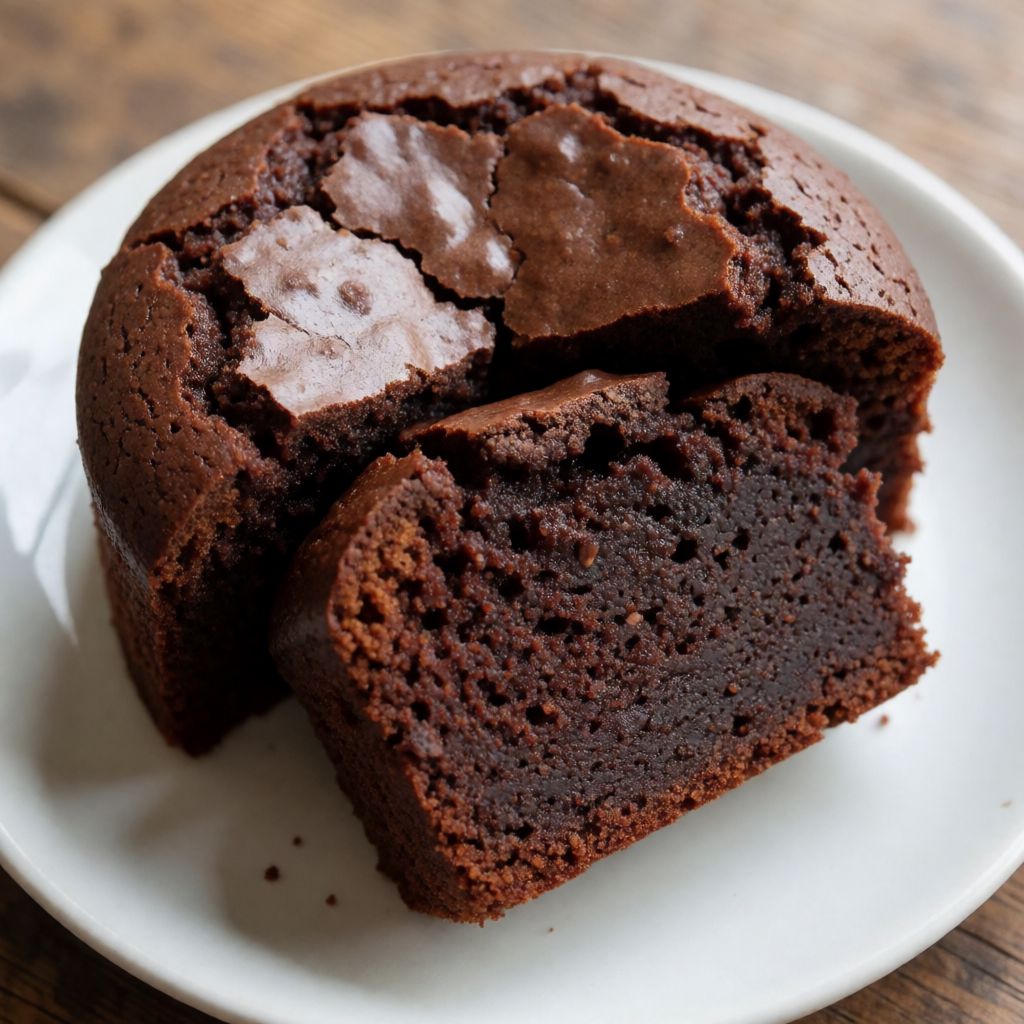
 AI photo
Halloween Cake
A layered chocolate-almond sponge with orange zest, filled with orange mousse and covered in fondant pumpkins and ghosts, perfect for Halloween.
Labels are worked out automatically from the ingredients and can be wrong. Check the packaging if it matters to you.
Ingredients
- 150 g Butter
- 50 g Dark chocolate
- 4 pcs Eggs
- ½ pcs Vanilla pod
- 150 g Sugar
- 50 g Almond flour
- 80 g Plain flour
- ½ pcs Orange finely grated zest
- 1 tbsp Cocoa powder
- 2 tsp Baking powder
- 1 pinch Salt
- 4½ pcs Gelatine
- ½ pcs Vanilla pod
- 2 pcs Eggs
- 100 g Sugar
- 200 ml Orange juice
- ½ pcs Orange finely grated zest
- 300 ml Whipping cream
- 1 pinch Food colouring paste a few drops
- 200 g Black fondant for the edge
- 200 g Orange fondant for the pumpkins
- 75 g White fondant for the ghosts
- 10 g Green fondant for the pumpkin stalks
- ½ tsp Liquorice powder














Steps
Melt the butter in a pan over low heat, take it off the heat as soon as it's melted, and stir in the chocolate.
5 minSeparate the eggs into whites and yolks in two bowls. Whisk the whites to a thick, airy foam. Split the vanilla pod lengthways, scrape out the seeds and mix them with the sugar.
8 minIn a clean bowl, whisk the vanilla, sugar and yolks to a pale, airy cream. Fold in the warm melted chocolate and butter.
In a clean bowl, mix the plain flour, almond flour, orange zest, cocoa, baking powder and salt, then fold into the batter.
3 minGently fold the whisked egg whites into the batter, keeping as much air in as you can.
2 minSpread the batter into a greased 20 cm tin lined with parchment and level it out.
Bake in a preheated fan oven at 170°C for about 40 minutes.
40 minCheck with a wooden skewer in the centre of the sponge — it should come out clean or with just a few crumbs. Let the sponge cool completely in the tin before turning it out.
15 minSoak the gelatine in cold water for 10 minutes.
10 minSeparate the yolks from the whites. Whisk the whites to a thick foam. Whip the cream to soft peaks.
5 minIn a third bowl, whisk the yolks, vanilla seeds, sugar and finely grated orange zest to a pale, airy cream.
5 minMelt the softened gelatine in a bain-marie over low heat. Take it off the heat, stir in a little room-temperature orange juice first, then the rest. Beat this thoroughly into the egg cream with a mixer.
8 minFold in the whipped cream and, if you like, a tiny dab of food colouring, then gently fold in the egg whites last. Take care not to knock the air out of the whites and the mousse.
3 minPlace one sponge layer in the tin. Line the sides of the tin with an acetate cake collar. Pour the finished orange mousse over the sponge.
5 minPut the cake in the fridge for 2 hours.
120 minPlace the second sponge layer on top. Put it back in the fridge for another 4 hours.
240 minRoll out the orange fondant into a circle matching the diameter of the cake (20 cm) and place it on the cake.
5 minRoll out the black fondant into a long strip matching the circumference of the cake (about 63 cm) and wrap it around the cake.
5 min
This is not really a cake, it is scaffolding. A dense bitter sponge on the bottom, a wobbling orange mousse built on gelatine in the middle, another disc of the same sponge lid, and over all of that a sheet of fondant doing nothing but theatre — pumpkins, ghosts, a black ribbon round the waist. Taste and costume are two separate jobs here, and you should treat them as two separate jobs.
What decides whether it stands up and tastes right: how much air survives the folding, and how patient you are with the fridge. The sponge gets its lift from whisked whites, not from the baking powder — the powder is a safety net, not the engine. If you knock the air out while folding chocolate batter into egg whites, no amount of baking powder brings it back; you'll get a flat, dense disc instead of a light crumb, and no oven setting fixes a mixing mistake.
Same story in the mousse, only there the stakes are higher because nothing bakes it into shape — gelatine does that job, cold, slowly. Melt the gelatine gently and fold the whipped cream and egg whites in last, carefully. Beat too hard at that stage and you deflate the very thing that's supposed to make it a mousse and not a jelly.
Some people think a cake like this must be rushed because 'Halloween is in two days.' No — because gelatine needs real hours to set properly in a cold fridge, not a cold shelf near the door. Build in the two chilling stops as actual ingredients, not formalities, and the cake will hold its own weight when you cut into it instead of sliding sideways on the plate.
Butter and dark chocolate are melted together off the heat the moment the butter turns liquid — that's the whole trick. Chocolate scorches and turns gritty if it sits over direct heat too long; taking the pan off and letting residual warmth finish the melting is what keeps it smooth. Any dark chocolate with a clean snap and no added vegetable fat behaves the same way; cheap compound chocolate with a waxy finish won't melt as cleanly and leaves a slightly greasy taste.
Four eggs do two jobs at once in the sponge: yolks whisked with sugar and vanilla give structure and richness, whites whisked separately give lift. Keep the bowls properly clean when whisking whites — any trace of yolk fat and they refuse to foam, which is the real reason recipes insist on "a clean bowl", not superstition. Almond flour here isn't decoration, it keeps the crumb moist because it carries fat instead of pure starch; ground hazelnuts do the same job if that's what's in the cupboard. Plain flour and cocoa give the sponge its backbone and colour, orange zest gives it a smell — grate it fresh, because the oil that carries the scent evaporates fast once zested and dried zest from a jar smells of almost nothing.
The mousse runs on gelatine, and gelatine has one rule: bloom it in cold water first so it hydrates evenly, then melt it gently, never boil it. Boil it and the protein structure that's supposed to set your mousse breaks down, and you'll end up with liquid orange cream no fridge will ever firm up. If you only have powdered gelatine instead of leaves, the principle is identical — soak, then melt gently — just follow the ratio on your own packet, since brands vary. Agar-agar is not a straight swap here: it sets firm and stays firm at room temperature, which turns a soft mousse into something closer to jelly cut with a knife.
Fresh orange juice and fresh zest, squeezed and grated the same day, carry more of the orange than anything from a carton — carton juice is pasteurised and has lost some of its top note by the time it reaches you. Whipping cream needs enough fat to hold air when beaten; UK double cream (around 48%) does this easily, single cream won't whip at all, so don't try to save money there. Food colouring paste is used in a tiny amount because it's concentrated and won't water down the mousse the way a liquid dye can.
The fondant — black, orange, white, a touch of green for stalks — is sugar paste, and its only enemy is drying air; keep whatever you're not using wrapped in plastic while you work, or it cracks instead of folding smoothly round the cake. The liquorice powder isn't in the written steps because it belongs to the fiddly bit nobody writes down properly: dust it lightly for fine black details — eyes, stitches on a ghost — where a whole sheet of black fondant would be clumsy. For the acetate collar that holds the mousse walls straight while it sets, a strip cut from a clean plastic food tub or a stiff strip of baking parchment taped into a ring does the same job in a domestic kitchen; you're not after the right brand, you're after something smooth, food-safe and rigid enough to hold its own circle.
Use a 20 cm springform tin — standard in most UK kitchens — because unmoulding a mousse-topped sponge by tipping it out of a solid tin is asking for a collapsed side. And trust the skewer over the clock for the sponge: ovens, even fan ovens, run a few degrees hot or cool depending on the model, so 40 minutes is where to start checking, not where to stop baking.