
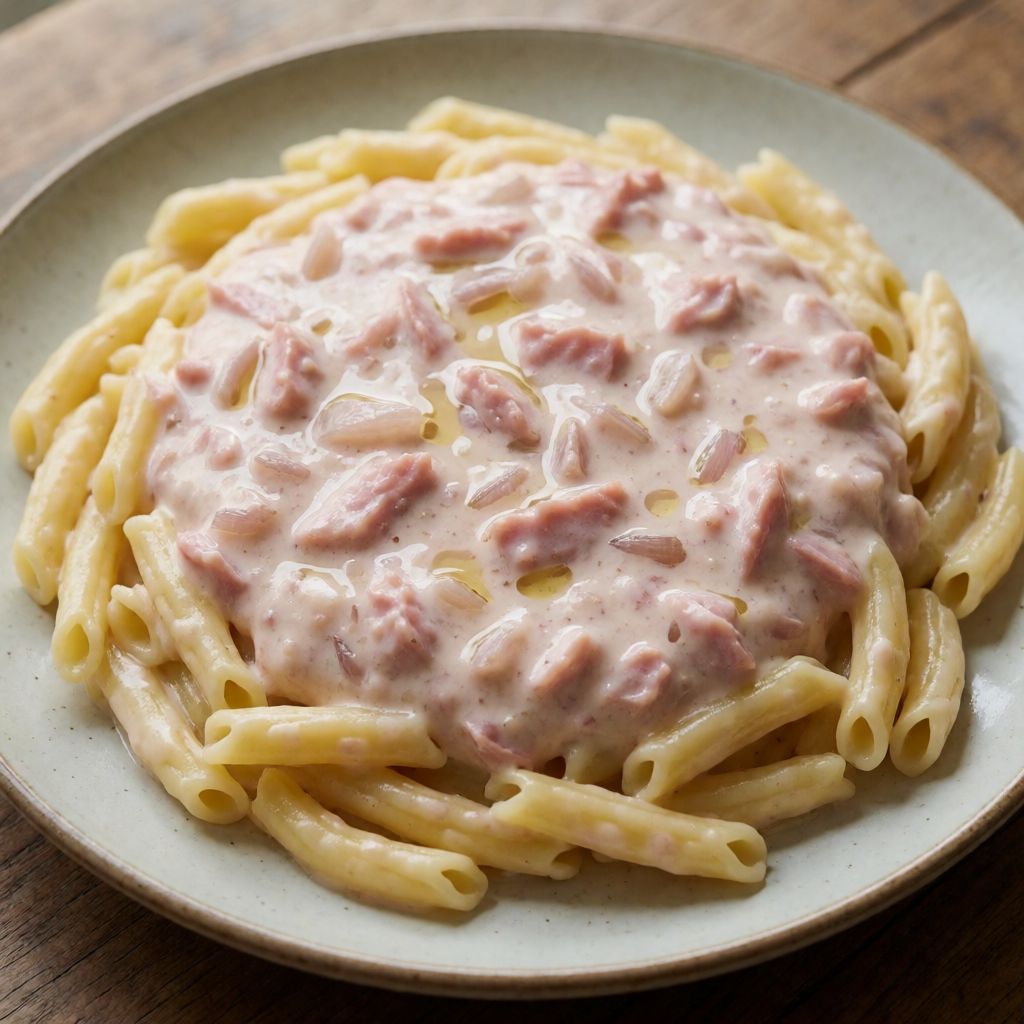
 AI photo
Pasta with Ham Mousse
A quick creamy pasta where whizzed ham and ricotta make an easy, silky sauce.
Labels are worked out automatically from the ingredients and can be wrong. Check the packaging if it matters to you.
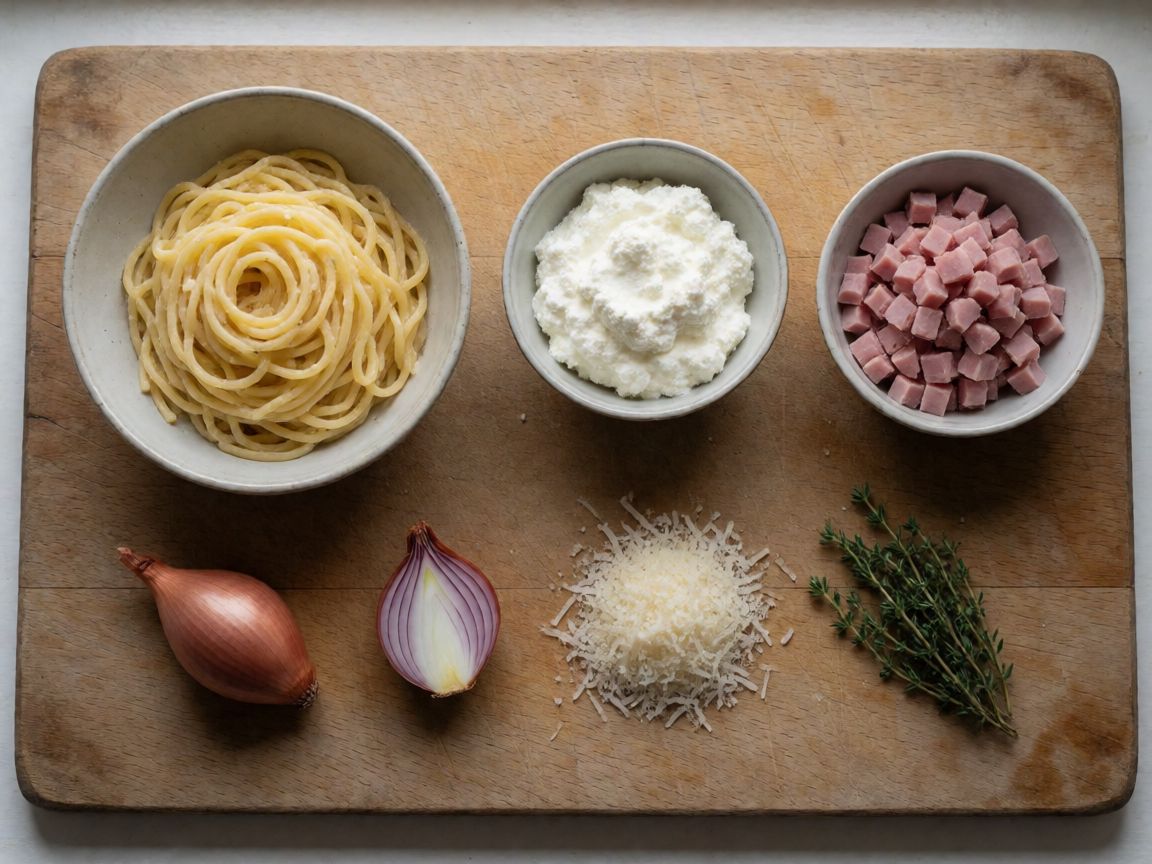
Ingredients









Steps
Put the ricotta and diced ham into a blender and blitz until smooth.
Add the olive oil, salt and black pepper, then blend to a creamy consistency.
Put a pan of water on to boil.
Salt the water and cook the pasta according to the pack instructions.
In a frying pan, fry the finely chopped shallot in olive oil until golden.
Add the ham mousse to the shallot.
Warm the sauce through evenly in the pan.
Mix the drained pasta with the sauce, adding a ladle of the cooking water for creaminess.
Sprinkle with Parmesan and thyme before serving.
This is pasta dressed in a cold-cut mousse — ham and ricotta blitzed into something between a pâté and a cream sauce, warmed through rather than cooked, and loosened back into silk with the water the pasta just swam in. No cream, no butter, no flour: the ricotta supplies the fat and the body, the ham supplies the salt and the savour, and the blender does the work a long simmer would normally do.
What decides whether it works is restraint with heat once the mousse hits the pan. Ricotta is a fresh cheese, barely acidified, loosely held together — push it past "warm" and the proteins that gave it that smooth curd tighten up, squeeze out water, and you get grains floating in broth instead of a sauce coating the pasta. You're not cooking the mousse, you're bringing it up to the temperature of the dish. Some say sauce needs a good bubbling reduction to taste of anything — no, because here the flavour was already built in the blender; heat is just there to make it pourable and to let the shallot's sweetness diffuse through it.
The pasta water is the second decision point, and it's not a garnish, it's an ingredient. Starchy, salty, hot — it does three jobs the mousse can't do alone: thins a sauce that's too thick to coat, reseasons it without adding more salt-heavy ham, and binds fat and water into something that clings to pasta instead of sitting in a puddle at the bottom of the bowl. Add it gradually, a ladle at a time, judging by how the sauce moves when you tilt the pan — it should slide, not sit, not run.
Ricotta: choose the fresh, moist kind sold in a tub, not a dense grainy block meant for baking — you want something that still has give, that blends to cream rather than to paste. If all you can get is a drier ricotta, loosen it with a spoon of the pasta water earlier than the recipe asks, before it ever meets the pan. A soft cream cheese or mascarpone will substitute at a push — the criterion is a fresh, mild, high-fat cheese with no sharp edge of its own, because its job here is texture and a canvas for the ham, not flavour in its own right.
Ham: this is cooked ham — the sliced stuff you'd put in a sandwich, not prosciutto, not gammon straight off a Sunday roast joint, though leftover roast ham, finely diced, works and arguably works better, since it's already got that deeper, roasted edge rather than the sweetness of commercial sliced ham. What you're after is something soft enough to blend without turning stringy. Dry-cured or very fatty cuts will throw the balance — too much salt, too much chew for a blender to smooth out.
Shallot: milder and sweeter than onion, which matters in a dish with so few components — there's nowhere for a harsh onion bite to hide. Half a shallot for four servings is a quiet amount on purpose; this is background, not a co-star. No shallot in the house, use the mildest onion you have, finely chopped, and give it a little longer in the pan to lose its sharpness before it turns gold — judge it by colour and smell, not a clock.
Olive oil: here it's just the medium — for blending the mousse to a spreadable cream, and for sweating the shallot. Any oil with no flavour of its own strong enough to fight the ham will do; a shouty extra virgin isn't wrong, it's just unnecessary, since nothing about this dish wants a peppery, grassy note cutting through it.
Parmesan and thyme at the end are not decoration, they're correction — Parmesan brings back the sharp salt note a mild ricotta-based sauce can lack, thyme brings a green, slightly resinous lift against all that soft fat and cured meat. Use them with a light hand; this dish is already rich, and more cheese on top of ham and ricotta can tip it from satisfying into heavy.
Pasta choice matters more than the recipe says out loud. A shape with ridges or a hollow — penne, fusilli, something with surface for the sauce to grip — will carry a thick, blended sauce far better than a smooth long strand that the mousse will just slide off. Cook it properly al dente, bending test rather than clock: it should give resistance to the bite, not snap, not go soft and flabby, because it finishes its last minute of cooking in the sauce itself, absorbing that starchy water and firming up slightly as it cools on the plate.
On patience: this isn't a dish that rewards rushing the mousse into the hot pan straight from the blender, cold from the fridge if you've made it ahead. Let it come up gently, stirring, watching for the first loosening at the edges — that's your cue it's ready for pasta, not a timer.