
 AI photo
Curried Herring
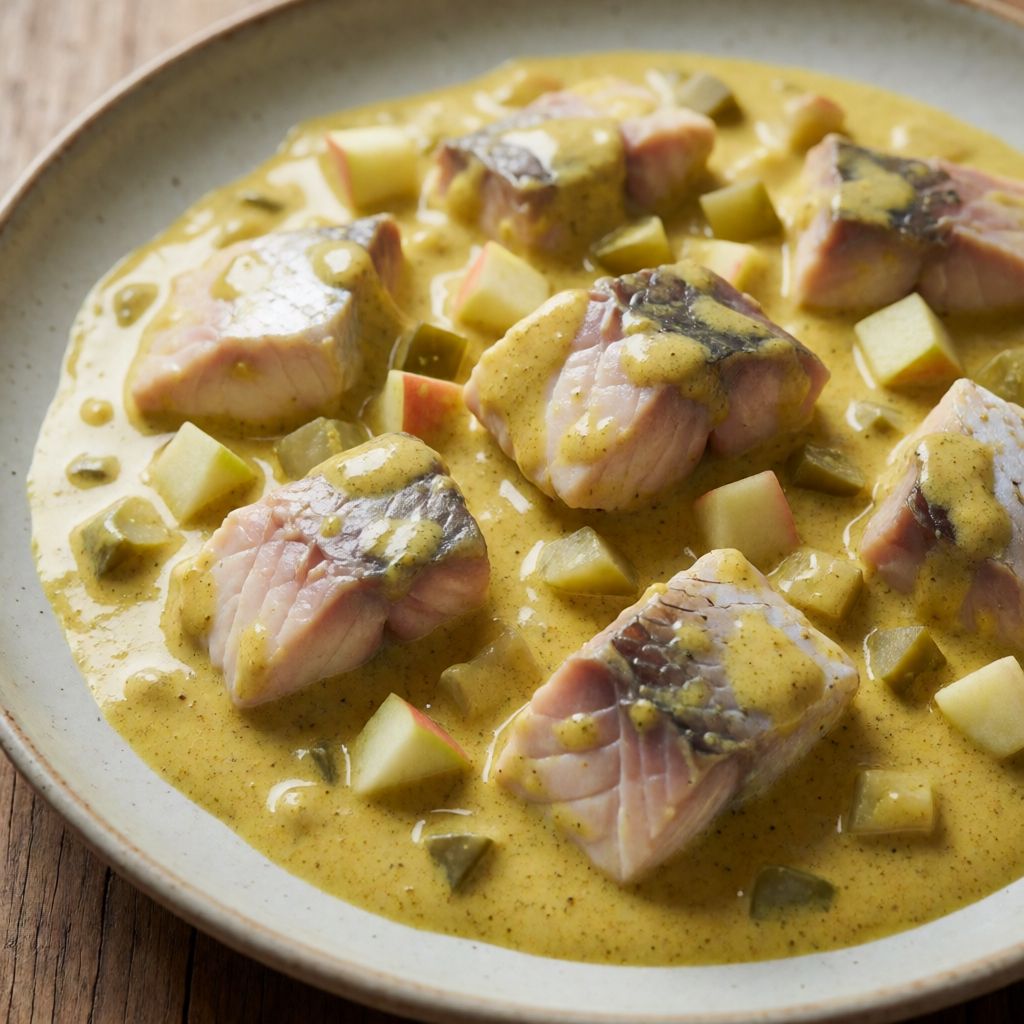
A classic Scandinavian-style curried herring salad, served with rye bread, red onion, apple and fried eggs.
Labels are worked out automatically from the ingredients and can be wrong. Check the packaging if it matters to you.
Ingredients
- 2 tsp Curry powder medium hot
- 100 ml Crème fraîche 38%
- 1 pinch Turmeric
- 2 tsp Dijon mustard
- 20 g Pickled gherkins finely chopped
- ½ pcs Apple finely diced
- 250 g Herring pickled, traditional-style
- Salt
- Black pepper freshly ground
- 6 pcs Rye bread slices
- 1 pcs Red onion sliced into rings
- ½ pcs Apple diced
- 3 pcs Eggs fried, sunny side up
- 1 bunch Dill finely chopped, fresh













Steps
Toast the curry powder in a dry pan over low heat for a few minutes until fragrant.
Mix the crème fraîche in a bowl with the curry powder, turmeric and Dijon mustard, and stir well.
Add the finely chopped pickled gherkins and diced apple, stir into the curry cream and season with salt and pepper.
Cut the herring into smaller pieces and mix with the curry dressing.
Serve with rye bread, red onion, diced apple and fried eggs, sprinkled with fresh dill.
This is a cold open-faced sandwich dressed up as a small act of composition: pickled herring folded through a curry-spiked crème fraîche, piled on rye, finished with raw onion, apple and a fried egg. Nothing here is cooked in the sense of heat changing a protein — the only flame you light is under dry curry powder for a minute, and that's not cooking the dish, that's waking the spice up. What decides whether this works is balance: the sourness of the pickled herring against the fat of the crème fraîche, the sweetness of the apple cutting the mustard's sharpness, the raw onion's bite kept in check by everything else. Get that balance wrong and you either have a bowl of fish in cream, or a bowl of curry powder with fish as an afterthought.
Some say curry powder needs oil to "release" its flavour — no, because what releases a spice's aroma is heat meeting the surface of the dry powder, not fat. Oil carries flavour once it's there; it doesn't summon it. A dry pan, low heat, a minute or two until you can smell it across the kitchen — that's the whole trick, and it's the only step in this recipe that uses your hob at all. Skip it and the curry tastes flat and chalky, sitting on top of the cream instead of moving through it.
Start with the herring, because it's the one ingredient you can't substitute your way out of trouble with. "Pickled, traditional-style" means it's been cured in a vinegar-sugar-spice brine, not smoked and not fresh — that distinction matters because smoked herring brings its own heavy, oily flavour that will fight the curry cream rather than sit under it. If your shop only has rollmops or herring in a mustard sauce, rinse off the extra sauce before using it, or you'll be stacking mustard on mustard on mustard and losing the shape of the dish.
Crème fraîche at 38% fat is doing a specific job here: it's rich enough to coat the fish without being watery, and sour enough to not read as sweet against the curry. Double cream will give you richness without the tang, and soured cream alone can be thinner and sharper — either works if you adjust by taste, but crème fraîche sits in the middle for a reason, and that reason is fat content holding the dressing together so it clings to the herring instead of pooling in the bowl.
Curry powder here is a blend, not a single spice, and "medium hot" matters more than it looks — this isn't a dish built to carry heat, it's built to carry warmth and colour. A pinch of turmeric on top of a turmeric-containing curry powder isn't decoration, it's reinforcing the colour so the dressing reads as golden rather than grey-cream with brown flecks — colour is part of how you judge a dish like this before it even reaches your mouth. If your curry powder is a hot one, use less and you'll still get the fragrance without the dish turning into something it isn't meant to be.
The gherkins and apple are both there to interrupt the richness — one with vinegar-sharp crunch, one with sweet-tart crunch — and that's why they're finely chopped or diced: you want small bursts distributed through the cream, not big pieces you bite into separately. Use a firm, tart apple — a Granny Smith or Braeburn rather than something soft and sweet like a Gala — because a soft apple will go mealy against the acidity of the herring and the gherkins rather than staying crisp against them.
Rye bread isn't a neutral base, it's structural: its density and sourness hold up under a wet topping that white bread would turn to paste under within a minute. If you can't find a proper dark rye, a dense wholemeal or a seeded loaf toasted lightly will do more good than a soft sliced loaf ever will — the test is whether the bread fights back a little when you press a fork into the topping.
The red onion rings and second portion of diced apple on top are there raw, uncooked by design, so you get a last layer of sharp and sweet that the dressing itself doesn't carry once it's sitting on bread. And the fried egg isn't filler — it's there to add a layer of plain, warm richness that ties the cold sharp components to something soft, which is why sunny side up matters: a hard-fried egg loses the yolk that's meant to run slightly into the rye underneath. Patience here isn't about long cooking — there isn't any — it's about resisting the urge to rush the toasting of the curry powder or dump everything onto the bread at once. Build the dressing, taste it, adjust the salt and pepper before the herring goes in, because once the fish is mixed through, correcting the balance gets much harder.