
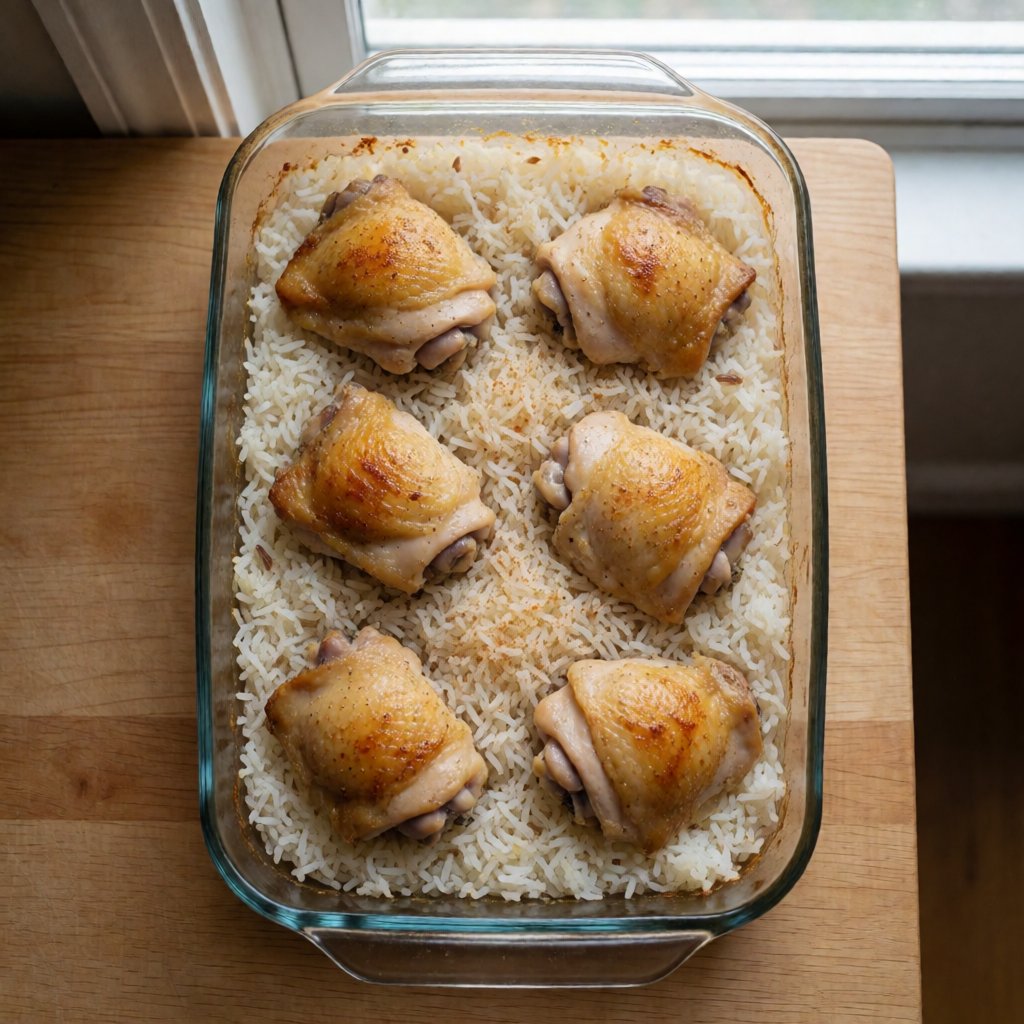
 AI photo
Chicken and Rice Bake
A simple one-dish chicken and rice bake with onion and paprika, cooked in the oven until tender.
Ingredients
- 450 g Chicken Thighs bone-in, 2 pieces
- 140 g Long Grain Rice
- 250 ml Boiling Water
- 1 pcs Onion chopped
- 1 tbsp Sunflower Oil
- 1 tsp Paprika
- 1 tsp Salt
- 1 pinch Black Pepper to taste








Steps
Rinse the rice and place it in a baking dish with the chopped onion, season with salt, then pour over the boiling water mixed with the oil.
Rub the chicken thighs with salt, paprika and pepper, then lay them on top of the rice.
Cover the dish with foil.
Put the dish into an oven preheated to 200°C for 45 minutes, until the meat near the bone reaches 74°C inside.
45 minRemove the dish from the oven.
Forget tandoor talk and pilaf grandeur — this is a chicken and rice bake, no more and no less, but it still runs on one real mechanism: two things that need the same forty-five minutes sit in the same sealed tin and feed each other while they get there. The chicken's fat renders and drips down, basting the rice from above. The rice gives off steam as it swells, and that steam keeps the chicken skin from drying out under the foil before the meat inside is actually done. Neither ingredient is really cooking alone here — they're cooking each other.
What decides whether it works is the seal, not the seasoning. The foil is standing in for a kazan lid, and in a flat with no cast-iron pot that's exactly the right job for it: trap the steam, hold the heat even, stop the top layer of rice drying into crunch before the chicken underneath is through. Lift a corner early to "check" and you let out heat and moisture you can't get back — the rice near the surface toughens and the dish doesn't recover in the time left.
Some say foil is only there to stop the chicken browning, so you can skip it if you don't mind pale skin. No — because without it the water boils off as open steam instead of circulating back down onto the rice, and you get a cooked bottom with a half-raw, gritty top. The lid, whatever shape it takes, is doing real work, not cosmetic work.
Start with the rice, since it does more work than its billing suggests. Long grain is right here because its lower starch content keeps grains separate under a lid, rather than collapsing into porridge — a risotto or pudding rice would turn gluey in forty-five covered minutes, because that stickiness is precisely what those varieties are bred for elsewhere. If you only have basmati, it works fine; a parboiled "easy cook" bag works even better, since it was built for exactly this kind of hands-off, lid-on cooking and is harder to overshoot.
The water goes in boiling, with the oil already stirred through it, and neither detail is fussiness. Rice starch starts gelatinising close to boiling point, so pouring in cold water means the first few minutes are spent just getting the liquid up to temperature — time that comes straight out of the window before the chicken overcooks. The oil, meanwhile, isn't there for flavour; a tablespoon of sunflower oil has almost none. It coats the grains so they don't clump into one starchy mass, and sits as a thin film that slows evaporation off the top. Any oil with no real smell of its own does this job — sunflower, groundnut, plain vegetable oil. Leave out strong olive oil or sesame; their flavour sits on top of the dish instead of disappearing into it, and this isn't built to carry a second flavour alongside chicken and paprika.
Onion goes in chopped and raw, buried under the rice's surface, and it never gets the chance to brown — there's no exposed hot metal here, only wet rice and steam the whole way through. That's fine. Its job isn't caramelisation this time but slow surrender: softening and bleeding sweetness and a faint sharpness into the grains around it, the way an onion left in a stew does its work without ever touching a frying pan.
Salt has to go in two places for two separate reasons, and skipping the second is the most common fault in dishes built like this. The salt rubbed onto the chicken seasons the meat and skin you taste first. The salt stirred into the rice's water seasons the rice itself — chicken juice dripping down from above won't reliably salt grains sitting an inch below the surface. Season only the meat and you get well-seasoned chicken sitting on rice that tastes of not much.
Paprika is working the skin, not the inside of the dish — colour and a faint sweet-smoky edge on the surface the covered rice underneath never reaches. Reach for smoked paprika instead of sweet and you're not intensifying the flavour, you're changing the dish's whole direction toward something closer to chorizo. A fair swap, just not a neutral one.
Last thing, and it's the step people skip because nothing visibly happens: once it's out of the oven, leave it five minutes with the foil still on before you serve. The rice is still finishing — pulling in the last of the trapped steam, settling into itself. Patience here isn't sentiment, it's the actual difference between rice that's cooked through and rice that only looks like it.
·