
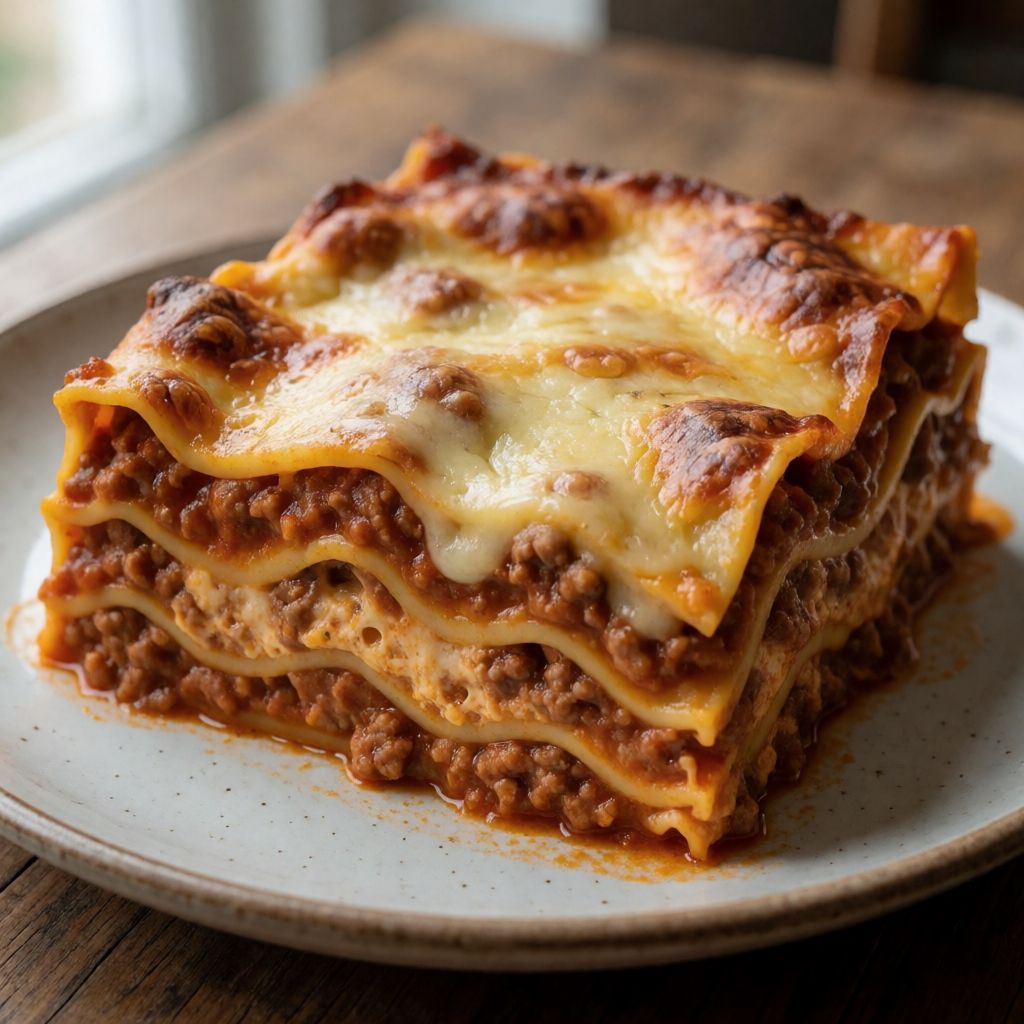
 AI photo
Hearty Lasagne with Meat Ragù and Swiss Emmental
A juicy lasagne with meat ragù and Swiss Emmental cheese.
Labels are worked out automatically from the ingredients and can be wrong. Check the packaging if it matters to you.
Ingredients
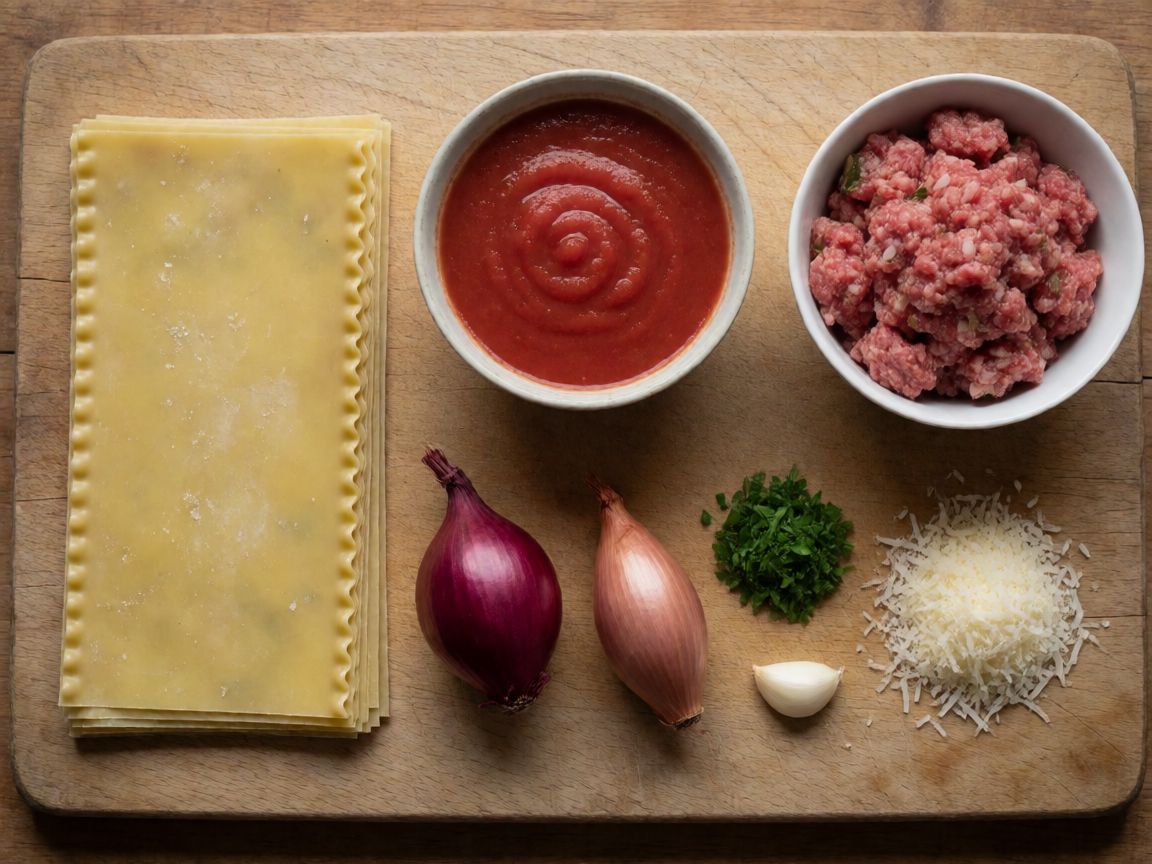
- 1 package Lasagne sheets
- 230 g Tomato passata
- 400 g Minced beef mixed (veal and pork)
- 1 pcs Red onion
- 1 pcs Shallot
- 1 tbsp Parsley
- 1 clove Garlic
- 120 g Emmental coarsely grated
- 100 g Parmesan
- 300 ml Béchamel sauce
- Salt to taste
- Black pepper to taste
- Olive oil to taste
- Butter to taste
- 120 ml White wine














Steps
Heat the olive oil and sauté the chopped onion, shallot, garlic and parsley until soft.
Add the minced beef and pour in the white wine, letting it evaporate.
Pour in the tomato passata, season with salt and pepper to taste, and cook.
Spread ragù and béchamel on the bottom of the baking dish, then layer the lasagne sheets, alternating ragù, béchamel, Emmental and Parmesan; dot with butter.
Bake at 180°C.
50 minDoneness: inside temperature should reach 71°C.
Lasagne is bricklaying with food: layers of pasta, sauce, cheese, stacked so each one does a different job. What decides whether the stack holds up isn't the oven, it's whether the ragù has a body of its own before it ever meets the pasta, and whether the béchamel is thick enough to glue the sheets together instead of sliding off them.
The onion, shallot, garlic and parsley go in first and slowly, because what you're building here is the base note of the whole dish — if they catch and brown too fast, they turn bitter and that bitterness sits under everything else for the rest of the cook. You're looking for them to go soft and faintly gold, not coloured hard. Some say the mince should just simmer in with everything from the start — no, because meat that goes straight into liquid releases water and boils grey instead of browning. Let it fry first, even briefly, so it picks up some real colour and flavour before the wine and tomato arrive.
The wine isn't there to taste of wine. It goes in hot, over meat that's already taken some colour, and its job is to lift the browned bits off the base of the pan and cut through the fat with acidity — you want it to lose its raw sharpness, not vanish completely. Then the passata turns the whole thing from a fry into a sauce, and from here it's about patience: the ragù needs time on low heat to thicken and taste of itself, not of raw tomato. That's the one ingredient this recipe doesn't list but absolutely needs.
The mince mix of veal and pork (standardly sold in the UK simply as 'minced beef' isn't quite that, so check the pack — you want a mix, not pure beef) exists for one reason: fat balance. Pork brings fat that beef alone often lacks, and that fat is what keeps the ragù from turning dry and grainy once it's been cooked down and then baked a second time in the oven. If you only have beef, use a slightly fattier cut minced, or add a spoon of butter with the meat — lean mince in a lasagne goes sawdusty by the time it comes out of the oven.
Onion and shallot together aren't fussiness — they're two different sugars and two different intensities. Onion gives bulk and sweetness, shallot gives a sharper, more concentrated note. If you've only got one, use more of it; the dish survives, it just leans a little flatter. Garlic here is a single clove for background, not a garlic dish — crush it rather than mince it fine, so it releases slowly instead of burning in the first minute of frying. Parsley at this stage isn't garnish, it's cut into the fry to add a green, slightly bitter edge that keeps the whole base from tasting one-note rich; flat-leaf if you can get it, it holds up to heat better than curly.
White wine's only real requirement is dryness — you're after acidity, not sweetness, so an off-dry or sweet wine will throw the balance toward the cloying side once the tomato is in too. No wine in the house, no drama: a splash of wine vinegar cut with water does the same acid job, just without the aromatics wine carries. Tomato passata is tomato that's already been sieved smooth — if you only have tinned chopped tomatoes, blitz them, because whole chunks in a ragù that's meant to coat pasta evenly just sit as lumps.
Béchamel is flour and butter cooked together into a paste, then loosened with milk — the paste (a roux) is there so the flour cooks through and stops tasting raw and starchy; skipping that step is the usual cause of a béchamel that tastes of raw flour no matter how long you bake the lasagne afterwards. If you're making it yourself rather than buying it ready-made, keep whisking while the milk goes in — lumps come from pouring too fast, not from any flaw in the method.
Emmental is chosen for how it melts: enough fat and moisture in it to go stretchy without turning to oil in the oven, which is exactly what you want holding the middle layers together. Any firm, mild cheese that melts cleanly stands in for it — Gruyère is the closest relation, a mild Cheddar works if you accept a sharper edge to the flavour. Parmesan is doing a different job entirely: it's hard, it's salty, it's there for the crust on top and the savoury backbone, not for melting into sheets, so don't swap it for something soft.
Your oven here is doing the work a kazan or a wood-fired oven would do elsewhere — there's no stovetop simmering for hours involved in the final stage, which is lucky, because a British domestic hob and a wide pan aren't built for that kind of patience anyway. The real patience is upstream, in letting the ragù reduce properly before it ever reaches the dish. Once it's out of the oven, give it a few minutes standing before you cut into it — straight from the heat, the béchamel is still loose and the first slice will just collapse sideways instead of holding its layers. That's not a flaw in the recipe, it's physics catching up with you if you don't wait.