
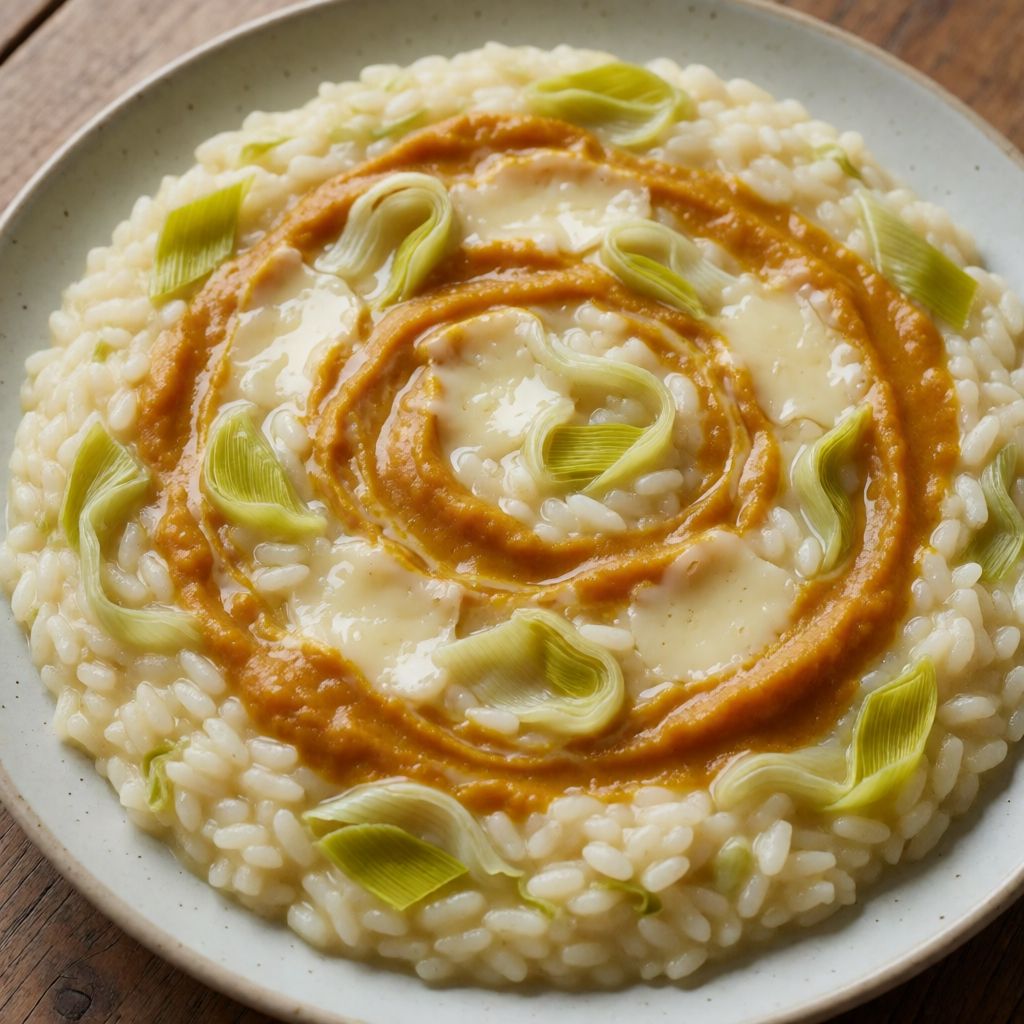
 AI photo
Risotto with Leek, Taleggio and Pumpkin Cream
A creamy risotto with leek, roasted pumpkin cream, Taleggio and Parmesan, finished with rosemary.
Labels are worked out automatically from the ingredients and can be wrong. Check the packaging if it matters to you.
Ingredients
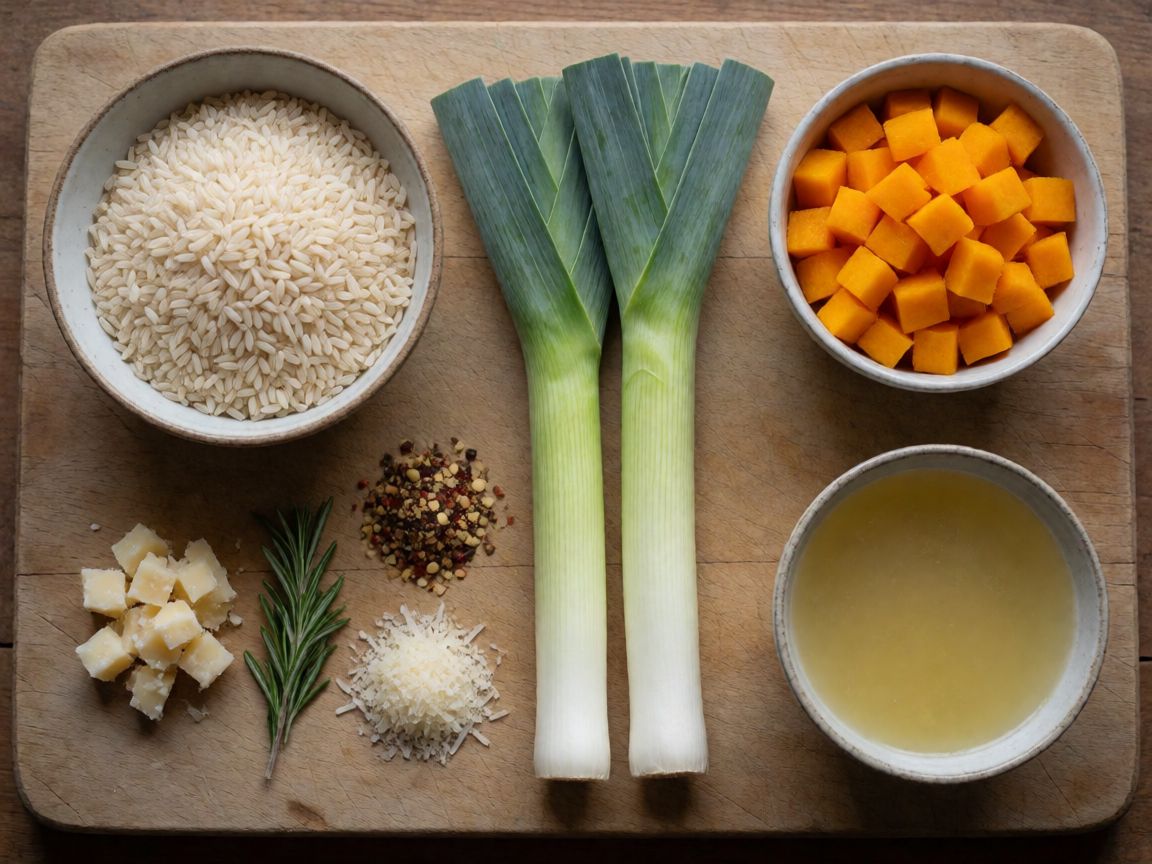
- 350 g Risotto rice
- 2 pcs Leek
- 400 g Pumpkin
- 100 g Taleggio
- Rosemary to taste
- Olive oil to taste
- Black pepper to taste
- Mixed peppercorns to taste
- 1 tbsp Parmesan
- 500 ml Vegetable stock
- 125 ml White wine
- Salt to taste












Steps
Put the pumpkin in a pan, add the stock, black pepper and salt, and cook.
20 minBlend the softened pumpkin until smooth and creamy.
Heat the olive oil in a sauté pan and fry the leek until soft.
Add the risotto rice and toast it briefly until lightly browned.
Pour in the white wine and let it evaporate completely.
Cook the risotto, gradually adding the vegetable stock, and stir in the pumpkin cream halfway through.
Season with salt to taste, add the mixed peppercorns, and stir in the Taleggio and Parmesan until creamy.
Add the rosemary and serve immediately.
Risotto is a method, not a flavour — rice cooked by friction and starch, not by boiling it to death. What decides whether this one works is whether you treat the rice as a thing that releases its own thickener gradually, rather than a thing you drown in liquid and hope for the best. The pumpkin cream is doing a second job alongside the rice's own starch: it's bulking out the creaminess without more butter or more stirring, and it's giving the dish its colour and its sweetness against the sharp, barnyard pull of Taleggio.
Some say risotto needs constant stirring from the first grain to the last, as if stopping for ten seconds ruins it — no, because what matters is contact between rice and liquid, not your arm. Stir enough that nothing sits dry on the bottom and scorches, and that the starch coming off the grains gets worked into the liquid instead of settling. A wooden spoon and a bit of attention does this; a phone in your other hand does not, because by the time you look up, the bottom third of the pan has gone past the point of rescue.
The texture you're after is "all'onda" — wave-like, loose enough to slump sideways on a tilted plate, not stiff enough to hold a dome. That's a feel, not a clock reading. Fifty minutes total is the floor here, because the pumpkin needs real time to go from raw and fibrous to soft enough to blend without lumps, and rice needs its own twenty-odd minutes of liquid absorption regardless of what's written. Push past that floor by eye and bite, not by timer.
Risotto rice is the one ingredient here with no real substitute and a real reason for it. Arborio, Carnaroli, Vialone Nano — these are short, fat grains with a starchy core that doesn't fully dissolve, so they release amylose into the liquid around them while staying slightly firm at the centre. A long-grain rice won't do this; it either goes mushy all the way through or stays hard, because it lacks that starch structure. If you only have what's in the cupboard, pudding rice is closer in behaviour than basmati — but call it something else if you use basmati, because it won't be risotto, it'll be rice in a pan.
The leek is the aromatic base, standing in for the onion a simpler risotto would use. It's milder and sweeter than onion once it's softened, which matters because pumpkin is already sweet and Taleggio is already sharp — you don't want three competing strong flavours, you want one quiet one underneath. Cook it until it goes soft and slightly translucent, not browned; browning here means you've pushed past "melting into the fat" into "caramelising," which changes the flavour from background to foreground, and this dish doesn't want a foreground onion.
The wine's job is purely chemical: it deglazes the toasted rice and, more importantly, its acid helps break down pectin and starch structures as it cooks off, which is part of why risotto needs that initial toasting-then-wine step rather than just rice and stock from the start. Let it evaporate fully — if you can still smell raw alcohol, the rice will taste of raw wine, not of itself. Any dry white without obvious sweetness works; a splash of dry vermouth or even a squeeze of lemon with a little water does the acid job in a pinch, though you lose some depth.
Pumpkin here is cooked separately in stock rather than roasted, because boiling it in the same stock you'll later use for the rice means none of its flavour or its starch is wasted — it all ends up back in the pan one way or another. Any dense, sweet squash does the job: butternut is the easiest substitute in a UK shop and arguably more reliable than pumpkin itself, since supermarket pumpkin is often bred for carving, not eating, and can be watery and bland. Butternut squash has a tighter flesh and more consistent sweetness.
Taleggio and Parmesan are doing different work. Taleggio melts into creaminess and brings a gamey, slightly funky edge; Parmesan brings salt and a sharper savoury note and helps bind the sauce with its own proteins. If Taleggio isn't to hand, a washed-rind cheese like Époisses is too strong a swap — go instead for something like a mild Fontina or even a soft Brie-style cheese for the melt, accepting you lose some of the funk. The vegetable stock should taste of something on its own, since it's cooking the pumpkin and feeding the rice — a bland stock cube in water gives you a bland risotto no amount of cheese will rescue, because the rice is absorbing and concentrating whatever liquid you give it, flaws included.