
 AI photo
Lemon Charlotte
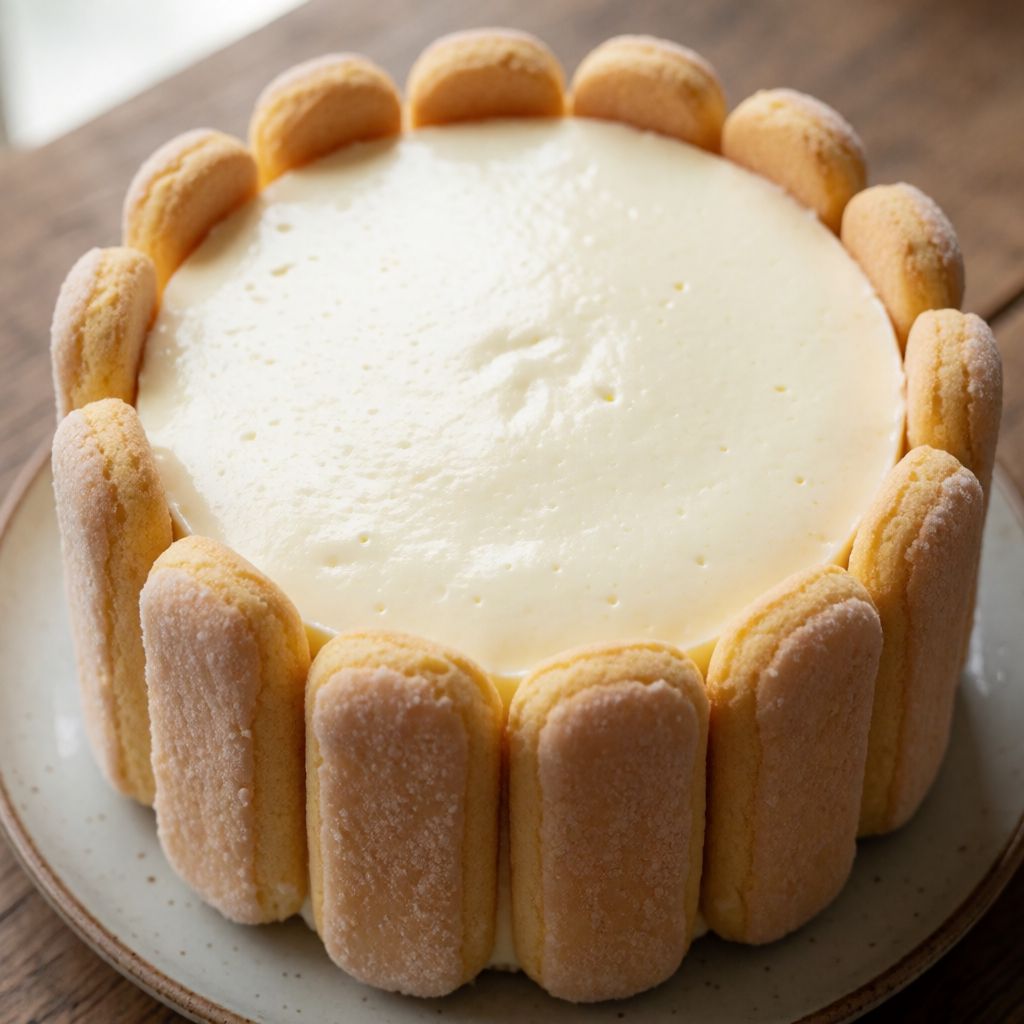
A chilled no-bake lemon charlotte: sponge fingers lined round a mousse of cream cheese, whipped cream and a tangy lemon paste.
Labels are worked out automatically from the ingredients and can be wrong. Check the packaging if it matters to you.
Ingredients
- Sponge fingers to taste
- 300 g Cream cheese
- 500 ml Double cream
- 90 g Caster sugar
- 15 g Gelatine
- 75 ml Water
- 1 pcs Lemon zest from one lemon
- 30 g Lemon zest
- 45 g Lemon flesh peeled
- 50 g Honey
- 50 g Icing sugar
- 130 g Caster sugar










Steps
Soak the gelatine in cold water (75 ml) for about 10 minutes until softened.
10 minIn a saucepan combine the cream cheese with the sugar (90 g). Place over low heat and, stirring with a whisk, melt and soften the mixture to a smooth creamy consistency, adding the grated lemon zest.
Remove from the heat, add the softened gelatine and mix well until fully dissolved.
In a blender combine the sugar (130 g), lemon zest (30 g), peeled lemon flesh, honey and icing sugar. Blend a few times until smooth and fairly runny.
Put the lemon paste in the fridge for at least 30 minutes.
30 minIn a separate large bowl, whip the cream with an electric mixer, then fold in the chilled cream cheese mixture gently with a spatula.
With a knife, trim about 1–2 cm from one edge of the sponge fingers so all pieces are the same height.
On a serving plate, place a 22 cm springform ring and arrange the sponge fingers around the inside edge.
Pour half the cream into the centre, then spoon some of the lemon paste over the top.
Cover with the remaining cream, smoothing the surface well with a spatula.
Pour over the lemon paste and spread it evenly across the surface.
Chill in the fridge for about 3–4 hours until well set.
240 minRemove the ring and decorate with a ribbon and a few lemon slices.
A charlotte, despite the name, isn't sponge cake baked in a mould — it's a cold-set mousse ring wearing a corset of sponge fingers. The fingers never cook with anything here; they're architecture, not flavour. What decides whether this works isn't skill with a whisk, it's gelatine behaving itself and cream that's whipped to the right stiffness before it meets the cheese.
The whole dessert is really two separate mixtures pretending to be one: a lemon cream-cheese mousse (lightened with whipped cream, set with gelatine) and a raw lemon paste that's closer to a lemon curd without the egg or butter — just zest, flesh, sugar, honey, blitzed to a runny purée. The mousse is the bulk; the paste is the hit of actual lemon that cuts through all that cream, layered in rather than stirred in, so you get stripes of sharpness instead of one flat sweetness all the way through.
Some say a charlotte needs baking — no, because the French dessert this borrows its name from (Charlotte Russe, 19th century, built to show off scarce refrigeration and even scarcer sugar at fashionable tables) was always a cold, moulded thing: sponge as a shell, cream as the point. This is that logic transplanted onto cream cheese and lemon, which is why it sits in the fridge for four hours and never sees an oven.
The ring mould matters more than people think. Without it the sponge fingers have nothing to lean against while the mousse is still liquid enough to slump — so a springform isn't decoration, it's the only thing holding the shape until the gelatine does its job.
Gelatine is the one ingredient with zero room for error, and it's also the one people rush. Soak it in cold water only — hot water starts dissolving it unevenly before it's ever bloomed, and you get stringy lumps instead of a clean set. Ten minutes is a lower bound, not a target: you're waiting until the sheets or granules go soft and floppy, no hard spots left. Stir it into the warm cream cheese mixture while that mixture is still warm enough to melt it fully but not hot enough to boil — gelatine loses its setting power above a rolling boil, which is the real reason the whole cheese-sugar-zest step says "low heat": not for flavour, but to protect the gelatine you're about to add.
Cream cheese here isn't cream cheese for tang, it's cream cheese for body — it holds water that would otherwise weep out of a pure cream mousse once sliced. If you've only got mascarpone, use it; it's richer and less sour, so you may want a touch more lemon zest to compensate. Full-fat is not optional: low-fat versions carry more water and less fat to trap it, so your filling can go sloppy instead of sliceable.
Double cream whipped before folding is doing structural work, not just taste. Whip it until it holds a soft peak and no further — overwhip and it turns grainy, and once you fold it into warm-ish cheese mixture it can split rather than loosen smoothly. Fold gently with a spatula, not a whisk, because a whisk knocks the air straight back out, and that air is the only thing stopping this dessert from eating like a dense cheesecake.
The lemon paste is where people reach for bottled lemon juice to save themselves the fiddly bit of peeling flesh away from pith — don't. Pith is where the bitterness lives, and bottled juice has no zest oil in it at all, which is half the point of blitzing zest with the flesh: you want the fragrant oil from the skin, not just the acid from the juice. Zest only the yellow — any white pith grated in turns the whole paste bitter, and no amount of sugar fixes that afterward, only prevents you adding less sugar than you otherwise would.
Sponge fingers are bought, not baked, in most kitchens making this on a Sunday — and that's fine, they're a wall, not a showcase. Trimming them level matters for one practical reason: an uneven top edge means the filling doesn't sit flush against the ring, and when you lift the springform off, gaps show at the rim instead of a clean seam. If you've no sponge fingers to hand, a thin layer of sliced Victoria sponge or even trimmed brioche round the inside works on the same logic — something dry enough to hold shape, not soaked in syrup, because wet sponge collapses against mousse over four hours in the fridge.
Caster sugar rather than granulated dissolves faster into both the warm cheese and the cold-blitzed lemon paste — granulated can leave a slight grit in a cold mixture that never gets heated again. Icing sugar in the lemon paste isn't there for sweetness so much as for a smoother blend, since it has no crystal structure left to catch in the blender blades.
And the four hours in the fridge: that's not a suggestion, that's the gelatine actually doing its chemistry, protein strands linking up slowly as everything cools. Cut it early and you get a wobbly disc that won't hold a slice shape on the plate — patience here isn't virtue for its own sake, it's the one ingredient with no substitute.