
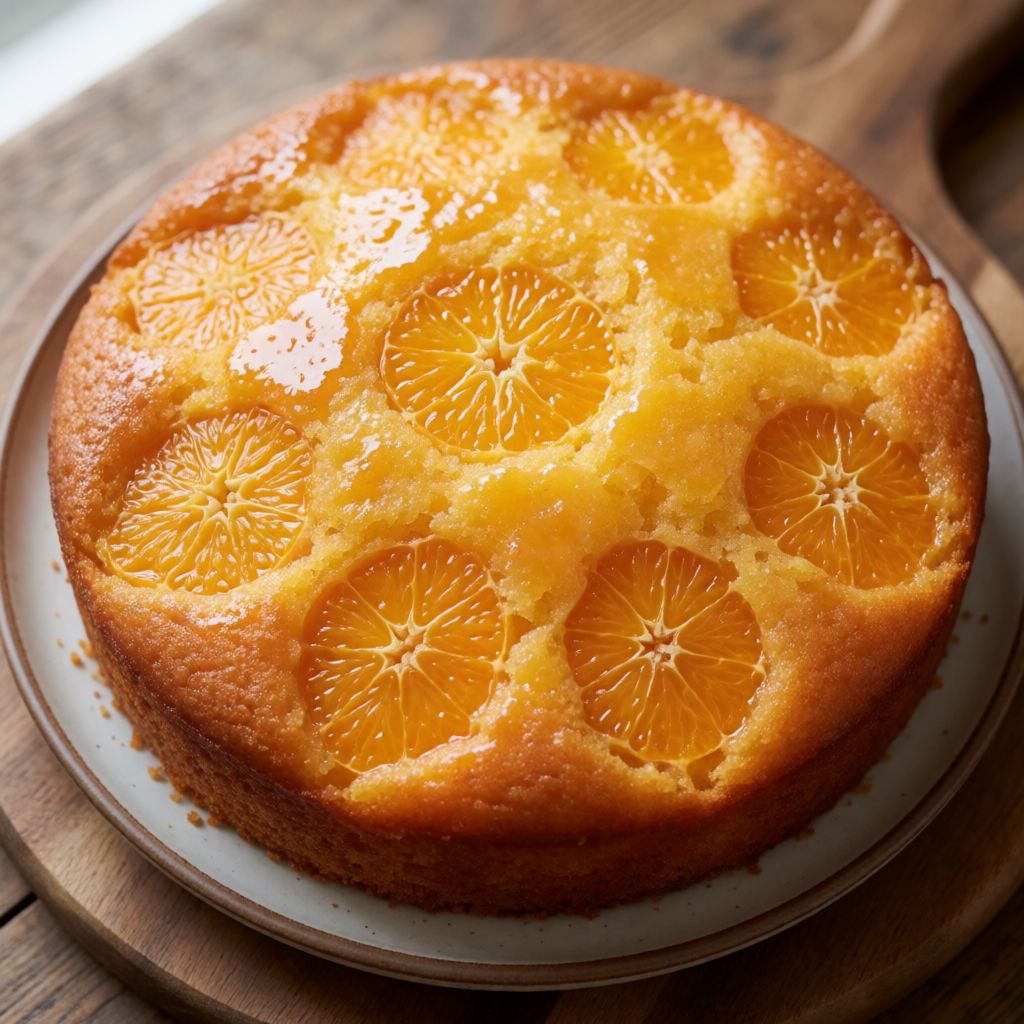
 AI photo
Tangerine Cake
A soft cake made by blending whole tangerines, peel and all, into the batter.
Labels are worked out automatically from the ingredients and can be wrong. Check the packaging if it matters to you.
Ingredients
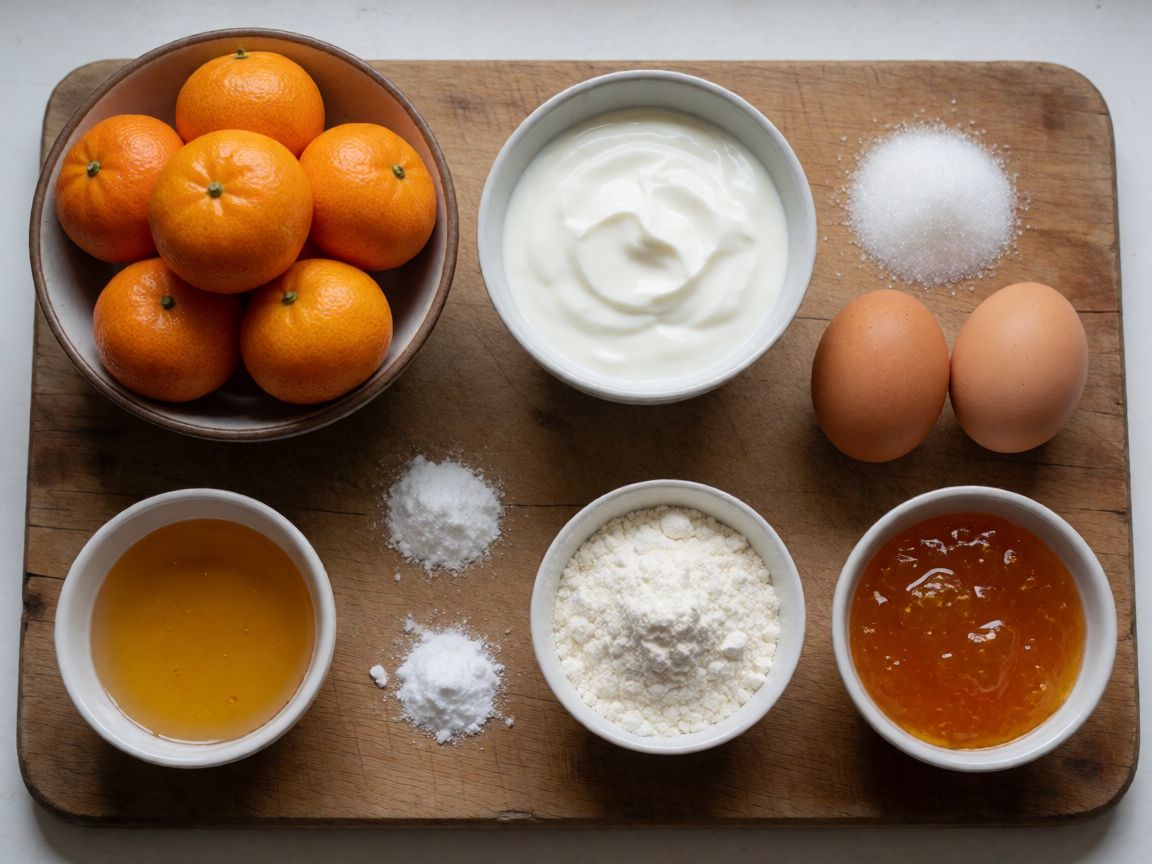
- 300 g Tangerines unwaxed, with edible peel
- 125 ml Yogurt
- 300 g Caster sugar
- 2 pcs Eggs
- 100 g Vegetable oil
- 300 g Plain flour
- 16 g Baking powder
- Honey to taste
- Orange jam to taste, an alternative to honey
- pinch Icing sugar for dusting, to taste










Steps
Choose unwaxed tangerines with edible peel, wash well, dry and cut into pieces, removing any pips.
Put the tangerines into a blender, add the yogurt and blend.
Add the sugar and eggs and blend again.
Pour in the vegetable oil and mix briefly until the ingredients come together into a smooth batter.
Transfer the mixture to a large bowl and add the flour and baking powder, sifting them in in stages.
Mix with a whisk and pour the batter into a 22 cm tin, greased and dusted with flour.
Bake in a preheated fan oven at 175°C for 50-55 minutes, or at 180°C without fan for 60-65 minutes.
55 minLet the cake cool, then before serving dust with icing sugar or brush the top with honey or orange jam.
This is a whole-fruit cake — the tangerine goes in peel, pith, flesh and all, blitzed into the batter rather than zested and juiced separately. That one decision is what the whole cake is built on. Most citrus cakes fight the bitterness of pith by discarding it; this one uses the blender to break it down so finely that the bitterness turns into perfume instead of a sour note. Which is why the fruit has to be unwaxed — a waxed, sprayed skin going straight into the blender is not a seasoning, it's a coating, and no amount of sugar fixes that.
What decides whether it works is less the oven and more the blender stage. You're not making juice, you're making a purée fine enough that the peel disappears into the crumb rather than sitting in it as chewy threads. If your blender is weak, cut the tangerine pieces smaller and blend longer — a lazy ten-second pulse leaves you with bitter confetti in an otherwise sweet cake, and that's not a flour problem, it's a blending problem, no amount of extra baking powder will rescue it.
Texture-wise this sits closer to a loaf cake than a sponge: oil instead of butter, yogurt instead of milk, both chosen for moisture that holds over days rather than lightness that peaks on day one. It keeps — a Sunday-roast household will find it still good on Tuesday with the tea, which a butter sponge rarely manages.
The flour and baking powder go in last and sifted, and that order matters more than it looks. Sift in stages into a wet, already-mixed batter and you avoid the two classic faults: lumps of raw flour that never hydrate, and a dense bottom layer because dry powder sank before the whisk caught it. You're not aiming for vigorous beating here — once the flour disappears, stop. Over-whisking develops gluten you don't want in this cake; it turns a tender crumb rubbery, and that fault shows up as a cake that feels chewy rather than soft, which people often blame on "too much flour" when it was really too much whisking.
On the tangerines themselves: 300g is roughly 3–4 fruit depending on size, and "unwaxed, edible peel" isn't a fussy instruction, it's the ingredient list telling you the peel is doing real work — bitterness and oil from the skin, sweetness from the flesh, moisture from the juice, all at once. If you can only get waxed supermarket tangerines, scrub them hard in warm water or, failing that, zest and juice them separately instead of blending whole — you lose some of the point of the cake, but you avoid eating wax. A couple of small clementines or a satsuma work the same way; what you're really choosing is "thin-skinned citrus with low pith bitterness," so a thick-skinned orange is not a straight swap — it'll need less fruit by weight or more sugar to balance.
The yogurt's job is acid and moisture, not flavour — it reacts gently with the baking powder and keeps the crumb from drying out the way a purely oil-and-egg batter can. Any plain yogurt does this; buttermilk or soured cream are close substitutes if that's what's in the fridge, since what matters is the acidity and the fat content, not the brand.
Vegetable oil rather than butter is an economic and practical choice, not a lesser one — oil stays liquid at room temperature, so the cake stays moist a day later when butter cakes have started to firm up. The rule for swapping it: any oil with no smell of its own — sunflower, rapeseed, a light groundnut — works. Olive oil doesn't, because you'll taste it fighting the tangerine.
Sugar at 300g against 300g fruit is doing more than sweetening — it's also moisture and structure, feeding the crumb its softness, so don't treat it as adjustable by much without expecting a drier or denser result.
The finish — honey, or orange jam, or just icing sugar — is not decoration, it's sealing. A glaze of warmed honey or jam brushed on while the cake is still slightly warm gives a thin moisture barrier that keeps the top from drying out as it cools and sits; plain icing sugar dusted on gives you none of that, it's purely for the eye, so if you're keeping the cake a few days, honey or jam earns its keep more than sugar does. Some say icing sugar "finishes" a cake — no, it just sits on top; it's honey's stickiness that actually does something structural.
Don't expect this to rise like a Victoria sponge — the batter is heavier with fruit purée, so the baking powder is working against more weight, and a slightly flatter, denser top is normal, not a failure. Patience at the cooling stage matters too: cut into it warm and the crumb, still setting around that fruit purée, will look gummy and underdone even when it's actually fine. Let it sit.