
 AI photo
Meat Croquettes
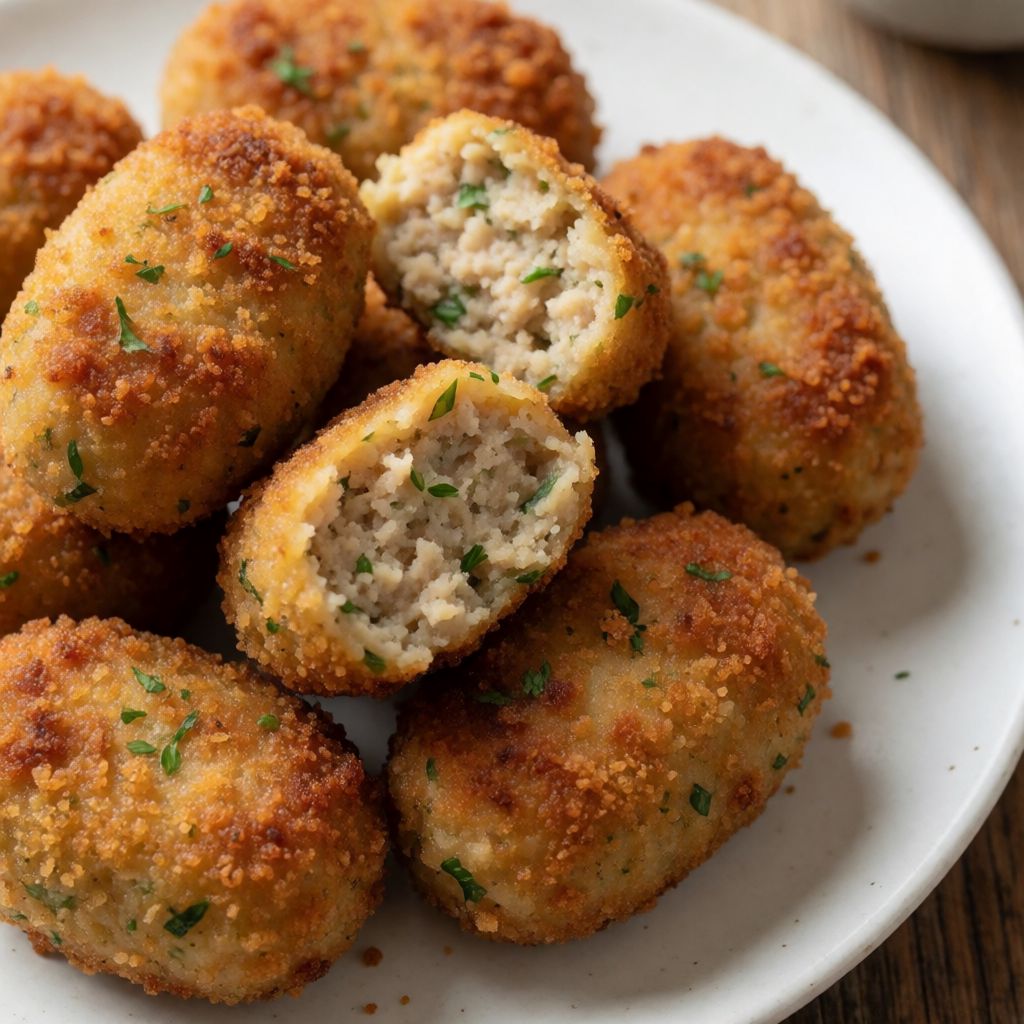
Golden Italian-style meat croquettes filled with ham and provolone, coated in breadcrumbs and pan-fried until crisp.
Labels are worked out automatically from the ingredients and can be wrong. Check the packaging if it matters to you.
Ingredients
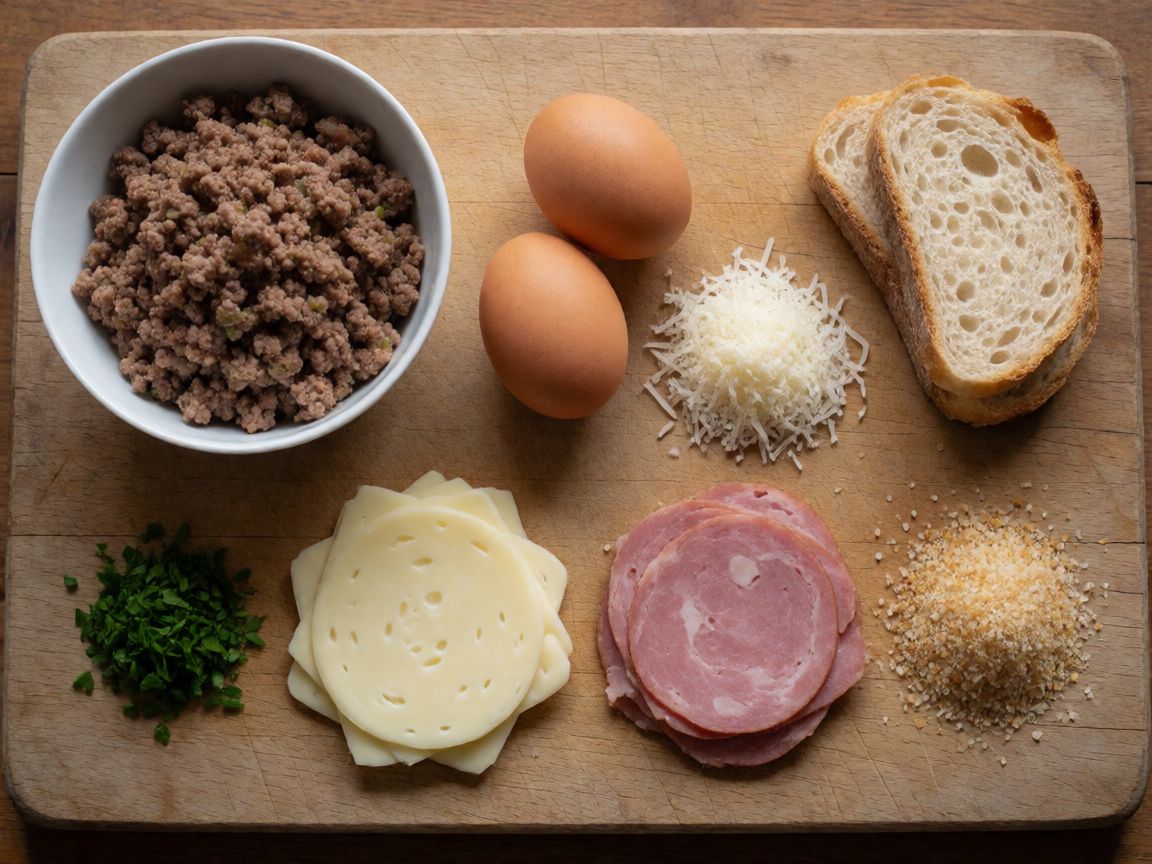
- 250 g Minced Veal and Pork
- 2 pcs Eggs
- 30 g Parmesan
- 50 g White Bread crusts removed
- 1 tbsp Parsley
- Salt to taste
- Black Pepper to taste
- 100 g Provolone
- 100 g Ham
- Breadcrumbs for coating
- Groundnut Oil for frying










Steps
Finely chop the white bread (crusts removed) and place it in a large bowl together with the minced veal and pork. Add the eggs, parsley, Parmesan, salt and black pepper. Mix well.
Take about a tablespoon of the mixture, place a few cubes of provolone and ham in the centre. Cover with a little more mixture and shape into croquettes.
Coat the croquettes in breadcrumbs and let them rest in the fridge for about 20 minutes, then coat them again.
20 minFry the croquettes in a deep pan in well-heated groundnut oil, turning on all sides until golden. They are ready when the centre reaches 71°C.
Place the croquettes on paper towel to absorb excess oil and serve hot.
This is not a meatball with a cheese surprise — it's an ambush. You bite through a dense, savoury shell and the middle gives up hot, pulled cheese and salty ham before you've even noticed the meat around it. That contrast is the whole point of a croquette: crisp casing, soft interior, molten core. Get the layering wrong and you just have an expensive fried meatball.
What decides whether it works is not the frying — it's everything that happens before the frying. The mixture has to be soft enough to wrap around the cheese and ham without tearing, and the coating has to be firm enough to survive the oil without splitting open and dumping that cheese straight into the pan. That split is the real failure here, and people blame the oil for it — "it was too hot" — when the actual cause is usually a warm, soft croquette going into hot fat. Fat that's still soft moves when it hits heat; fat that's been chilled holds its shape long enough for the crust to seal first. That's what the fridge rest is doing. Skip it and you're not saving twenty minutes, you're inviting a cheese leak.
The oil itself doesn't need a thermometer, though a thermometer won't hurt. What it needs is heat you can read: drop in a pinch of breadcrumb and it should fizz and colour steadily, not sit there doing nothing, not blacken in two seconds. Too cool and the crust drinks oil instead of sealing — you get a greasy, pale croquette that never crisps. Too hot and the outside colours before the inside has had any chance to warm through, so you serve a croquette with a cold, half-set centre around the cheese.
Start with the meat. Veal and pork together give you lean structure from the veal and fat from the pork — fat is what keeps a croquette from frying up dry and chalky inside its crust. If you're buying mince rather than this specific split, the criterion is simple: something lean mixed with something fatty, roughly four parts lean to one part fat. Pure lean beef mince will work, technically, but it fries drier, because there's no fat melting through the crumb to carry flavour and moisture while it cooks.
There are two different breads doing two different jobs here, and conflating them is where people go wrong. The chopped white bread, crusts off, goes into the meat mixture itself — it's there to hold water and fat in suspension through the mince, the same trick as a good meatloaf or meatball, so the inside stays tender instead of setting into a rubbery puck. It is not filler to stretch expensive meat, though it certainly started that way in frugal kitchens — bread was cheap, meat wasn't, and a cook who could make 250g of mince feed eight people with eggs and breadcrumbs was doing real economics, not cooking theatre. The breadcrumbs for the outer coat are a completely separate thing: dry, not soaked into anything, there purely to crisp and seal. Mixing the two up — say, using fresh soft breadcrumbs for the coating — gives you a soggy shell instead of a crisp one.
Eggs bind the mixture into something you can shape and that holds its shape raw, before any heat has set it. Parmesan is salt and savour, hard and dry enough not to add moisture you don't want — Grana Padano or a mature Pecorino do the same job, pecorino pushing it slightly sharper and saltier. Parsley is there for green freshness against all that fried richness; dried won't give you the same lift, so use fresh if you can.
Inside, provolone is chosen for one property above all: it melts and stretches without splitting into a puddle of fat and water, the way some softer fresh cheeses do under heat. Mozzarella will substitute reasonably — expect a slightly wetter melt — and a mild, young cheddar will do it too, melting cleanly if less elastically. Avoid anything that weeps a lot of liquid when it melts; that liquid has nowhere to go but through your crust. The ham adds a separate, saltier hit and a bit of chew against the softness of the cheese — use a proper deli ham with some body to it, not the wafer-thin kind that disappears into nothing once it's hot.
On the oil: groundnut oil is picked for being clean-tasting and tolerant of high heat without smoking or turning bitter. The actual requirement is any refined oil with a high smoke point and no smell of its own — sunflower or rapeseed, both easy to find in any UK shop, do the same job. You don't need a deep-fat fryer for this, and you shouldn't feel you're missing one — a wide, heavy pan with oil three or four centimetres deep, enough that the croquettes are mostly submerged, turned with tongs rather than left to sit, does exactly the same work a fryer does, just with you paying slightly more attention. Afterwards, paper towel isn't a formality — it's pulling surface oil off the crust so what you taste is the fry, not the fat it was fried in.