
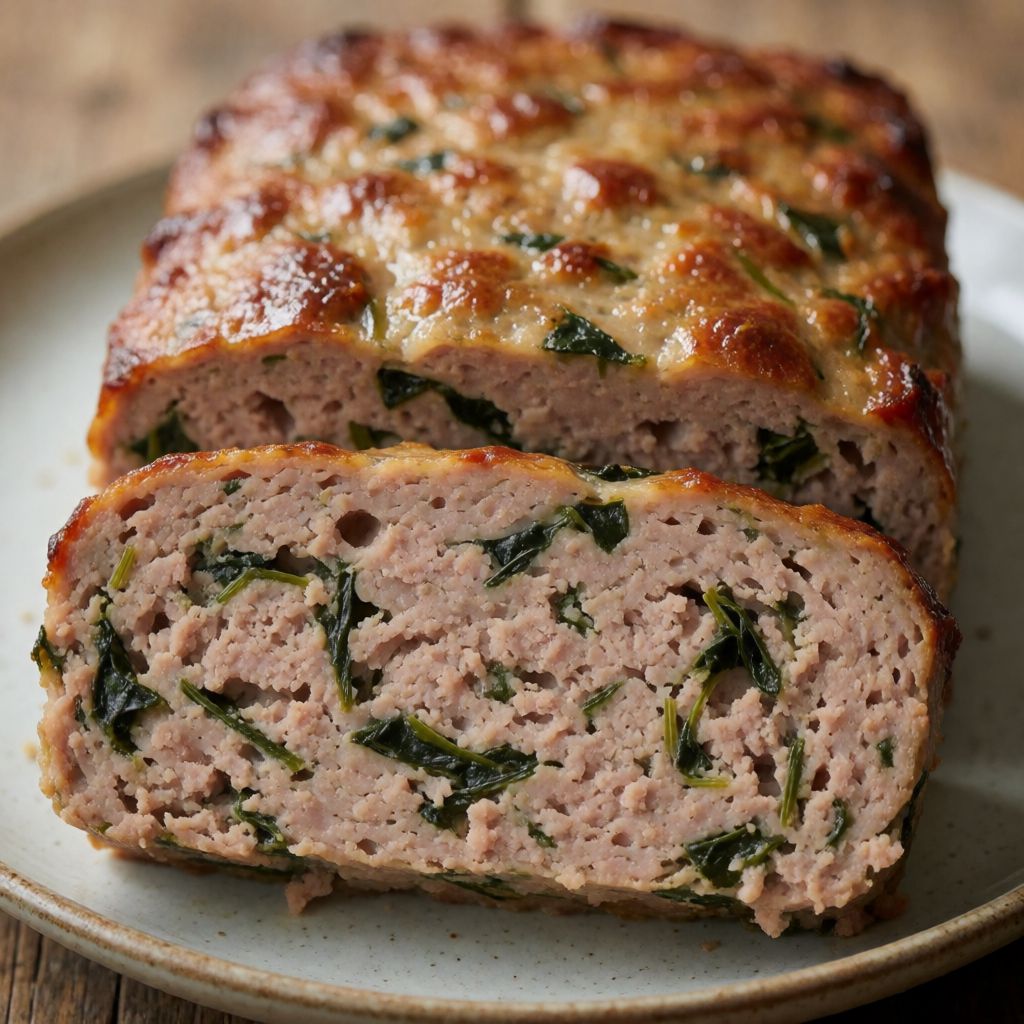
 AI photo
Meatloaf with Chard and Parmesan
A classic meatloaf filled with chard, ham and Parmesan, baked until golden.
Labels are worked out automatically from the ingredients and can be wrong. Check the packaging if it matters to you.
Ingredients
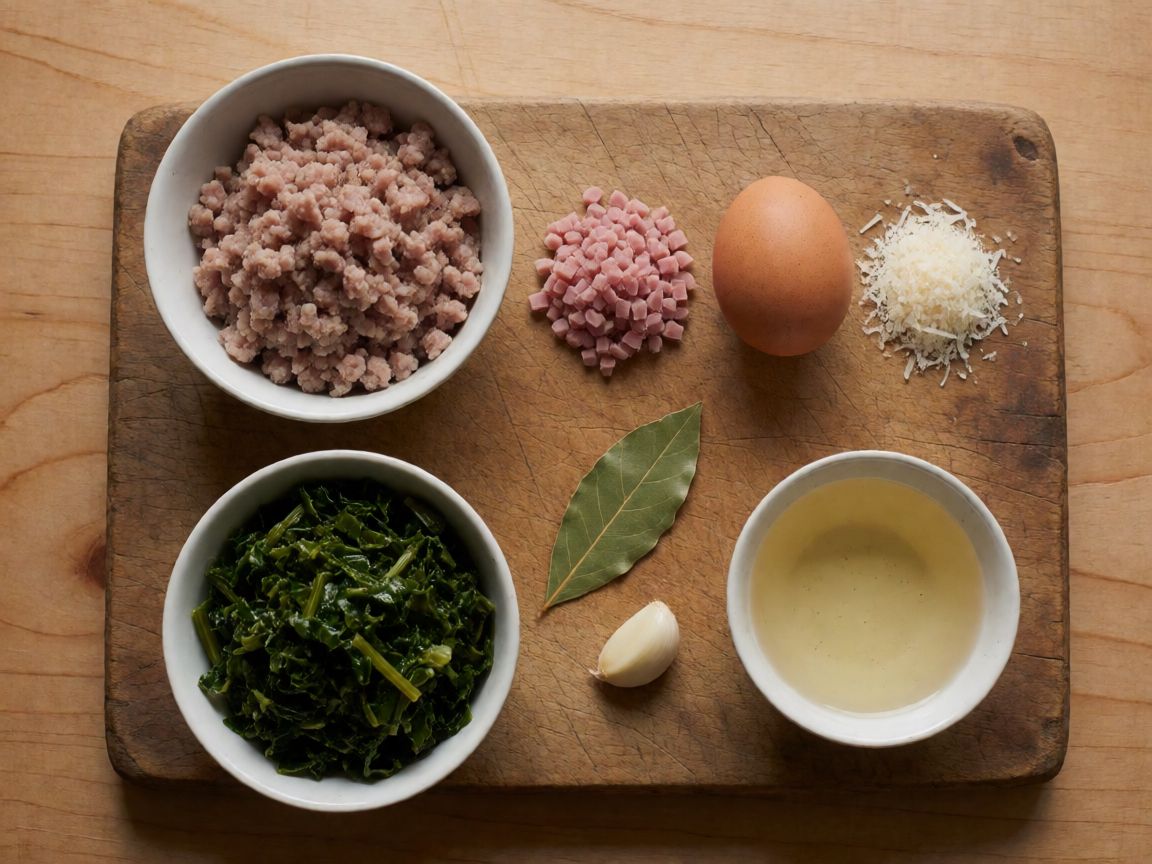
- 600 g Pork mince
- 100 g Ham
- 1 pcs Eggs
- 4 tbsp Parmesan
- Salt to taste
- Black pepper to taste
- 2 tbsp Olive oil
- 500 g Chard
- 1 pcs Bay leaf
- 250 ml White wine
- 1 clove Garlic
- Breadcrumbs as needed
- Potato as needed, cooked













Steps
Chill and chop the chard in a bowl, then mix with the Parmesan and ham.
In another bowl, knead the pork mince with the egg, a pinch of salt, black pepper and the mashed cooked potato.
Spread the mince on a surface sprinkled with breadcrumbs, and place the chard, ham and Parmesan filling in the centre.
Shape into a traditional elongated loaf and roll it in breadcrumbs.
Grease a baking dish with 2 tbsp olive oil, place the loaf in it, and add the bay leaf and a clove of garlic in its skin.
Pour over 250 ml of white wine and bake at 180°C for 50 minutes, turning the loaf halfway through.
50 minCheck doneness with a thermometer: the centre should reach 71°C internally.
Serve warm.
What you're building here isn't a brick of mince pressed into a tin — that's the shortcut version, the one that bakes into a grey block and dries from the outside in. This is a flat sheet of seasoned pork, rolled around a filling, so the loaf has two zones: an outer layer that takes the heat and crisps, and a core that stays wrapped and steams in its own moisture. Whether it works comes down to one thing: does the filling stay inside, or does it leak out and turn the whole loaf into soup.
That's why the chard gets chilled before it's chopped. Warm chard, cut at room temperature, is already shedding water from its cut edges — chop it fine and it pools. Chill it first and the cell walls hold together a little longer, long enough for you to fold it into Parmesan and ham without the mixture going wet before it's even in the loaf. Some say you should blanch chard before using it raw in a filling — no, because here it isn't cooking raw at all: it rides inside fifty minutes in the oven, wrapped in meat, and that's plenty.
The potato and egg in the mince aren't padding to stretch cheap meat, though that's exactly why a dish like this exists historically — more on that below. Mechanically, mashed potato is starch, and starch grabs water and holds it as the mince heats and its own juices try to run out. Leave it out and you get the defect everyone blames on "lean pork" — a dry, crumbly loaf — when the real cause is a mixture with nothing in it to catch the moisture.
Pork mince is the backbone, and it wants enough fat in it to self-baste. If your butcher's mince looks lean and pink straight through with no flecks of fat, ask for something with more shoulder in it — a loaf this size, open to the air, has far more surface to lose moisture from than a sealed, tinned meatloaf ever does.
Ham does a different job from the pork — it's already cooked and already salted, so it reads as a separate bite inside the filling instead of blending into the mince. Any dense, cooked, salted meat works in its place: a thick offcut of gammon, cooked bacon, even leftover ham from a Sunday joint, chopped small. Don't substitute raw bacon — it needs its own cooking time and will come out undercooked wrapped inside the loaf.
Parmesan is chosen for being hard and nearly dry. A cheese with real moisture in it — mozzarella, a soft cheddar — will melt and run rather than binding into the chard and ham. The criterion is any aged, hard, low-moisture cheese that grates fine and stays put: grana padano, a well-aged pecorino, even a hard aged gouda all do the same job.
Chard itself is a sturdy, cheap leaf, the kind grown in kitchen gardens long before spinach became the default bag on a supermarket shelf — it holds its structure through long cooking far better than spinach, which is exactly why it suits a filling that spends time wrapped inside something else. If all you have is spinach, use it, but squeeze it hard after chilling and chopping — it carries far more water and will flood the filling otherwise.
The breadcrumbs, both on the board and around the loaf, aren't filler. They're a dry barrier. Roll a wet surface of mince onto a bare board and it sticks and tears when you try to lift it; dust with crumbs and it releases clean, and that same coating on the outside becomes the crust that holds the shape against the wine underneath.
The thermometer reading at the centre matters more than the fifty minutes on the clock, because fifty minutes is only what it usually takes, not a guarantee — your oven, the loaf's thickness, how cold the mince was going in, all of it shifts the number. Some say pork has to be cooked grey right through to be safe — no, because a thermometer tells you more than colour ever will. Once the centre reaches what the recipe asks for, the job holding the meat together is done; push it well past that out of an old habit of fearing pink pork and you're not making it safer, just drier. And for the mashed potato — use what's already going soft on the stove anyway. If a Sunday roast is in motion with potatoes boiling or roasting, set a couple aside and mash them plain into the mince; that's the same economy that put potato and stale bread into mince loaves across Europe long before this was written down as a recipe — using what the kitchen already had cooking, so nothing extra gets dirtied or wasted.