
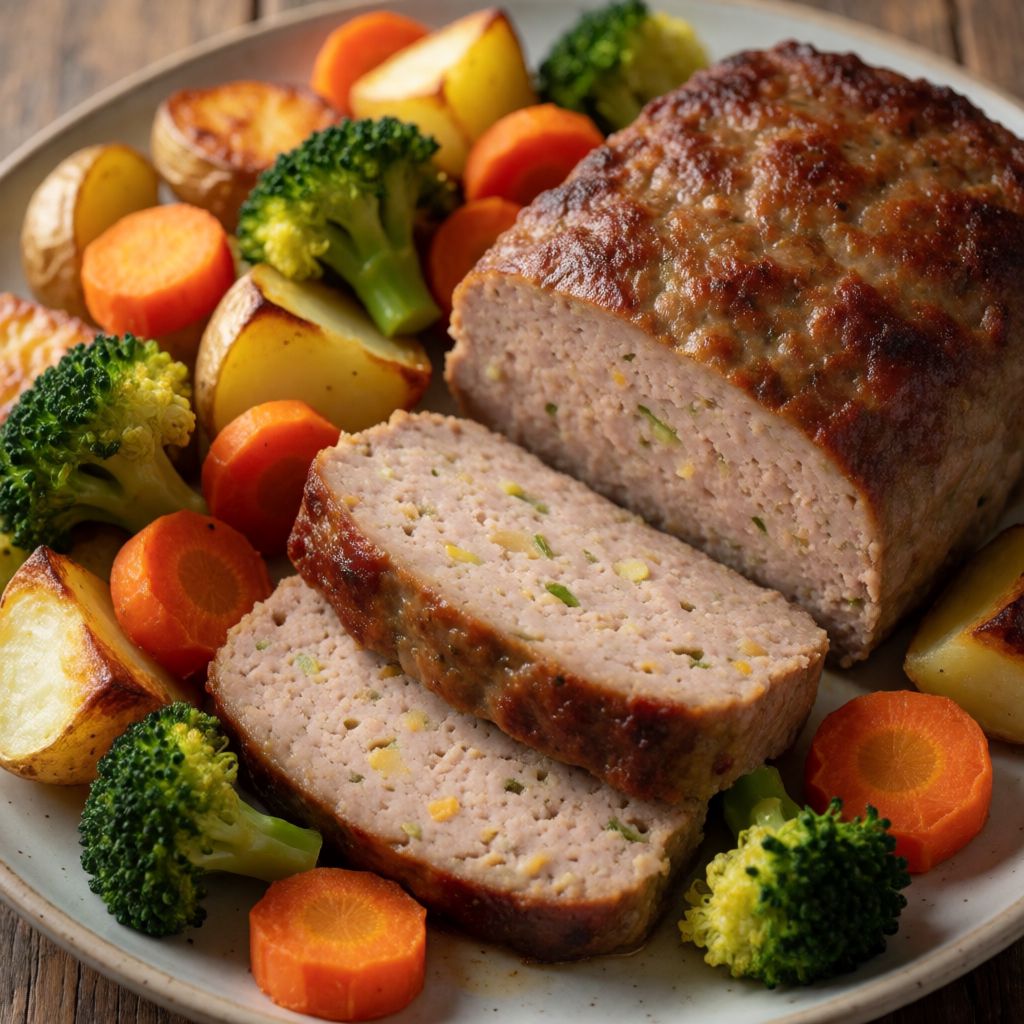
 AI photo
Meatloaf with End-of-Season Vegetables
A hearty meatloaf of pork and chicken mince, filled with potato, carrot and broccoli to use up the last of the season's vegetables.
Labels are worked out automatically from the ingredients and can be wrong. Check the packaging if it matters to you.
Ingredients
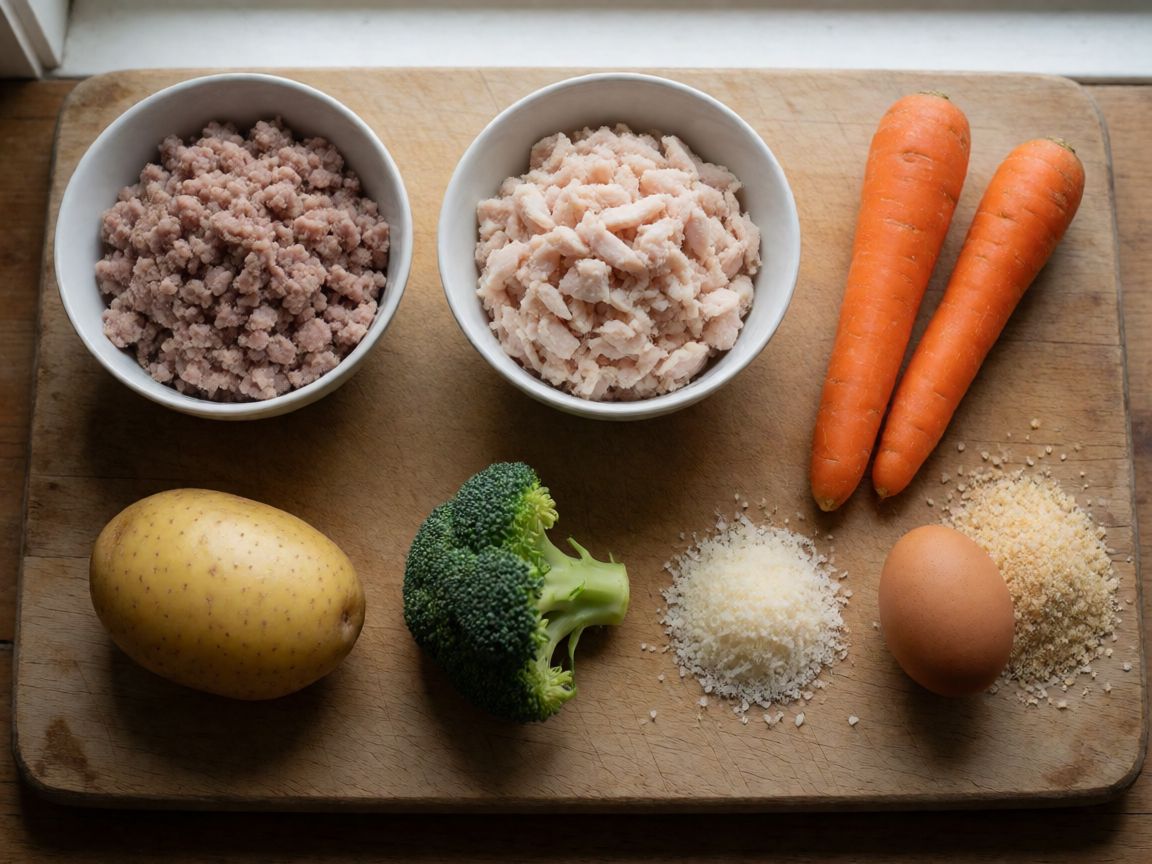
- 200 g Pork mince
- 250 g Chicken mince
- 1 pcs Potato
- 2 pcs Carrot
- 1 pcs Broccoli
- 2 tbsp Parmesan
- 1 pcs Egg
- Breadcrumbs to taste
- Salt to taste
- Black pepper to taste
- Olive oil to taste
- 120 ml White wine
- Garlic to taste
- Bay leaf to taste














Steps
In a bowl mix the pork mince with the chicken mince, Parmesan, salt, black pepper and egg.
Spread the mixture out on a work surface and place the vegetables (potato, carrot, broccoli), cut into small cubes, in the centre.
Shape into a loaf and coat it in breadcrumbs.
Place the loaf in a baking dish with olive oil, bay leaf and garlic in its skin.
Pour over the white wine and bake at 200°C, turning the loaf halfway through cooking.
40 minCheck doneness: the inside of the loaf should reach 74°C.
Serve with grilled vegetables or a salad of broccoli, olive oil and lemon.
This isn't a terrine and it isn't shepherd's pie wearing a different hat. It's meat used as a jacket: you wrap raw cubes of potato, carrot and broccoli inside a roll of pork-and-chicken mince, and the vegetables cook from the heat and moisture of the meat around them, not from the oven air directly. That's the whole trick of the dish, and it decides everything else.
What makes it work or fail is dice size, nothing else. Potato is starch — it needs real heat getting all the way to its centre to go from chalky to soft, and the loaf only gives it forty minutes at 200°C, borrowed through a wall of meat. Cut the cubes small, roughly a thumbnail, and they finish with the meat. Cut them like roast-potato chunks and you'll get a nicely browned crust around a hard, raw middle — and more time in the oven won't fix it, it'll just dry the outside before the inside catches up.
Some say you can tell a meatloaf's done by cutting it open and checking the colour. No — because chicken mince can look perfectly pale and still be underdone at the core, and pink isn't a reliable signal either way once you've mixed two meats and an egg into it. A probe reading 74°C in the centre is the only honest answer here; the recipe already gives you that number instead of a guess, which is more than most meatloaf recipes bother to do.
Pork mince and chicken mince together solve a problem chicken alone can't: chicken breast or thigh mince on its own is lean, and lean mince under forty minutes of 200°C heat turns to dry sawdust before it's safe to eat. The pork brings fat that melts through the mix and bastes it from inside. The criterion is simply: pair a lean mince with a fattier one. If pork isn't to hand, an 15–20% fat beef mince does the same job; turkey thigh mince can stand in for the chicken.
The egg and the Parmesan inside the mix aren't seasoning in the showy sense — the egg is a binder, its protein setting under heat to hold mince, crumbs and vegetable juice together so the loaf slices instead of collapsing. The Parmesan salts and deepens the mix from within, the way a stock cube would in a less honest kitchen. Any hard, aged cheese with real salt to it works the same way — pecorino, an old cheddar grated fine.
The breadcrumb coating on the outside is doing a different job from the egg inside: it's a crust. It takes the surface fat as the loaf bakes and browns into something dry and textured, which protects the meat surface from drying out while the vegetables inside are still steaming gently in their own moisture. Without it you'd have one texture throughout — soft all the way to the edge — and no contrast when you cut in.
Garlic goes in with its skin on for a reason that has nothing to do with looks: a peeled, chopped clove in a 200°C oven for forty minutes burns and turns bitter long before the loaf is done. Left in its jacket, it steams and sweetens instead, and you squeeze the paste out afterwards if you want it on the plate. The wine goes into the dish, not into the mince — it keeps the base of the pan from catching when you turn the loaf, and its acid cuts through two sources of fat, the meat's and the olive oil's, so the dish doesn't sit heavy.
Turning the loaf halfway through is there because a domestic oven has no honest even heat around a joint — the side nearer the element browns while the far side stays pale, unlike a spit or a kazan where the heat moves and the food sits still. One turn balances that out; it isn't optional theatre.
And once it's out, give it a few minutes before you cut — on a plate, loosely covered, since most of us don't have a proper lid handy for this and a plate does the job just as well. That pause is patience doing its actual work: the juices that the wine and the fat drove to the centre during baking need a moment to settle back through the loaf, otherwise the first slice bleeds everything onto the board instead of staying where it belongs.